 עברית
עברית

Understanding Cholesterol and Its Impact on Heart Health
Learn how cholesterol contributes to heart attacks and discover effective ways to prevent them, with insights into risk factors and expert recommendations for maintaining heart health.
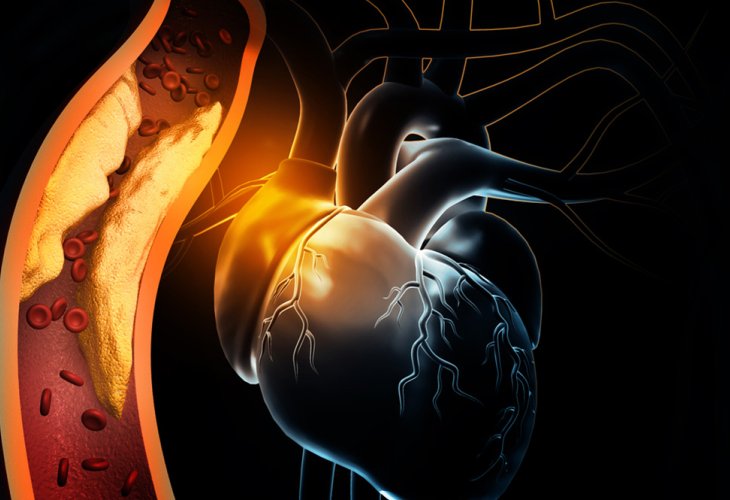 (Photo: shutterstock)
When we hear the word cholesterol in relation to our body’s health, it often carries a negative connotation. Yet, it's undeniable that our bodies need cholesterol. Cholesterol is an organic compound comprised of carbon atoms arranged in a ring-like structure, serving as a foundation for certain hormones produced by the human body. Additionally, it acts as a building block for cell walls and is an essential component in bile secreted by the bile ducts.
Some people, who are often aware of cholesterol's importance and its partial negative impact, tend to believe we have two types of cholesterol. However, that's not the case. The truth is there aren't two different kinds of cholesterol, but rather two pathways through which it travels to the organs in our blood.
Because cholesterol is a fatty substance, it does not dissolve in the watery environment of the blood. Thus, it is transported in the blood via a 'truck' — a type of fatty protein complex that encases cholesterol, allowing it to dissolve and exist within the blood’s watery environment. This ‘truck’ that carries cholesterol to various body organs is known as LDL, or more simply as 'bad' cholesterol. Conversely, the ‘truck’ that does the opposite journey, taking excess cholesterol from body cells back to the liver for recycling, is known as 'good' cholesterol — HDL.
What's the Link Between LDL and Atherosclerosis?
Atherosclerosis is a process where a fatty plaque forms and grows within the walls of arterial blood vessels, slowly narrowing the blood vessel’s interior. This plaque originates when the LDL 'trucks' pass through the vessel walls, are absorbed by special blood cells known as macrophages, and eventually burst. This process creates a kind of growing 'dump' in the blood vessel, which is actually the atheromatous plaque.
The process of atherosclerosis is an active and inflammatory one involving cholesterol, cells, and other substances secreted by the body. It's a natural process that occurs in our bodies from birth. The problem is the rate at which this process happens, and the more risk factors there are, the more widespread and faster it occurs.
Risk factors are divided into several categories: the higher the LDL levels in the body, the greater the likelihood of penetrating the vessel wall and initiating the process. Another risk factor is smoking. Smoking damages the function of blood vessel walls, making them more penetrable. High blood pressure also damages the vessel walls, facilitating LDL penetration more easily.
There is also an extreme condition called 'familial hypercholesterolemia,' where LDL levels are exceedingly high. The condition is primarily due to genetic defects in the LDL receptor found in the liver, which is the body’s mechanism for clearing LDL from blood cells, and when this receptor is genetically defective, high levels appear in the bloodstream. If both genes are defective, LDL levels can reach as high as 500, 600, or even 800, causing cardiovascular disease in teenagers. However, this disease is rare, with a frequency of one in a million, and Israel has between 12 to 15 people in such a condition.
The heterozygous condition, where only one gene is defective and the other is normal, is much more common, occurring in one out of every 285 individuals, making it the most common genetic disorder. Here, cholesterol levels reach over 200, often resulting in heart disease at a relatively young age (30-50).
Treatment and Prevention of Atherosclerosis
Today, it's well-established that high cholesterol levels in the blood are the primary cause of developing atherosclerosis, and by reducing cholesterol, we can reduce the rate of heart disease and mortality.
For individuals who have already suffered a heart attack and are at higher risk, lowering cholesterol is the best way to prevent another attack. They should strive for rapid aggressive cholesterol management through medication and diet, aiming to keep LDL below 55 and/or decrease it by fifty percent from their pre-event level.
The standard medicinal treatment involves statins, which are excellent drugs that have revolutionized cardiology and vascular disease care. Today, these drugs are sometimes combined with another medicine called ezetimibe, which reduces cholesterol absorption in the intestine.
Statins inhibit the liver from producing cholesterol on its own. If the liver doesn’t produce, it essentially creates more receptors on liver cells that ‘absorb’ cholesterol from the bloodstream, thus lowering its levels. However, sometimes this isn't enough, and cholesterol levels can be so high that additional measures are needed. Moreover, a certain segment of the population cannot take statins at all, or only partially, due to side effects, primarily muscle pain.
Recent research discovered a protein named PCSK9, responsible for the number of receptors on liver cell surfaces. The simple formula is: more of the protein means fewer receptors, which in turn means more cholesterol. From this, researchers concluded that if we eliminate the protein from the bloodstream, more receptors would appear on liver cell surfaces. One method to remove the protein is by creating antibodies against it and eliminating it from the bloodstream. This technique forms the basis for medications that have been available in recent years and proven effective in lowering cholesterol and reducing cardiovascular events. These medications are self-injected bi-weekly.
A new treatment uses a completely different method. Instead of finding an antibody to remove the protein, it relies on preventing the body from producing the protein at all by entering liver cells. The blockade of protein production occurs at the-mRNA level, similar to the COVID-19 vaccine, and not within the cell nucleus. Since this drug works on mRNA, it can be administered at larger intervals — once every six months.
The mechanism leading to a heart attack is the rupture of atheromatous plaque on which a blood clot forms, and by administering medications and significantly lowering the figures, the plaque becomes more stable and less prone to rupture. Hence the critical importance of aggressive treatment to rapidly reduce blood cholesterol levels.
In any situation, for everyone, medical recommendations include quitting smoking, ensuring blood pressure balance, and maintaining balanced blood sugar levels. Aggressive cholesterol lowering can halt the development of atheromatous plaque and sometimes even cause its regression, stabilizing it to prevent disintegration.
Professor Avishai Ellis is the Chairman of the Israeli Society of Internal Medicine and works at Rabin Medical Center.

