

Israel News
State Comptroller: Dangerous Terrorists Were Released Because There Was No Room to Hold Them
State Comptroller Matanyahu Englman said in a special report that the IDF and Israel Prison Service were not prepared for a scenario in which thousands of terrorists would be detained after the war. The result, he found, was a severe shortage of prison space and the release of detainees. The report also found major failures in Israel’s handling of cyber threats.
- Shlomi Diaz
- | Updated
 (Archive photo: Chaim Goldberg/Flash90)
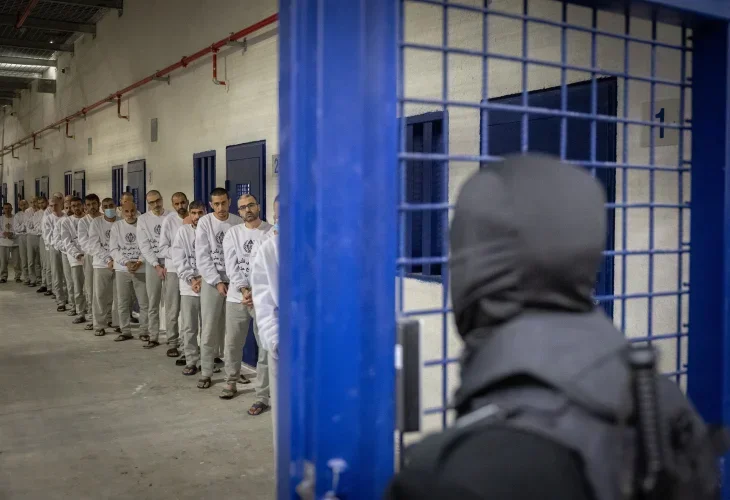
State Comptroller Matanyahu Englman published a special report today (Tuesday) finding that the IDF and the Israel Prison Service were not prepared for a scenario in which thousands of terrorists would need to be imprisoned following the war. That failure led to a shortage of thousands of prison spaces and to the release of terrorists, some of them considered dangerous.
According to the comptroller, the number of security prisoners in Israel Prison Service facilities rose by about 92%—from roughly 5,200 before the "Swords of Iron" war to around 10,000 detainees in January 2025. Englman said the IDF and the Prison Service had not prepared in advance for the need to imprison terrorists on a large scale over an extended period. In his view, the IDF’s failure to produce an early estimate, along with the lack of suitable prison infrastructure, led to a severe crisis in the detention system.
As a result, the director of Shifa Hospital—who had operated on behalf of Hamas and held Israeli hostages there—was released back to Gaza, along with 18 other detainees. The terrorists were released while Israeli hostages were still being held in the Gaza Strip.
The comptroller also sharply criticized the fact that the move was not brought to Prime Minister Benjamin Netanyahu’s attention in real time and was not submitted for his approval.
The report further states that in February 2025 there was a shortage of 3,502 prison spaces—a situation that hurt the Shin Bet’s ability to carry out arrests and interrogations in Judea and Samaria, created heavy strain on prison staff, and increased security risks inside detention facilities.
The comptroller noted that as of February 2025, indictments had still not been filed against the terrorists who took part in the October 7 massacre. He said this is an issue of the highest public, legal, and moral importance.
In addition, the State Comptroller exposed a series of serious failures in Israel’s preparedness for cyber threats in the years leading up to the "Swords of Iron" war. The report found that during the fighting, there was a sharp rise in the intensity of cyberattacks against Israeli organizations.
The attackers engaged in psychological warfare and access denial at the start of the campaign, carried out attacks aimed at deleting information, worked to recruit collaborators and spies through social media, and gathered intelligence on civilians and sensitive processes in Israel.
Despite the threats, the State Comptroller determined that, "In the decade preceding the war and through mid-2025, the prime ministers did not initiate or hold dedicated cabinet discussions on the issue, apart from a single meeting in 2018. As a result, the cabinet was not exposed to the full range of risks and the potential for damage."

