

Magazine
She Nearly Signed a Major Record Deal: Then Her Life Changed
Why did a rising Israeli singer step away from mainstream success? Hadas Degul shares the story behind her choice.
- Avner Shaki
- | Updated
 Inset: Hadas Degul (Photo: Eitan Motahdeh)
For Hadas Degul, music was never simply a hobby. It was a calling she recognized almost from the moment she first heard a guitar as a child. Years later, that calling would take her to prestigious stages, a promising recording career, and the brink of mainstream success. But as her connection to Judaism deepened, Hadas found herself facing a difficult question: What happens when the career you dreamed of collides with the life you now believe you are meant to live?
Her answer would ultimately reshape not only her music, but her marriage, motherhood, faith, and understanding of success itself.
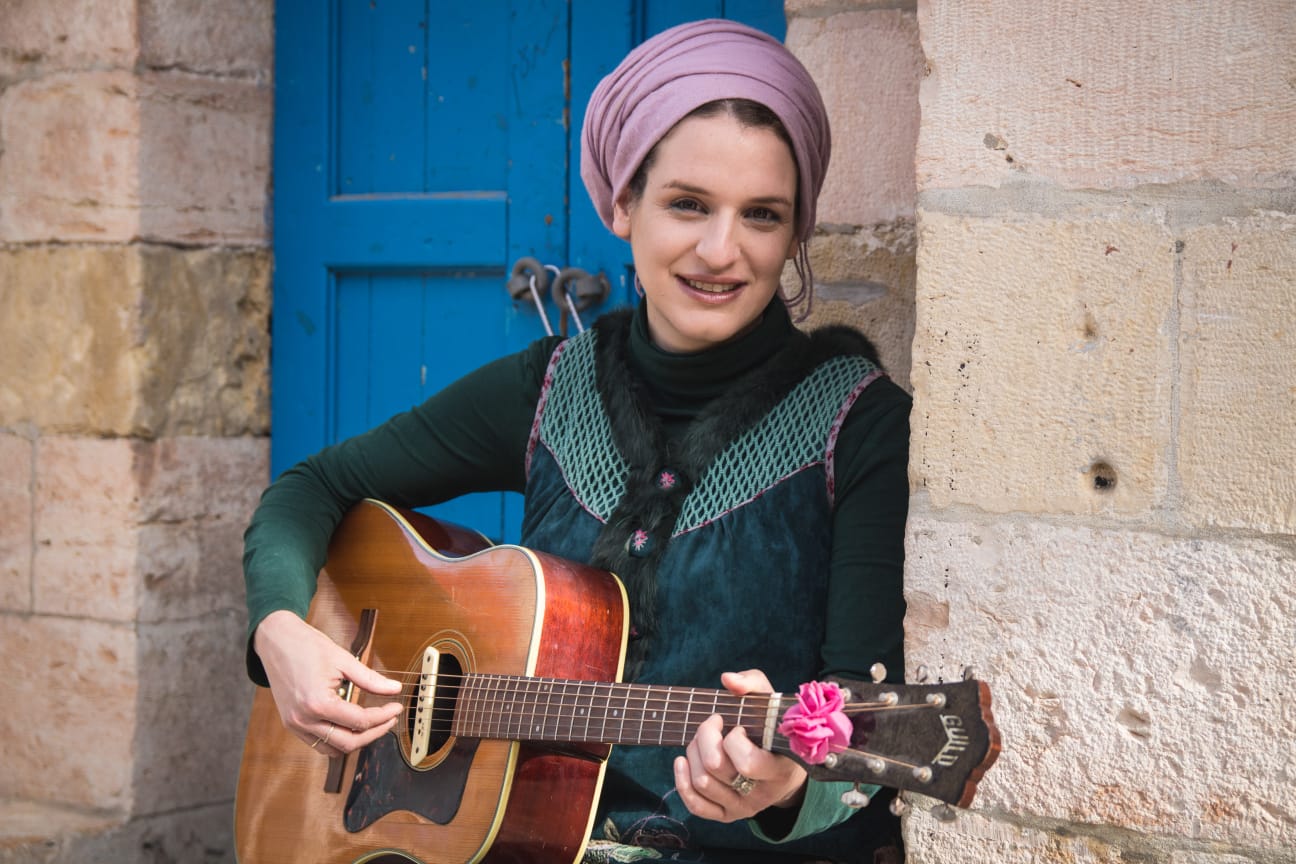 Photo: Hadar Alfasi
A Musical Dream Begins in Jerusalem
Hadas grew up as a secular girl in Jerusalem’s Ramot neighborhood in the 1980s. Her path to music began at age six, when she stood mesmerized as her kindergarten teacher played the guitar. In that moment, a dream took root, and she began studying diligently to make it a reality.
She grew up in a classic Israeli home, half Ashkenazi and half Sephardi, far from mitzvah observance but filled with a strong Jewish and Zionist identity. Her connection to art came from a desire to go deeper. She loved old Israeli songs, and for her bat mitzvah, she specifically asked to sing them.
One of her father’s friends heard her clear voice and immediately recognized her talent. "She’s truly talented," he told her father. "You have to send her to the Academy of Music high school."
At the very end of the summer, Hadas was accepted. "It changed my life," she says. "From seventh grade on, I knew there was no other option. I felt that this calling was stronger than I was."
Her talent eventually earned her the coveted designation of "Outstanding Musician" when she enlisted in the IDF, a status reserved for only a small number of recruits each year. She also performed in military bands and with the Education Corps jazz ensemble, singing and playing classical guitar at a high level.
"In the army, I felt I was on the fast track to success," she recalls.
Immediately after her discharge, at age 21, Hadas released her first album through the Eighth Note label. Written entirely by Hadas, the album received glowing reviews. She opened the International Film Festival at the Sultan’s Pool, performed at the President’s Residence, and was invited to the Israel Festival. Her songs were being heard by a growing audience, but beneath the surface, another journey had already begun.
"Anyone who listens to the first album can see that it was all there already," she says with a smile. "There’s a song on the album called Tikkun Chatzot and another called Kol B’Isha Ervah."
The second song emerged from an experience during her military service. Hadas was rehearsing with four musicians who, she felt, largely ignored her musical opinions. "Suddenly, I felt that they saw me in that position of ‘the singer,’ and that was it. I felt it was disrespectful, and out of frustration I wrote: ‘Kol B’Isha Ervah. The phrase is familiar, but I didn’t understand. Kol B’Isha Ervah. Now it is clear and relevant.’"
At the time, she could not have known how significant those words would eventually become. "That phrase sat in the back of my mind, without my realizing that I was predicting my own future."
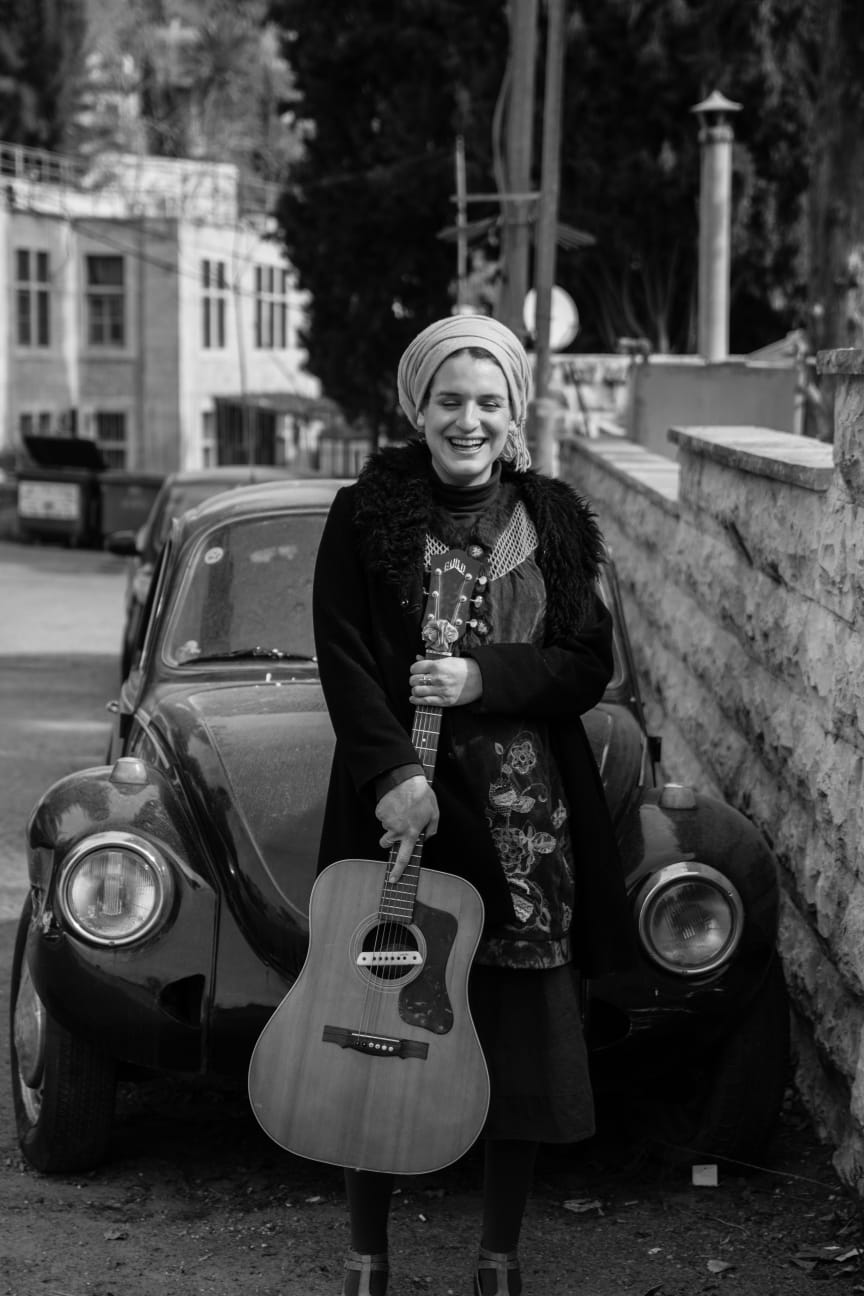 Photo: Hadar Alfasi
The Encounter That Changed Everything
After leaving the army, Hadas moved into the heart of Tel Aviv’s bohemian scene in Neve Tzedek. At the same time, her process of teshuvah began gaining momentum as she wrestled with fundamental questions about her Jewish identity.
"I asked myself: Why are we even here in this country? I felt there had to be a deeper reason than Alterman’s songs. I simply felt a constant longing in my soul."
The practical turning point came when Hadas was 22. She had just left a successful meeting at the Eighth Note and was walking with her guitar along Shamai Street in Jerusalem when she passed a guitar store. A young man was standing at the entrance, and she heard someone call him "Tzvika."
On impulse, Hadas approached him. "Are you the legendary Tzvika Sharling?" she asked.
A few minutes later, realizing how difficult it was to walk around with all her equipment, she returned and asked if she could leave her things with him. When she came back to collect them, Tzvika asked her to play something.
"I told him, ‘Me? Playing here? I’m about to release an album. I’m going to be the next Rita!’" she recalls, laughing.
But he insisted. Hadas took out her guitar and began playing. He joined her, and people soon began gathering around them. "That was our first performance together."
Next to Tzvika’s cash register was a pile of holy books and a kippah. For Hadas, who was already overwhelmed with questions about Judaism, the sight felt significant.
The two became a couple. Tzvika, Mordechai Zvi, was already putting on tefillin and praying, but Hadas was initially alarmed by where their journey might lead.
"We had a lot of blowups. I was afraid of the word teshuvah, and above all, I was afraid I would have to stop performing."
For two years, the couple gradually became more observant. They began keeping Shabbat and married when Hadas was 25.
Meanwhile, the secular music industry continued calling her back.
Choosing Between Mainstream Success and Halacha
Hadas began an extended series of meetings with Roni Braun, the legendary CEO of Helicon. For three years, she says, they met approximately once every two weeks as she came increasingly close to a major breakthrough.
"It was supposed to be a 20 year contract for five albums. I was exactly the kind of artist they were looking for."
At one meeting, Braun invited lyricist and artistic director Yaakov Gilad to offer his opinion. Gilad had seen Hadas and Mordechai Zvi a few days earlier at Amir Dadon’s launch show.
At the meeting, Gilad told Braun, "She’s becoming religious."
Braun dismissed the concern. "She just doesn’t perform on Shabbat. Neither does Ninet."
But Gilad replied, "I saw her husband. They’re becoming religious."
"Yaakov said it before I even said it to myself," Hadas recalls.
Once the issue was out in the open, Hadas tried to find a way to reconcile the two worlds. "I came to Roni and told him, ‘I’ll go onstage in modest dresses. It will work great.’ I tried to bridge the gap, but the contract they offered was too restrictive. I sent it back with lots of revisions. They didn’t agree, and we parted ways."
Her husband, she reveals, had also been praying for a very different outcome.
"Right before the big presentation at Helicon, my husband went to Uman for the first time and prayed with all his strength that it would fail. To this day, he takes credit for it," she says with a smile.
Still, Hadas does not describe what happened as a dramatic sacrifice.
"In the end, it was an organic process. I didn’t feel that I was sacrificing myself on the altar of Hashem. I simply understood that it was less suited to the life I wanted."
Hadas and her husband independently produced her second album. But an even more consequential decision followed: Hadas decided, for halachic reasons, that she would perform exclusively for women.
"If we’re being honest, soccer players who don’t play on Shabbat won’t make it to the top teams. The same thing happens to religious female singers. The moment you perform only for women, the mainstream world closes its door."
She points to well known artists such as Etti Ankri and Din Din Aviv, arguing that once female performers stop singing for male audiences, their new work receives far less exposure in secular media.
Yet Hadas also has criticism for the religious community.
"I have a certain anger toward the religious world. There are women who are careful not to perform for men, and it limits them greatly, yet at the sector’s major events they still bring in secular female singers. The religious public often gets its culture from the secular world and barely grows artists from within."
She points in particular to the lack of significant platforms for religious female singers. "We lose out from both directions. Because there are no significant platforms for women’s singing, the audience does not know us, and at major events they import secular female singers because that is what the public has been exposed to."
Was her decision to perform only for women based on anything beyond halacha?
"The decision was based solely on halachic considerations, but after making it, I understand that it has deeper layers. A woman in front of a mixed audience activates, even subconsciously, mechanisms of wanting to be loved, to impress, to be appealing. That need also exists in front of women, but there it is much cleaner, and the performance becomes something friendlier, more down to earth, and deeper."
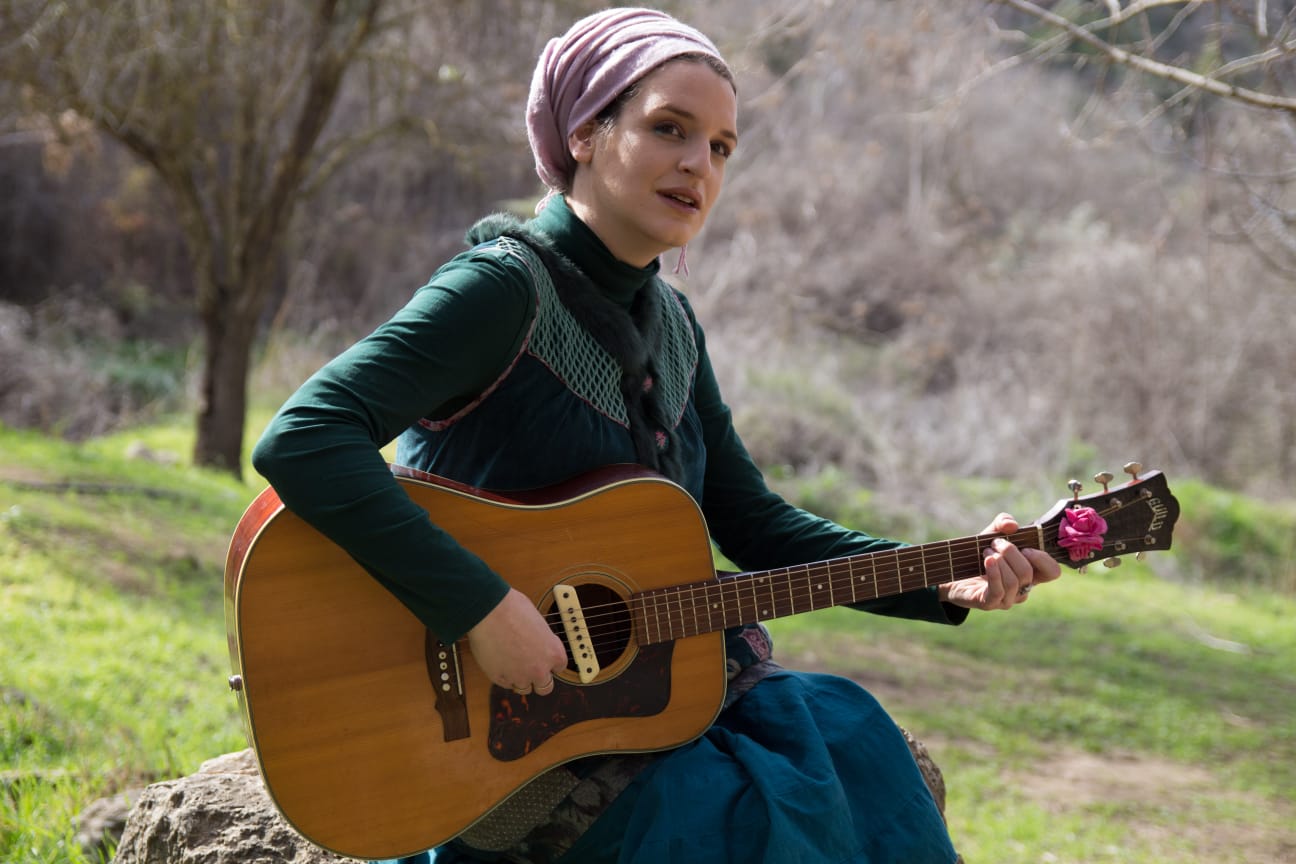 Photo: Eitan Muthada
Motherhood and a New Chapter in Music
For the past 14 years, Hadas’s primary focus has been raising her seven children.
"I devoted my life to my children," she says. "I didn’t send them to after school programs, and I stayed home with each child until age three. Everything I did in music was ‘along the way.’ You cannot compare the career of a man, who sits in the studio for entire days, with the career of a mother whose home rests on her 100 percent."
Now that her youngest child has started preschool, Hadas feels she has entered what she calls "the second phase" of her life.
She recently released a new single, "Secret," and teaches vocal development, writing, and composition at Yonatan Razel’s Shirat HaLeviim school. She performs her original material, is developing a new show with Ditsa Or, writes and composes songs for herself and other artists, and recently completed a children’s musical.
For the first time in years, she has entire mornings available for creativity.
That renewed energy has also led her to a cultural incubator that selected 10 female artists from approximately 100 applicants, with the goal of raising the professional standard of children’s performances in Haredi and religious communities.
"At first, I said to myself: What do I have to do with this? Then I realized it was tailor made for me. It included everything I love and do best: writing, composing, acting, singing. So I applied, and, thank Hashem, I was accepted."
Hadas wrote a children’s musical titled Renanah on a Cloud, intended for children ages three and older and accompanied by professionally produced original songs.
"It is wholesome and suited to the community, but it can also speak to every child in Israel. I’m excited about this chapter of my life in a way I cannot describe."
"I Simply Chose Truth"
Toward the end of the conversation, Hadas speaks candidly about a question that still occasionally crosses her mind.
"Sometimes there is this fear in the back of my mind that perhaps, after 120, Hashem will say to me, ‘Hadas, I gave you a phenomenal voice. Why did you limit yourself?’"
It is a difficult thought for an artist who once stood on the threshold of mainstream success. But another conviction, she says, is stronger.
"I sometimes have thoughts like that, but stronger than them is a burning faith that this is not what they will say to me there. When I look at my children, at the home I built, at the observance of halacha to which I have remained committed, and at the purity of my creative work today, I know that great things still lie ahead for me."
For Hadas, the story is therefore not ultimately about giving up music for Judaism. Music remains central to her life. What changed was the framework in which she chose to pursue it and her definition of what it means to succeed.
"Deep down, I did not really sacrifice," she says. "I did what was incumbent upon me to do, and I simply chose truth."

