

Behind the News
Trump Justifies Iran Deal by Saying More Bombing Would Have Risked Global Economic Collapse
Trump said the MOU prevented “a worldwide depression,” arguing that continued bombing would damage markets and keep the Strait of Hormuz closed
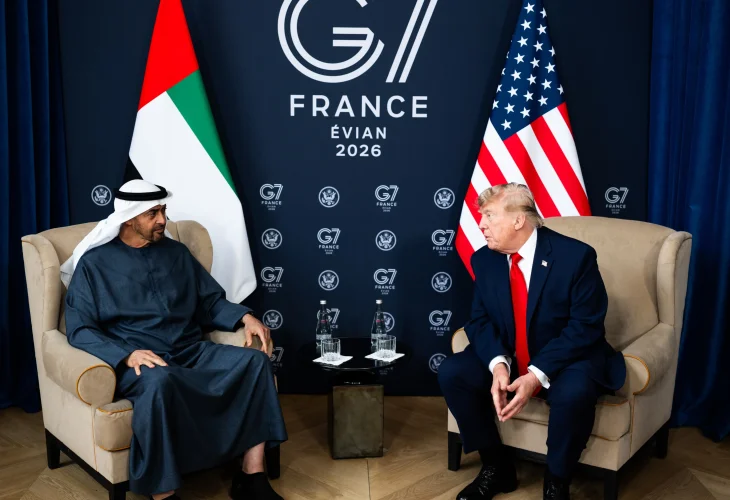
US President Donald Trump defended his memorandum of understanding with Iran on Wednesday, saying the agreement prevented a global economic crisis and stopped the Strait of Hormuz from remaining closed under fire.
Speaking at the G7 summit in France, Trump said the deal “achieves everything we set out to accomplish,” including ending the current conflict, reopening Hormuz and preventing Iran from obtaining a nuclear weapon. But his own explanation focused heavily on the economic danger of continuing the war.
“The alternative would be a worldwide depression,” Trump said.
He argued that more airstrikes against Iran would not have guaranteed success, and said prolonged fighting would have kept one of the world’s most important oil routes shut.
“If we didn’t do this deal, we could have dropped more bombs for another three weeks, two to four weeks, [but] you would never have the Hormuz Strait open,” Trump said. “You would never have success, your market would have, instead of going up at levels that nobody’s ever seen before, would go down at levels that nobody ever saw before.”
Trump also described the military limits of continued escalation, saying the danger to shipping would have remained even after more strikes.
“The Strait would never open, because they don’t like floating billion-dollar ships up and down a strait when there are rockets flying over them and mines all over the place,” he said. “It wouldn’t be open for a long time.”
The remarks offered one of Trump’s clearest explanations yet for why he pushed for a deal rather than continuing the bombing campaign until Iran was further damaged. He said the final two days of U.S. bombing cost $200 million, and argued that the blockade on Iran was “more impactful than all of the bombing raids.”
Trump sharply criticized hawkish voices who wanted the U.S. to continue striking Iran.
“You know, the stupid people want to have a worldwide depression, and they’re stupid people. So you can only go so far,” he said. “You drive somebody into the ground, and a lot of bad things happen.”
He also referred to critics of the agreement as “the tough guys that would drive the country right down the tubes.”
At the same time, Trump insisted the MOU does not mean Washington has given up its military option. He said the understandings with Tehran are conditional, and warned Iran that the bombing could resume if it does not comply.
“It’s a memorandum of understanding. If I don’t like it, if they don’t behave, we’ll go right back to dropping bombs right smack in the middle of their head, okay?” he said.
The president said Iran’s leaders are now likely to act differently, claiming they have been exposed to “a different way of life.” He also maintained that the agreement will stop Iran from ever obtaining a nuclear weapon.
The deal has drawn close attention in Israel, where officials and critics are watching whether the MOU actually removes Iran’s nuclear threat or mainly freezes the conflict while restoring oil traffic through Hormuz. The G7 also welcomed the agreement while calling for a broader follow-up deal addressing Iran’s nuclear program, ballistic threats and regional destabilization.
Trump’s remarks made clear that the White House is selling the agreement on two fronts: as a security achievement against Iran’s nuclear ambitions, and as a move to prevent markets, oil routes and the global economy from being dragged into a longer war.

