

Kabbalah and Mysticism
Tammuz in Kabbalah and Astrology: A Month of Vision, Risk, and Repair
From the zodiac sign of Cancer to the sin of the Golden Calf, discover the hidden spiritual themes that define the month of Tammuz.
- Yehosef Yaabetz
- | Updated
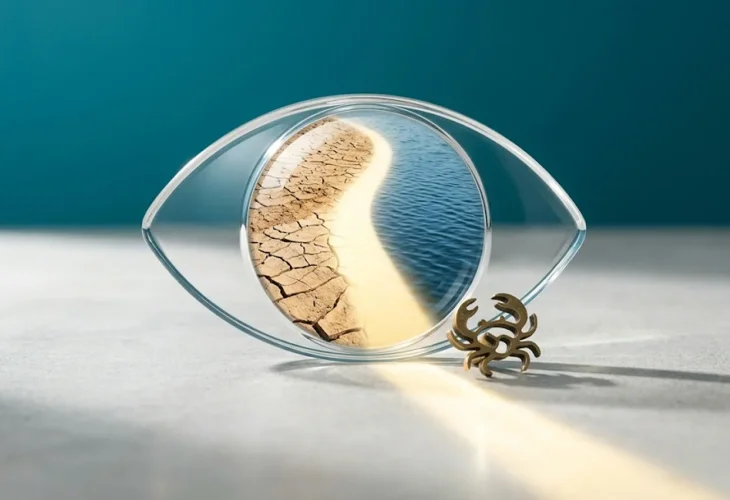
The zodiac sign associated with the month of Tammuz is Cancer, represented by the crab.
The crab is a unique creature that lives between land and water, and the sages of Kabbalah saw in this a reflection of the spiritual nature of the month itself. Tammuz is a time when a person stands between two worlds: the physical world and the spiritual world. The challenge is to choose which direction to follow.
Rabbi Avraham Abulafia points out another fascinating characteristic of the crab. Unlike many animals that move directly forward, the crab often moves sideways or at an angle. This, too, serves as a spiritual lesson:
During Tammuz, a person can easily lose direction if he is not careful to remain focused on his goals and values.
The Power of Sight
Sefer Yetzirah teaches: "He made the letter Chet king over sight... and formed with it Cancer in the world, Tammuz in the year, and the right hand in the soul."
The letter Chet is associated with life because it begins the word chayim, life. Yet it also begins the word chet, sin. The kabbalists saw deep significance in this duality.
Rabbi Tzadok HaKohen of Lublin explains that sin is not always the opposite of life. Often, it is the misuse of the very powers that were given to sustain and elevate life. For this reason, Tammuz is considered a month filled with powerful spiritual energy. The challenge is not whether a person has strength, but how that strength is directed.
The sense associated with Tammuz is sight. On a practical level, this makes sense. Tammuz falls during the height of summer, when the days are long and sunlight is abundant. Yet the kabbalists teach that precisely because there is so much light, there is also greater potential for confusion.
Seeing Clearly
Rabbi Moshe Cordovero, known as the Ramak, writes that the eye is one of the primary gateways through which impressions enter the soul. When a person's vision is refined, it becomes a source of wisdom and spiritual growth. When it is misused, it can become a source of distraction, confusion, and unhealthy desire.
Accordingly, the sages connect Tammuz to the need for guarding and refining one's sight. The challenge is not merely what a person sees, but how he interprets what he sees.
This idea is reflected in the central event associated with the month: the sin of the Golden Calf.
The Sin of the Golden Calf
According to Chazal, on the Seventeenth of Tammuz, Moshe descended from Mount Sinai and encountered the Golden Calf. The kabbalists saw a deep connection between this event and the spiritual essence of the month.
The Jewish people wanted something tangible. They demanded, "Make us a god who will go before us." Instead of relating to Hashem through faith and spiritual awareness, they sought something they could physically see and touch.
The holy Ari explains that the root of the sin was a descent from faith to sensory perception. Rather than looking beyond the physical world, the people attempted to reduce the Divine to a visible form.
This was, in essence, a failure of vision.
Light and Humility
From an astrological perspective, Tammuz falls during the strongest period of the sun's influence. The sun reaches its peak strength, symbolizing a tremendous outpouring of energy and light.
In the Zohar, the sun often represents the sefirah of Tiferet, beauty and harmony. Yet intense light carries its own danger. Just as physical sunlight can blind a person who stares directly into it, spiritual abundance can sometimes lead to pride and overconfidence.
For this reason, the kabbalists teach that one of the central tasks of Tammuz is learning how to receive blessing and illumination without losing humility.
The Days of Bein HaMetzarim
The Seventeenth of Tammuz also marks the beginning of Bein HaMetzarim, the Three Weeks leading up to Tisha B'Av.
The Ari teaches that during this period, certain lights of kindness become less revealed while forces of judgment become more pronounced. Because of this, Jewish tradition developed customs of increased caution and spiritual awareness during these weeks.
People become more careful in their actions, increase their prayers, and focus on refining their character traits. The goal is not fear, but heightened awareness and spiritual growth.
Reuven and the Gift of Vision
The tribe associated with Tammuz is Reuven.
Reuven's very name is connected to sight. When he was born, Leah declared: "For Hashem has seen my affliction." The kabbalists note that the name Reuven can be understood as "See, a son," linking it to the concepts of vision and understanding.
Yet it was specifically Reuven who stumbled in the episode involving his father's bed. Chazal saw this as another example of a recurring theme: great spiritual strengths carry great responsibility. The greater a person's gifts, the greater the need to direct them properly.
Choosing Light
The great Hasidic masters viewed Tammuz as a month dedicated to repairing inner vision. Rabbi Tzadok HaKohen explains that true sight is the ability to look beyond external appearances and perceive a deeper reality.
This helps explain why the very month associated with the sin of the Golden Calf and the beginning of destruction also contains the power of healing and repair. The challenge of Tammuz is not simply to avoid failure, but to transform the way we see.
Within this month we find both life and sin, light and darkness, destruction and renewal. The same spiritual energies can elevate a person or pull him downward.
Ultimately, the choice belongs to us. Tammuz reminds us that a person's future is shaped not only by what he sees, but by how he chooses to see it.

