

World News
U.S.-Iran Talks Open in Switzerland; Report Says First Session Will Focus on Israel-Hezbollah Fighting
American and Iranian delegations have opened talks in Switzerland aimed at implementing the memorandum of understanding signed earlier this week. The discussions will begin with an emergency session focused on the escalation between Israel and Hezbollah.
- Yuval Aviv
- | Updated
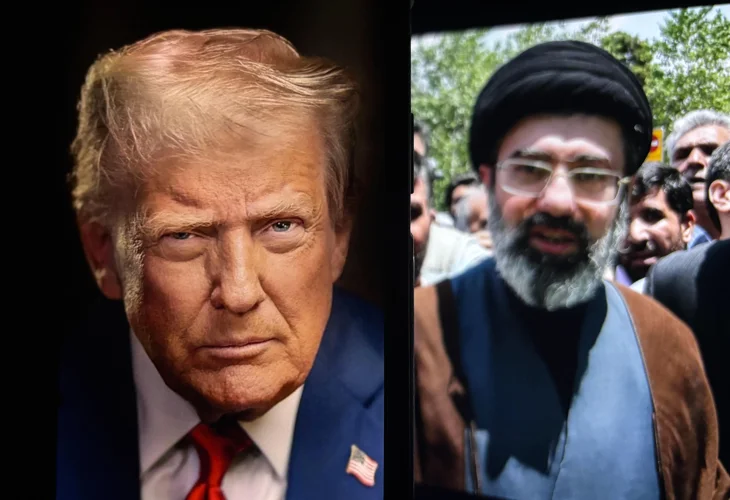 (Credit: shutterstock)
Official delegations from the U.S. and Iran opened a new round of talks today (Sunday) in Switzerland, aimed at advancing the implementation of the memorandum of understanding signed by the sides last Wednesday.
Leading the Iranian delegation are Iran’s foreign minister, Abbas Araghchi, and the official in charge of the negotiations, Mohammad Bagher Ghalibaf, who arrived in Switzerland ahead of the opening of the talks. On the American side, the discussions are being led by U.S. Vice President J.D. Vance, alongside President Trump’s envoys, Steve Witkoff and Jared Kushner.
Pakistan has also joined the diplomatic effort, playing a central mediating role between the sides. Pakistan’s Foreign Ministry announced that Prime Minister Shehbaz Sharif left for Switzerland together with Army Chief General Asim Munir, with the goal of holding meetings with the American and Iranian delegations. The official statement said that "Pakistan will continue to support the implementation of the memorandum of understanding."
Ahead of the opening of the talks in Switzerland, Vance addressed the goals of the meeting and explained that it is intended to advance progress both on the issue of Iran’s nuclear program and on the ceasefire in Lebanon.
Under the memorandum of understanding signed by the sides, a 60-day ceasefire was agreed upon, while President Donald Trump clarified that during this period no transit fees would be imposed in the Strait of Hormuz, and that the continued validity of the decision would be reviewed based on progress in the contacts.
As previously reported, last night Iran’s Revolutionary Guards announced the closure of the strategic shipping route, claiming it was a response to "Israeli crimes" in Lebanon and to violations of ceasefire commitments by the U.S. U.S. Central Command rejected the claims and said that tracking data in its possession points to the regular movement of dozens of commercial ships through the strait, transporting millions of barrels of oil to markets around the world.
Also in the background is the ongoing escalation in southern Lebanon. A diplomat involved in the talks told CBS that the first discussion will be devoted to the continuing confrontation between Israel and Hezbollah and will be held in an emergency format. According to Iran, the Israeli strikes were what led the Revolutionary Guards to take their step in the strait. By contrast, in Israel officials stress that the military activity is being carried out in response to repeated violations by Hezbollah.
U.S. Ambassador to Israel Mike Huckabee addressed the developments and posted a sharply worded message on X against Hezbollah: "The U.S. defines Hezbollah as a terrorist organization. They are a malignant cancer and caused the deaths of hundreds of Americans. They are the common enemy of Lebanon and Israel. They occupy civilian homes in Lebanon to store weapons and fire drones and rockets at civilian targets in Israel. Evil."

