

Health and Nutrition
Rice Cakes and Weight Loss: Are They Really a Healthy Choice?
Rice cakes seem like the perfect diet snack, but are they? Learn how they compare to bread, which varieties are healthiest, and why toppings matter more than you think.
- Yitzchak Eitan
- | Updated
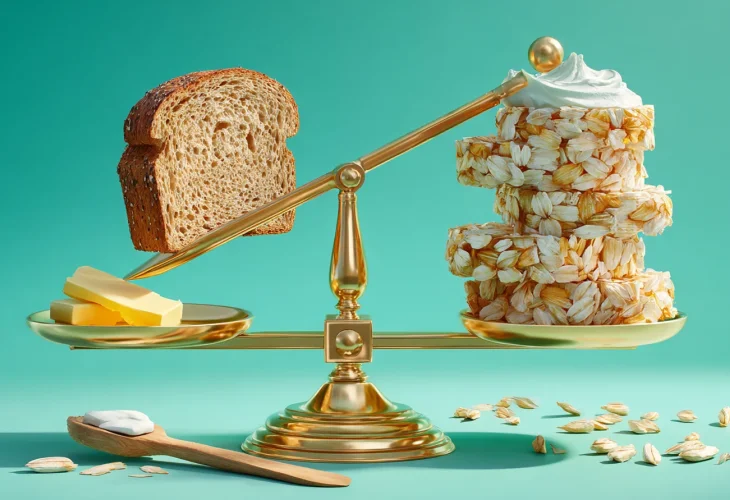
Many people assume that rice cakes are one of the best foods for weight loss. After all, each rice cake contains very few calories. But according to dietitian Dr. Maya Rozman, looking only at the calories per piece can be misleading.
Speaking on her 103FM radio program, Dr. Rozman explained that a food's calorie content should be evaluated per 100 grams, not per serving.
"If one piece of Bamba contains only three calories, does that make Bamba a diet food? Or if one almond has just eight calories, does that mean almonds are ideal for weight loss?" she asked. "What matters is the number of calories per 100 grams."
Why Rice Cakes Can Be Misleading
According to Dr. Rozman, rice cakes contain about 360 calories per 100 grams, while bread averages around 180 calories per 100 grams.
"So why do rice cakes seem so low in calories?" she explained. "Because they're mostly air. Each one weighs very little, so it contains few calories. But air doesn't keep you full."
In other words, while a single rice cake is low in calories, it may not be as satisfying as a slice of bread.
Are Rice Cakes Healthy?
Despite this, Dr. Rozman says rice cakes have some nutritional advantages.
Most varieties contain only one or two simple ingredients, such as whole-grain brown rice, corn, buckwheat, chickpeas, lentils, or a small amount of salt.
Compared with many types of bread that contain preservatives and other additives, rice cakes often have a shorter and simpler ingredient list.
Which Rice Cakes Are Best?
If you're choosing between different types of rice cakes, Dr. Rozman recommends looking for those made with legumes, such as chickpeas or lentils.
Rice cakes made from whole grains like brown rice, buckwheat, or corn are all fairly similar nutritionally. They provide dietary fiber, B vitamins, iron, magnesium, have a relatively low glycemic index, and are naturally gluten-free.
However, varieties that include legumes contain more high-quality protein, making them an even better choice.
Don't Forget the Toppings
Dr. Rozman says the biggest mistake many people make isn't the rice cakes themselves—it's what they put on top.
When making a sandwich, most people spread one serving of cheese, avocado, or another topping between two slices of bread.
With rice cakes, however, each one needs its own topping.
If you replace two slices of bread with four rice cakes because they contain a similar number of calories, you may also end up using four servings of spread instead of one or two.
For example, four tablespoons of 5% white cheese equal roughly half a container and add about 100 calories that many people forget to count.
The same applies to avocado, mayonnaise, butter, jam, and other spreads, which can quickly add hundreds of extra calories.
Dr. Rozman's conclusion is simple: rice cakes themselves can certainly fit into a healthy diet, but whether the meal supports your weight-loss goals depends just as much on what you put on top as on the rice cakes themselves.

