

Facts You Didn't Know
The Surprising New Weapon Against Mosquitoes Isn't a Pesticide
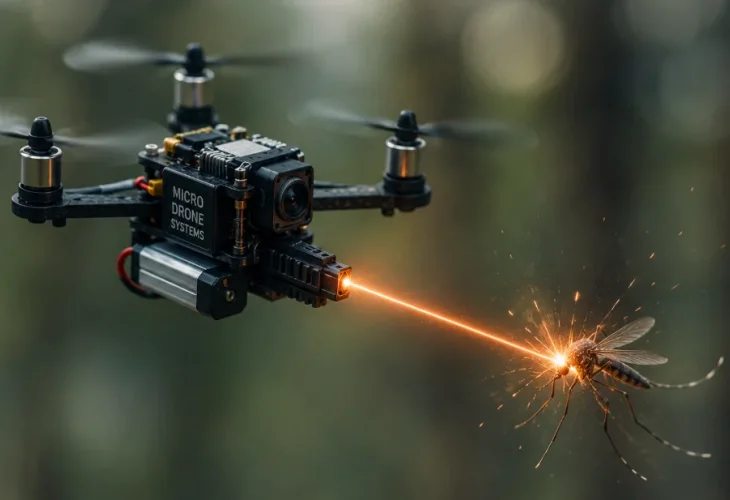
An American startup is developing AI-powered drones that could identify and eliminate mosquitoes without pesticides. Here's how the technology works:
- Shira Dabush
- | Updated
Here's a polished version in the same style you've been using for Hidabroot: smooth American English, beginner-friendly, balanced paragraphs, and faithful to the original while improving flow and readability.
Cities around the world have spent decades battling massive mosquito populations, many of which carry dangerous diseases such as malaria, dengue fever, Zika virus, and West Nile virus. Today, mosquito control relies mainly on chemical pesticides, traps, and efforts to eliminate breeding grounds, but these methods can be expensive and often come with environmental drawbacks.
Now, an American startup called Tornyol, backed by the investment fund Y Combinator, believes it has found a different solution: replacing pesticides with swarms of tiny autonomous drones that can hunt mosquitoes in midair.
The company recently released a video showing what it describes as its first successful aerial interception. In the demonstration, a miniature drone chases a moth inside a controlled testing environment before striking it and knocking it out of the air.
A New Approach to Mosquito Control
Although the test involved a moth rather than a mosquito and was conducted under laboratory conditions, the company sees it as an important proof of concept.
Its long-term vision is to develop autonomous drones capable of identifying and eliminating disease-carrying mosquitoes in real-world environments.
Each drone is expected to weigh only about 40 grams and be equipped with cameras, sensors, miniature microphones, and artificial intelligence software that can detect and track flying insects in real time.
Identifying Mosquitoes by Their Wingbeats
One of the system's most innovative features is its acoustic identification technology.
The drones emit ultrasonic sound waves and analyze the returning echoes using highly sensitive microphones. Because mosquitoes produce a unique wingbeat frequency, enhanced by the Doppler effect as they fly, the AI is designed to distinguish them from other insects.
If successful, this technology could allow the drones to target mosquitoes while minimizing harm to beneficial insects such as bees and butterflies.
According to the company, a swarm of as few as ten drones could monitor an area of approximately one square kilometer, continuously scanning for mosquitoes and eliminating them without the use of chemical pesticides.
Promising Potential, but Significant Challenges Remain
If the technology proves successful outside the laboratory, it could dramatically reduce the cost of mosquito control.
Tornyol estimates that its system could eventually be up to 100 times less expensive than many of today's conventional mosquito-control methods.
Even so, experts caution that considerable hurdles remain before the technology can be deployed on a large scale. The drones will need to demonstrate that they can operate reliably in changing weather conditions, distinguish mosquitoes from countless other flying insects, manage large mosquito populations, and avoid harming species that play an important role in the ecosystem.
While the concept is still in its early stages, it offers a glimpse of a future in which artificial intelligence and autonomous drones could provide a safer, more environmentally friendly way to combat some of the world's most dangerous disease-carrying insects.

