

Israel News
Israel Tests New Lebanon Withdrawal Model as Army Replaces IDF in Pilot Zones
The phased plan gives Beirut responsibility for removing Hezbollah while Israel retains leverage over any broader withdrawal
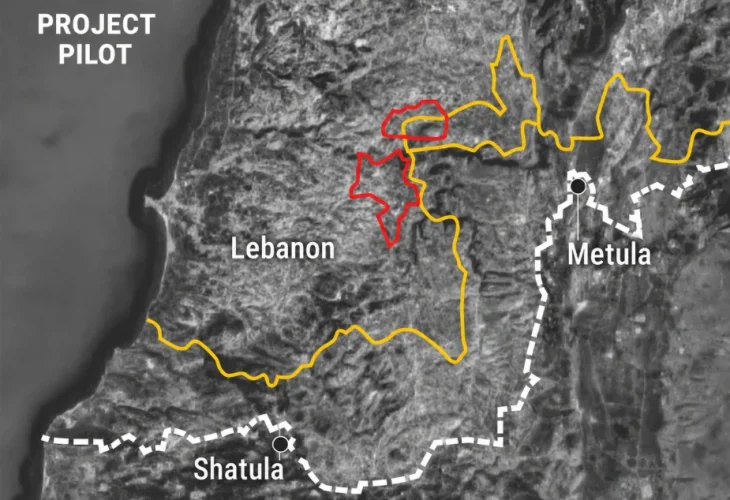
The Lebanese army began operating Monday in three southern Lebanese villages under a new US-backed pilot arrangement intended to transfer security responsibility from the IDF to the Lebanese state. The project began in Froun, Srifa and Zawtar al-Gharbiya, according to the US State Department.
The deployment is the first practical test of the framework agreed upon by Israel and Lebanon last month. It is designed to determine whether the Lebanese army can establish effective control in limited areas, remove Hezbollah’s armed presence and prevent them from returning after Israeli forces redeploy.
Unlike earlier agreements, Israel is not withdrawing from southern Lebanon according to a single fixed timetable. The sides are beginning with limited pilot areas. If the Lebanese army successfully assumes responsibility and the zones are cleared of Hezbollah weapons and infrastructure, the model can be expanded to additional locations. Israel also continues to hold the wider security zone it established inside Lebanon since the war began.
Israeli Ambassador to the United States Yechiel Leiter described the pilot zones as a test that will determine whether Israel moves further. “If Hezbollah is going to stay there, we haven’t accomplished anything, and that’s why they’re called pilot zones,” Leiter said. “If it works, then we continue the withdrawal. If it doesn’t work, then we stay where we are.”
Verification remains one of the arrangement’s main unresolved issues. Israel rejected proposals under which Lebanon would determine on its own whether an area had been cleared. Israel and the United States also opposed giving UNIFIL the central monitoring role it held under previous agreements. Italian troops were proposed during last week’s US-mediated talks in Rome as possible monitors, but no final verification mechanism has been publicly confirmed.
The Lebanese army’s practical challenge goes far beyond establishing checkpoints. To meet Israel’s security demands, it may have to search homes, farms and underground sites, confiscate weapons and prevent Hezbollah members from rebuilding positions in predominantly Shiite areas.
Hezbollah has rejected the broader framework and the demand that it surrender its weapons. The Lebanese government, however, says the state must hold exclusive security authority and argues that army deployment offers the most effective path toward ending Israel’s military presence.
The model is intended to avoid the failures that followed UN Security Council Resolution 1701 after the 2006 Second Lebanon War. Under that arrangement, the Lebanese army and UNIFIL deployed south of the Litani River, but Hezbollah later rebuilt extensive weapons stockpiles, tunnels and positions near the Israeli border.
The November 2024 ceasefire also relied heavily on Lebanese enforcement and international monitoring. Israel later said Hezbollah repeatedly violated the agreement and continued acting against suspected terrorist infrastructure.
The new framework attempts to address that weakness by linking each Israeli redeployment to results in a specific area. Israel retains territory while the first zones are tested and can refuse to expand the process if it concludes that Hezbollah remains active.
The risk is that the Lebanese army could establish a visible presence without conducting the searches required to uncover Hezbollah’s concealed capabilities. Israel could also face American and international pressure to continue withdrawing if the parties disagree over whether a pilot has succeeded.
The agreement is therefore operationally underway but remains unproven. Its success will depend on whether Hezbollah’s weapons and infrastructure are removed, whether Lebanese troops remain in control and whether Israel agrees that the results justify opening additional pilot zones.

