

World News
Mamdani Cannot Arrest Netanyahu, but He Can Convict Him in the Public Mind
New York cannot arrest Netanyahu, but Mamdani can still persuade Americans to see him, and eventually others tied to the war, as criminals
- Brian Racer
- | Updated
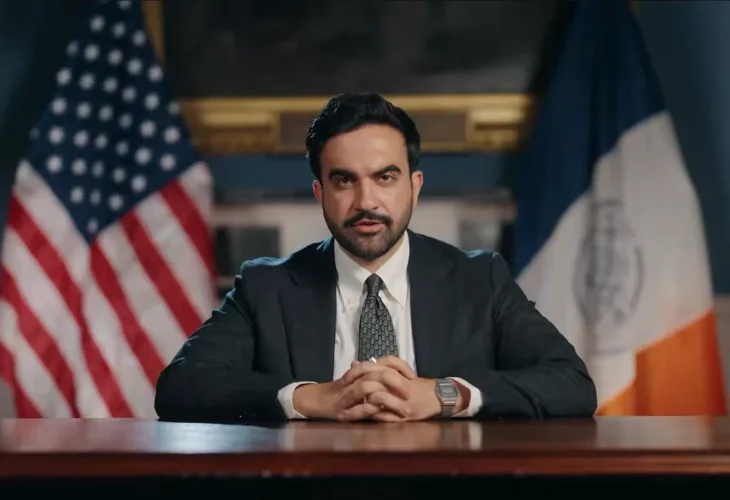
New York City Mayor Zohran Mamdani released a two-minute video Tuesday night declaring Prime Minister Benjamin Netanyahu a “war criminal,” accusing him of genocide and saying he is not welcome in New York.
In the video, Mamdani also admitted that New York has no independent legal authority to enforce the International Criminal Court’s warrant, despite repeatedly promising to pursue Netanyahu’s arrest if he entered the city.
That should have ended the matter. Instead, Mamdani turned the collapse of his legal proposal into a national political campaign, raising a more important question: Why continue promoting Netanyahu’s arrest after conceding that the NYPD has no authority to carry it out?
Mamdani does not need Netanyahu to actually be arrested for the campaign to work. He only needs Americans to begin treating him as though he has already been convicted. Not as a foreign leader facing disputed accusations, but as a criminal who should not be allowed to enter the country freely.
Mamdani devoted only a small portion of his video to the city’s lack of authority. Most of it resembled a prosecutor’s closing argument. He blamed Netanyahu for Palestinian deaths, amputations, starvation, attacks on hospitals and the killing of journalists and aid workers.
“Benjamin Netanyahu is a war criminal, the architect of a horrific genocide against the Palestinian people,” Mamdani said.
But the ICC has not convicted Netanyahu. It issued an arrest warrant in November 2024 over alleged war crimes and crimes against humanity. The warrant is not a genocide ruling, and Israel disputes both the accusations and the court’s jurisdiction.
Mamdani said that anyone with “their eyes,” “their heart” and “their conscience” should understand that Netanyahu belongs before a court of law. In other words, disagreeing with him is framed not as a legitimate debate over evidence, jurisdiction or the difference between an arrest warrant and a conviction, but as a failure of basic morality.
Mamdani then widened the circle of responsibility. “The list goes on and on, all as we as Americans pay for the bombs that do the killing,” he said, later warning that American silence could become “another weapon.”
Mamdani’s argument pushes responsibility beyond Netanyahu to the governments, organizations and individuals that support Israel. His legislation did not criminalize every donor, but it did apply the language of complicity to New York groups accused of funding Israeli policies. Once the war itself is treated as a criminal enterprise, it is not a large step for activists to move from Netanyahu to the commanders and soldiers they say carried it out.
Mamdani has not called for soldiers’ families, Jews or ordinary Israel supporters to be arrested. But once this way of thinking takes hold, formal charges are not needed for suspicion to spread. Soldiers can be treated as war criminals, groups that support them as “enablers,” and entire communities as morally complicit.
Mamdani would likely say he is simply applying the same legal standard to everyone, and he has previously called the October 7 massacre a war crime. But in this video, he mentioned neither Hamas terrorists nor the hostages nor the ICC cases against Hamas leaders, making his appeal to universal justice feel focused entirely on criminalizing Israel.
Netanyahu will not be arrested by New York City. President Donald Trump has said he will not be arrested in the United States, which is not an ICC member. But Mamdani’s campaign should not be judged only by whether police ever place Netanyahu in handcuffs.
By presenting disputed allegations as settled crimes and connecting Americans to those crimes, Mamdani is making criminal prosecution an increasingly normal way to discuss Israel. He cannot convict Netanyahu in a courtroom, but he can help convict him in the public mind. Once that verdict is accepted, others will decide how far down the chain the accusation should travel.

