

World News
74 Years Later, Wreckage of Plane Lost in the Atlantic With Dozens on Board Is Found
The remains of a Pan American plane that crashed into the Atlantic in 1952 have been located after decades. In the wake of the disaster, major safety reforms were introduced across the aviation world.
- Yuval Aviv
- | Updated
 (Photo: Air/Sea Heritage Foundation)
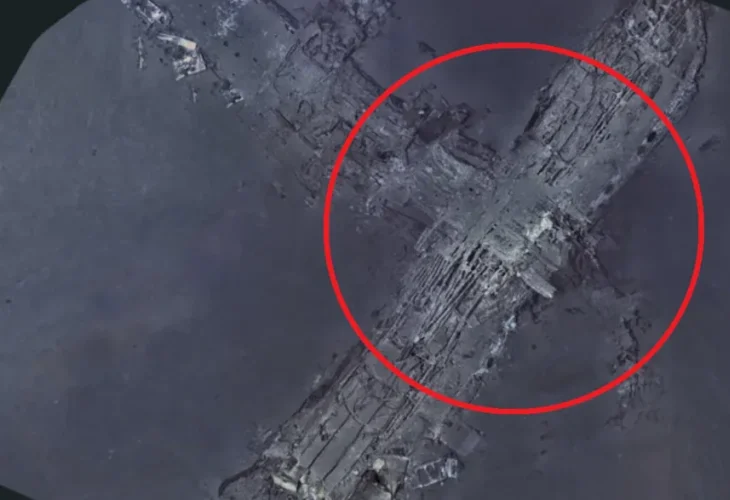
More than seven decades ago, Pan American Airways’ Clipper Endeavor passenger plane vanished into the depths of the Atlantic Ocean after crashing shortly after takeoff. Now, 74 years after the disaster that killed 52 of its passengers and crew members, its wreckage has been found at a depth of about 610 meters — a discovery that brings a measure of closure for researchers and the families of those who died, while bringing renewed attention to one of the most tragic aviation events of the early 1950s.
The plane crashed in 1952, shortly after taking off from Puerto Rico on its way to the airport now known as JFK in New York. The Douglas DC-4, roughly similar in size to a modern Boeing 737, was carrying 64 passengers and five crew members on that flight. Soon after takeoff, it lost both right-side engines, and about 10 minutes later the pilots were forced to make an emergency landing on the water.
Despite the brutal landing, everyone on board survived the initial moments of the crash. But very quickly, the incident turned into a major disaster. In those years, pre-takeoff safety briefings were still not standard practice, and chaos and panic broke out inside the cabin.
Some passengers struggled to find life belts, others hesitated to enter the water, while crew members tried at the same time to release the life rafts. In just three minutes, the plane sank beneath the surface of the sea, and 52 people drowned. U.S. Coast Guard crews and rescue forces managed to save only five crew members and 12 passengers.
The search for the plane’s remains began in 2019, when Russ Matthews, president and co-founder of the Air/Sea Heritage Foundation, came across a brief report about a luggage tag from the flight that had washed ashore in Florida. The find sparked his curiosity, and he began reviewing historical reports and narrowing the search to the waters off the coast of San Juan.
During the search, the team used an autonomous underwater vehicle from Deep Sea Vision, considered one of the most advanced in the world. The craft can scan the seafloor at depths of up to about 6,100 meters and remain underwater for four consecutive days. In the end, the team succeeded in locating the remains of the Clipper Endeavor resting on the ocean floor, split into two parts.
At a later stage, an additional photographic survey was conducted, during which Pan American’s winged logo and the plane’s name were clearly documented, still legible even after decades in the deep sea. According to the search team, those details were what ultimately made it possible to confirm beyond doubt that this was the lost aircraft.
The disaster left a deep mark on the aviation world. Following the crash, the body that preceded the U.S. Federal Aviation Administration, the Civil Aeronautics Board, determined that safety briefings and emergency demonstrations must be required before every flight, including instructions for passengers on how to inflate life belts. According to the statement, those changes are believed to have saved thousands of lives since then.

