

Parshat Ekev
Parashat Eikev: How One Mitzvah Can Change the World
Learn why every commandment matters, how one person's actions can influence the entire world, and why overcoming temptation creates a powerful moment for prayer
- Rabbi Moshe Sheinfeld
- | Updated
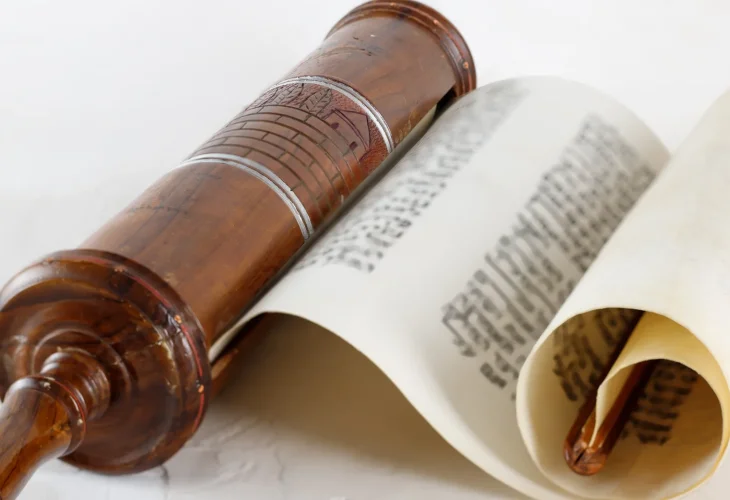 (Photo: Shutterstock)
In this week's Torah portion, Moses delivers a powerful and inspiring address to the Jewish people. Among his words of encouragement, he says: "Every commandment that I command you today you shall carefully observe, so that you may live, increase in number, and come to possess the land that the Lord swore to your forefathers." (Deuteronomy 8:1)
If we examine the wording carefully, we notice something unusual. The verse begins in the singular but ends in the plural.
It opens with, "Every commandment that I command you today," addressing each individual. It then continues, "You shall observe... so that you may live, multiply, and inherit the land," speaking to the nation as a whole.
Why does the Torah shift from singular to plural?
The Power of One Person
The Kli Yakar explains that the answer lies in the verse from Proverbs: "A righteous person is the foundation of the world." (Proverbs 10:25)
The actions of a single individual have the power to influence the entire world.
Our Sages teach: "The world is judged according to its majority, and every individual is judged according to his majority. If a person performs one mitzvah, fortunate is he, for he has tipped both himself and the entire world to the side of merit. If he commits one sin, woe to him, for he has tipped both himself and the entire world to the side of guilt." (Kiddushin 40b)
The Rambam codifies this principle in Hilchot Teshuvah (3:4).
This is why the verse begins in the singular. God speaks directly to every individual because every person's actions matter. One mitzvah performed by one person can affect countless others, and Heaven considers that single deed as though many had participated in it.
Every Action Is a Judgment
Later in the Torah portion we read: "And it shall come to pass, because you listen to these ordinances..."
The Kli Yakar asks why the Torah specifically mentions ordinances (mishpatim) rather than repeating the three familiar categories of commandments: testimonies, statutes, and ordinances.
He explains that the Torah wishes to teach us that every action a person performs is itself a form of judgment.
Our choices determine not only our own future but, in a profound sense, the destiny of the entire world. Each of us carries an extraordinary responsibility.
Why Does the Torah Say "Every Commandment"?
The verse also contains another subtle lesson.
It says: "Every commandment"in the singular. Why not say "all the commandments" in the plural?
The Ohr HaChaim explains that people sometimes create their own hierarchy of mitzvot. They decide that certain commandments are more important while others are less significant. As a result, they justify neglecting those they consider "minor," believing that observing the "major" mitzvot is sufficient.
This is a serious mistake. The Mishnah teaches: "Be as careful with a seemingly minor mitzvah as with a major one, for you do not know the reward given for the commandments." (Pirkei Avot 2:1)
We have no authority to rank God's commandments according to our own preferences. Certainly, Jewish law recognizes priorities in situations of conflict. For example, saving a life overrides the observance of Shabbat. The Torah itself establishes these principles.
But in general, every mitzvah is precious in the eyes of God and deserves our full respect and commitment. For this reason the Torah says "every commandment." Each individual mitzvah is worthy of being observed in its entirety.
The Torah Is One Complete Whole
The Torah continues: "Every commandment that I command you today you shall observe, so that you may live, increase in number, and inherit the land..."
The commentators note that the human body contains 248 limbs and 365 sinews, corresponding to the 248 positive commandments and the 365 prohibitions.
Imagine someone suffering severe pain in just one part of the body. Would anyone respond by saying, "Why are you complaining? Only one part hurts. The rest of your body is perfectly healthy."
Of course not. When one limb suffers, the entire body suffers.
The same is true of the mitzvot.
Just as 247 healthy limbs cannot compensate for one injured limb, observing many commandments should never cause us to ignore the importance of even one mitzvah that remains neglected.
The mitzvot form one unified whole, just as the human body does. This is why the Torah speaks of "every commandment" as though it were a single entity.
The Blessings of Complete Commitment
When a person strives to observe all of God's commandments, the blessings described in this verse follow naturally.
"So that you may live." This refers to life itself.
"And increase in number." This alludes to children and future generations.
"And inherit the land." This points to prosperity and livelihood.
These are among the greatest blessings people seek in life: life, family, and sustenance. The Torah teaches that the path toward these blessings begins with wholehearted dedication to every commandment.
A Powerful Time for Prayer
Later in the Torah portion we find the blessing: "There shall not be among you a barren man or barren woman..." (Deuteronomy 7:14)
The Talmud explains that this also means: "May your prayers never be barren before God." (Bechorot 44b)
Meaning, may our prayers be accepted and bear fruit. The Maharsha derives from this a remarkable insight about having our prayers answered.
King David writes: "Bless the Lord, His angels, mighty in strength, who do His word, listening to the voice of His word." (Psalms 103:20)
At first glance, the order seems backwards. Shouldn't people first hear God's word and only afterward carry it out?
The Radak explains that the verse reflects the Jewish people's declaration at Mount Sinai: "We will do and we will hear."
The Maharsha, however, offers a different interpretation. He explains that the verse refers to righteous people who conquer their evil inclination. They are called "mighty in strength" because true strength lies in mastering oneself.
After they overcome temptation and faithfully fulfill God's will, the verse continues: "Listening to the voice of His word."
According to the Maharsha, this does not refer to the righteous listening to God. Rather, it means that God listens to them. God hears the prayers of those who overcome their evil inclination and performs miracles on their behalf, protecting them from harm.
What an extraordinary teaching. Every time a person overcomes a spiritual challenge and chooses to do what is right despite temptation, he creates a special moment of divine favor, which is a particularly auspicious time to pray.

