

Magazine
When the Clothes She Loved No Longer Fit Who She Was Becoming
Fashion designer Chana Rachel Weinberg lost friends and clashed with her department head when she chose modesty. Instead of leaving fashion, she built Chanabana.
- Shira Dabush
- | Updated
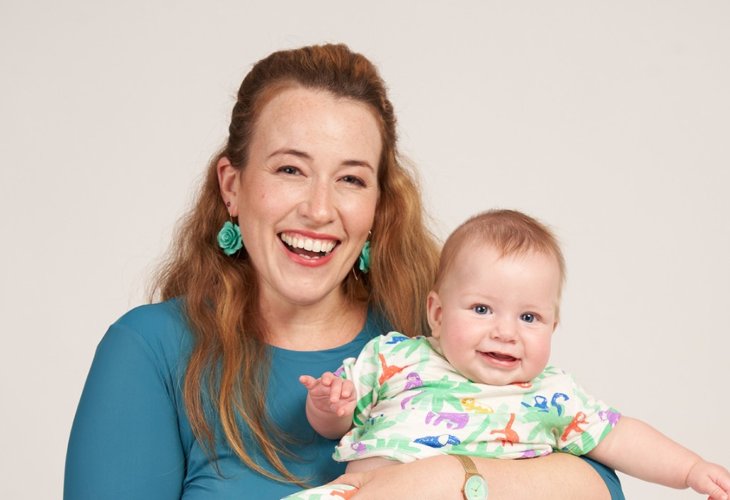 Chana Rachel Weinberg, founder of Chanabana
During her final year at Shenkar, just as she was supposed to show the world who she was as a designer, Chana Rachel Gaffin faced a question that threatened to unravel everything she had built: What happens when the clothes you love creating no longer reflect the woman you are becoming?
Until then, she had been one of the more daring students in her class. Fashion was her life. She loved color, experimentation, and clothes that made a statement, and she designed and wore revealing pieces without fear of standing out. Then, almost without planning it, something inside her began to shift. Her faith was growing stronger, and with it came an increasing desire for modesty. Looking into her closet, she felt strangely disconnected from clothes that had once seemed an integral part of her identity.
“Suddenly, I realized that I could no longer wear many of the beautiful, colorful sports clothes I had collected over the years. I felt absolutely devastated”.
Perhaps the word “devastated” tells the story best. Chana had not stopped loving fashion, and the dream remained exactly where it had always been. She was the one who had changed. And one question became increasingly impossible to ignore: Would growing closer to Hashem require her to relinquish something that had always been such a defining part of who she was?
The change did more than surprise those around her. It provoked negative reactions and even cost her several friendships. But Chana Rachel had made her choice, and she was not prepared to retreat. She would have to find a new path, even if that path did not yet exist.
The Student Who Changed Before Graduation
Chana Rachel Gaffin, now Weinberg, made aliyah from Pennsylvania when she was three years old. Her love of clothing began long before she realized it would become her profession. At 15, after struggling to find clothes she loved that also fit properly, she bought two sewing machines and decided to make them herself. She wandered through Jaffa and King George Street searching for fabrics, stayed awake late into the night designing, and recruited her friends as models for makeshift fashion shows.
The hobby became a calling, and she was accepted into Shenkar. But as she approached the end of her degree, she began a profound spiritual transformation. In her earlier years she had been among the students designing particularly daring clothes. Suddenly, even a low neckline began to trouble her.
“I don’t think it was a conscious desire to make a Kiddush Hashem”, she explains. “It was much more of an internal journey. I gradually became more modest and wanted to reconnect with the way I had grown up, when modesty had been a natural part of my life. It was very intuitive and very internal. I developed a desire to feel more covered, to turn inward, and to connect with something deeper”.
She had dressed modestly as a child too, but this time there was one crucial difference.
“As a child, that was simply the way I was raised. This time, it came from my own desire. I chose it for myself, and that made it feel new”.
Not everyone understood.
“The reactions at Shenkar were pretty strong because I had always been one of the more adventurous students. I dressed less modestly and was very ‘out there.’ So when I started changing, it was a shock to people”.
The price went beyond comments.
“I remember going from being one of the more popular students in the class to losing quite a few friends. For many of the students there, who came from very secular backgrounds, what I was doing was completely foreign”.
How did you respond?
“Other than following what felt true to me, I didn’t really know how to respond. It wasn’t an attempt to prove anything to anyone. It was simply where I was going internally, and I needed my outside to reflect that too”.
When students were expected to create a graduation collection that would represent them as designers, the tension between her two worlds could no longer be ignored.
“I chose to write my final project about modesty in fashion. The decision met with opposition from the head of the department, but I insisted. It was important for me to follow my own path, and that is what I did”.
“I’d Be Lying If I Said I Never Felt Like I Was Giving Something Up”
Today it is tempting to focus only on the outcome: a designer who went on to establish Chanabana, a modest activewear brand. But the road there was anything but simple.
As Chana began dressing more modestly, something unexpected happened alongside the struggle. She experienced a profound sense of comfort. At the time she was attending Tanya classes in Tel Aviv, and she discovered a kind of fulfillment she had never known.
“It was like the way chicken soup fills you up when you’re hungry”, she says with a smile. “I discovered a new kind of fulfillment in life, one that didn’t come from fashion, appearance, or the physical world”.
In one of those classes, she was asked to take a large poster board and write the words “Where am I going?” She filled it with everything she longed for: a husband, a home, building a faithful Jewish home in the Land of Israel, happiness, health, and singing. The poster stayed in her room throughout her single years, including the difficult ones, and became an anchor.
Looking back, did modesty demand too great a sacrifice?
“I’d be lying if I said I never felt like I was giving something up”, she admits. “Even today, there is sometimes a little voice in my head that wonders: What would have happened if I had continued designing the way I used to? How successful could I have become?” Sometimes she thinks about a reflective swimwear collection she could have developed under her own brand. “It could have spread like wildfire”, she says.
But then she stops that thought.
“That’s just a voice. I also feel very strongly that what I’m doing today is important, and I know it brings more nachat to Hashem”.
Did she ever consider abandoning fashion altogether? Her answer is unequivocal.
“Fashion has been part of me for so long. When something is embedded so deeply in you for years, you can’t simply decide that you’re no longer that person”.
Of the 60 students who began the program with her, only 13 or 14 completed it, and by her estimate only about five still work in fashion. “And I’m one of them”, she says proudly. Glamour and a degree are not enough to sustain a career in such a demanding field. You have to genuinely love creating.
“Whether I’m 21 and in fashion school, 60, 80, or even 90, I know I will always create. It’s simply what I do”.
One Hundred Women, One Running Skirt
Her brand emerged from a real void in her own life: she could not find activewear that was colorful, attractive, practical, and consistent with her standards of modesty.
What had existed for some time as little more than an idea became reality almost spontaneously.
“One day I was with my father in Beit Shemesh, and when the cashier asked me what I did, I told her very naturally, ‘I’m a fashion designer, and I’m launching my own modest activewear brand. In three months, you’ll go onto Chanabana and you’ll see it there’”.
Three months later, the brand was online.
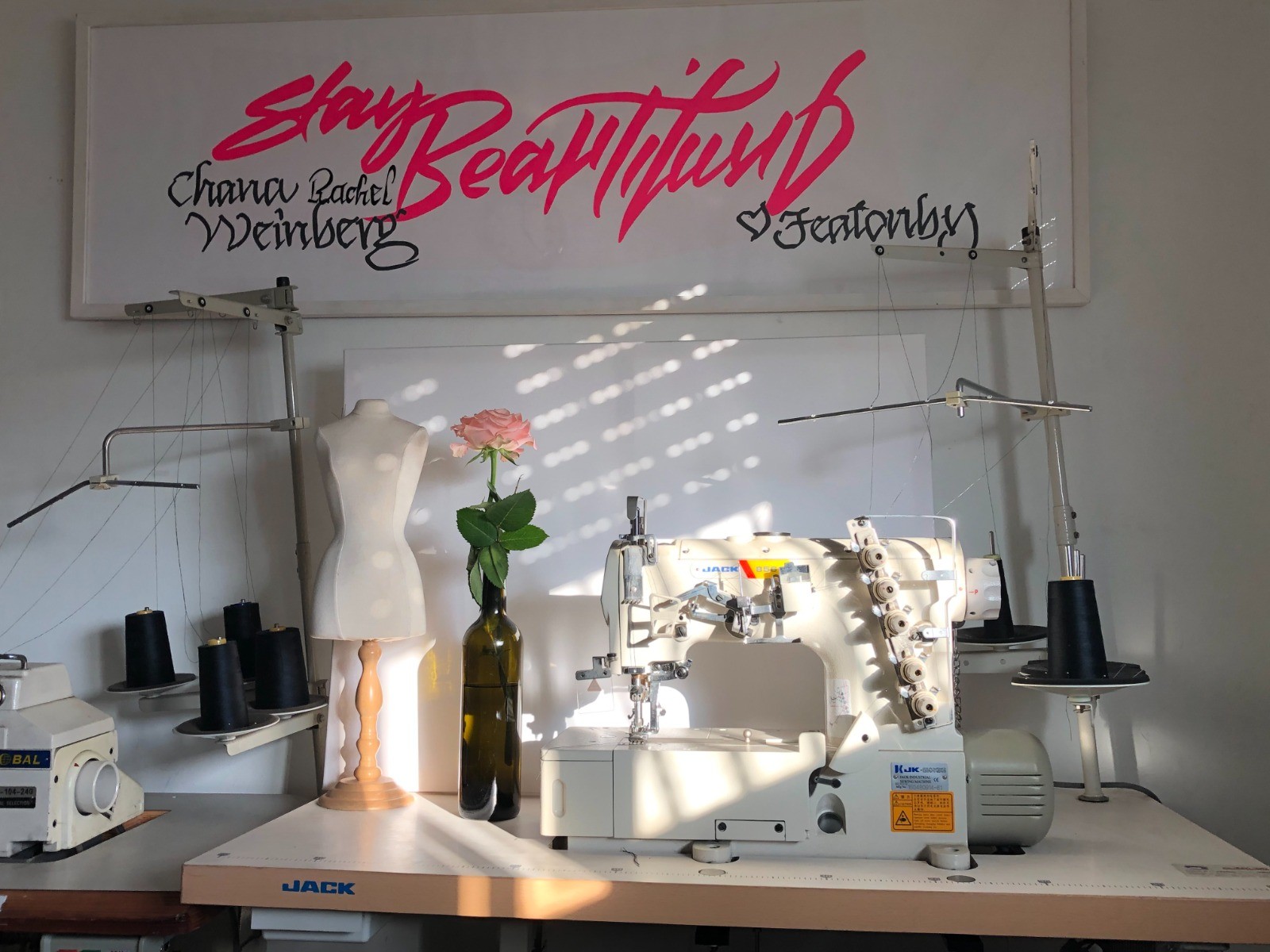 The Chanabana studio
But before designing a single product, Chana walked through Machane Yehuda Market and stopped around 100 women to ask what their ideal running skirt would look like. She listened carefully and used their feedback to shape her designs. Even today, she emphasizes that there is no single model of a “modest woman”.
“Different women observe different standards, so I try to offer options rather than decide for them what is ‘modest enough’”.
That approach led to a broader realization: modesty does not have to stand in opposition to femininity, nor does modest clothing have to be gray, shapeless, or devoid of personality.
Does the fashion world still tell women they must reveal more to feel beautiful and confident?
Chana believes the problem runs deeper. “There is a huge obsession in the fashion world with being extremely thin, almost stick-thin, and I don’t necessarily agree with that definition of beauty”. In her view, no single body type or style should define beauty.
“I definitely don’t think you need to reveal your body in order to feel attractive, confident, or fashionable. And today there are infinitely more options than there were when I began my journey. You don’t have to compromise on looking beautiful just because you want to dress modestly”.
Then she offers a sentence that encapsulates her journey.
“To me, modesty is femininity. It’s that simple”.
More Than Sleeve Length: Modesty as a Way of Being
After years of living with modesty, Chana no longer sees it merely as rules about sleeves and coverage. For her it is a broader way of moving through the world, one that can carry meaning even for women who are not religious.
“Modesty doesn’t belong only to religious women”, she says. “It isn’t just about how much of your body you cover. To me, it is also about the way you carry yourself in the world, what you choose to reveal, and what you prefer to keep for yourself”.
In an age when almost every vacation, purchase, or family moment can become content within seconds, she speaks of the value of keeping parts of life private.
“There is something good about being a little more inward. Not constantly feeling the need to say: Look at me. Look at what I have. Look at where I am”.
Perhaps this is the deeper meaning of modesty: not disappearing, but recognizing that our worth does not depend on how visible we are.
Asking for the Holidays Off at Fashion Week
The real test, Chana discovered, is not what you wear. It is how firmly you stay anchored in your values when the opportunity you dreamed of is standing in front of you.
One of the most significant challenges of her career came when she interned with the internationally acclaimed designer Mary Katrantzou during preparations for Fashion Week. It was exactly the kind of opportunity a young designer would be terrified to jeopardize, yet it coincided with the Jewish holiday season, and she had to tell the team in advance of a long list of days she could not work.
“When I wrote down that long list of days I would need off, I was so afraid they would reject me”, she recalls.
They did not. There were moments when she felt judged by team members, but something unexpected happened too. In London, immersed in the international fashion world and far from the religious environment she knew, she found herself drawing even closer to Hashem.
What would she say to a young woman who dreams of studying fashion but whose spiritual life matters just as much?
“Absolutely, it’s possible”, she replies. “Especially today, when the modest fashion world has developed so much, there are many more opportunities for a woman who wants to build a career in fashion while remaining true to her values”.
But she refuses to romanticize the reality. The industry is demanding, unstable, and often financially precarious. “It took me six years just to break even”. She would not advise anyone to enter it simply because fashion looks glamorous.
“Do it only if you truly feel that creating is your greatest passion, something that is in your pulse and one of the things you most want to do in your life”.
And here the circle that began at Shenkar closes. Back then, Chana wondered whether modesty would force her to relinquish part of her identity. Today she understands that her challenge was never to choose one world over the other, but to find a path that would let her remain faithful to her values without surrendering her creativity, her love of fashion, or her professional dreams.

