

Relationships
Jewish Unity Begins with the Soul: A Timeless Lesson from the Tanya
Unity is built by looking beyond appearances, embracing our differences, and recognizing our shared Divine source
- Moran Kors
- | Updated
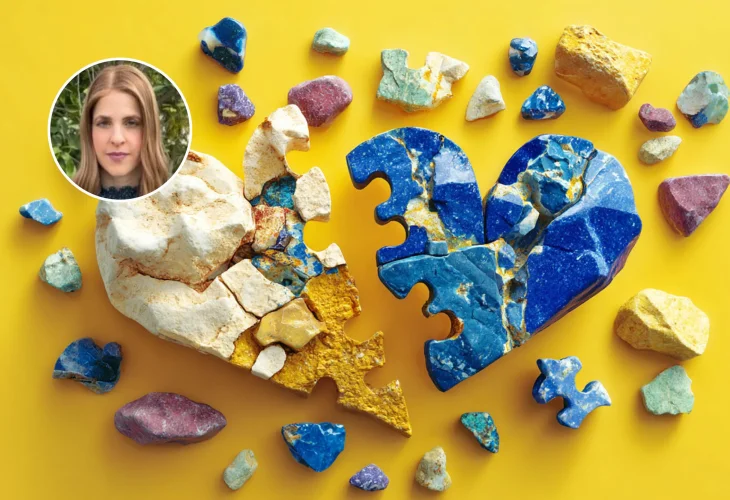
When I am asked what Jewish unity and love for a fellow Jew truly mean, one quote immediately comes to mind: "All Israel are truly brothers because the source of their souls is in the One God; it is only their bodies that are separate."
These are the words of the Alter Rebbe in Chapter 32 of the Tanya, often referred to as the heart of the Tanya.
Looking Beyond the Surface
If we look only at people's bodies, we see individuals who appear different from one another. We see different opinions, personalities, lifestyles, and perspectives. But when we learn to look at the soul, we discover that we all come from the same source. When we meet one another at that level, love for our fellow Jew is no longer a slogan. It becomes a way of life.
I believe we have the ability to look at the world, and especially at other people, in this way. We can lift our eyes above the physical and recognize that every person possesses a Divine soul that longs to choose what is good. When we do, we begin to notice what unites us rather than what separates us.
This is the work of a lifetime, but it is work that bears remarkable fruit.
Seeing the Divine in Others
When we choose to see another person's inner world, we awaken that inner world within them as well. If we make the effort to look at others in this way, we will naturally look at our own children the same way. We will become less angry, more understanding, and far more peaceful.
Love for our fellow Jew does not require us to be identical. Quite the opposite. It invites us to embrace our differences and recognize that someone who is unlike us can broaden our perspective and enrich our lives.
Differences Help Us Grow
Perhaps nowhere is this more evident than in marriage. The Torah says, "I will make for him a helper opposite him." The person who truly helps me is often the one who is different from me. The one who challenges me, thinks differently, and sees the world through another lens is often the one who helps me grow the most. Our differences become opportunities for growth.
If we understand that in marriage the person standing opposite us was sent to complete us, how much more should we adopt that mindset as a society. Rather than fearing diversity, we should recognize it as a source of strength. Instead of placing labels on people, we should genuinely seek to know them, take a sincere interest in them, and discover how our differences can become the very place where we grow and connect more deeply.
Turning Unity Into Action
Ultimately, actions matter more than words. Unity should not remain a slogan or an inspiring idea that disappears into the air. Real change begins when each of us pauses before we think, speak, or act and asks ourselves:
Is what I am about to say what Hashem wants from me? Will these words bring the redemption closer? Will they increase unity?
If the answer is yes, then we move forward. That brief moment of reflection has the power to change lives.
Unity does not mean uniformity. It means bringing together the unique strengths of every individual. From the rich mosaic of our people, we can build a society that is stronger, deeper, and more worthy of a nation whose mission is to be a light unto the nations, as will be fully revealed with the coming of the complete Redemption, may it come speedily in our days.

