

The Ninth of Av (Tisha B'Av)
Lessons for Tisha B'Av: Timeless Wisdom on Hope, Redemption, and Faith
Discover profound insights on mourning with hope, overcoming limitations, strengthening inner resilience, and finding God's unity amid life's greatest challenges
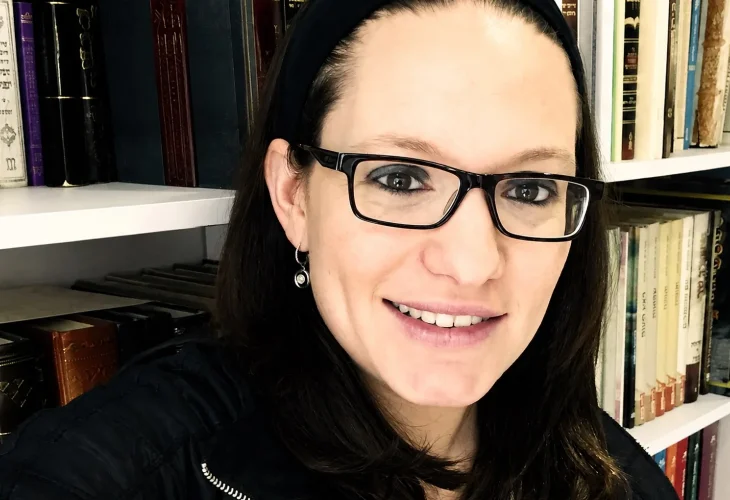
- Sivan Rahav-Meir
- | Updated
Every year, as Tisha B'Av approaches, the teachings of the Netivot Shalom take on renewed relevance. Netivot Shalom is the beloved collection of writings by Rabbi Shalom Noach Berezovsky, the Slonimer Rebbe, whose yahrzeit falls on the 7th of Av. His words remind us that Tisha B'Av is not only about remembering the past but about transforming the present and preparing for the future.
Following are four timeless insights from his teachings and other Jewish thinkers that offer guidance for this season of reflection.
Refusing to Accept a Broken Reality
The Slonimer Rebbe teaches that Jewish mourning is unlike any other.
"We do not mourn something that once existed but is gone, because the Jewish people do not preserve memories of the past unless they are connected to the present and the future. The meaning of mourning is refusing to accept the present reality."
Tisha B'Av is therefore not simply a day of historical remembrance. It is a declaration that we refuse to become comfortable with a world that is spiritually incomplete. We mourn because we know the world is capable of something greater.
He also distinguishes between two very different kinds of tears: "There are two kinds of crying: the tears of despair and brokenness, and the tears of hope. Our tears over the destruction are tears of hope and longing, not for what has passed, but for what will yet be."
These tears are not expressions of defeat. They are expressions of faith that redemption is still possible. The Rebbe extends this idea from the national level to the personal one.
Just as the Jewish people await national redemption, every individual experiences periods of personal exile, moments of darkness, uncertainty, and spiritual distance. Even then, a person must continue believing that change is possible.
Sometimes life becomes so difficult that we begin to believe nothing can ever improve. We accept our circumstances and lose hope of transformation. Rabbi Moshe of Kobrin warned against precisely this mindset: "The worst thing is when a person accepts his situation."
Hope is itself the beginning of redemption.
"I Am Not a Man of Words"
Sometimes a single word tells an entire story.
When God first appeared to Moses and asked him to lead the Exodus, Moses protested: "I am not a man of words... for I am slow of speech and slow of tongue."
Forty years later, after leading the Jewish people through the wilderness, Moses delivers the long farewell address that fills the Book of Deuteronomy. Remarkably, that book begins with the words: "These are the words that Moses spoke to all Israel."
What an extraordinary transformation. The man who once declared, "I am not a man of words," becomes the man whose words have inspired humanity for thousands of years.
Rabbi Berel Wein explains that this teaches a powerful lesson. When a person has a clear mission, a meaningful purpose, and a compelling vision, seemingly impossible obstacles can be overcome. Growth is possible. Weaknesses can become strengths.
Even the name of the book, Devarim ("Words"), carries this message. A person can move from believing, "I am not a man of words," to becoming someone whose words continue to shape generations.
A Burned City Was Burned Again
A striking Midrash imagines Jerusalem speaking to Babylon after the destruction of the Temple:
"You killed a lion that was already dead. You ground flour that was already ground. You burned a city that was already burned. You destroyed a Temple that was already destroyed."
The message is profound. Babylon did not create the spiritual collapse. It merely completed what had already begun. The city had first been weakened from within.
This is perhaps one of the hardest truths to accept. Jerusalem was not destroyed primarily by an external enemy. It first suffered an internal collapse through spiritual decline, division, and moral decay.
Throughout history, Israel's enemies have repeatedly sought to exploit these same internal weaknesses. Whenever faith weakens, identity fades, unity fractures, or society becomes consumed by internal conflict instead of shared purpose, those fractures become vulnerabilities.
The lesson of the Midrash is timeless. External threats become far more dangerous when a society has already lost its inner strength. The real question is not only what our enemies understand. It is whether we understand the importance of strengthening ourselves from within.
Every Hope Carries a Measure of Mount Nebo
No person achieves every dream. There are always ambitions left unrealized, prayers that remain unanswered, and hopes that unfold differently than expected.
Our greatest teacher, Moses, experienced this reality himself. Standing atop Mount Nebo, he looked upon the Promised Land from afar. He had devoted his life to leading the Jewish people there, yet he would never enter it himself.
He prayed. He pleaded. Ultimately, he accepted God's decree.
The Israeli poet Rachel captured this universal human experience in her famous poem Mineged ("From Afar"). Having lost the opportunity to build a family and fulfill many of her dreams because of tuberculosis, she wrote: "In every hope there is the sorrow of Nebo."
Every longing carries something of Moses' experience on Mount Nebo.
The Torah reminds anyone discouraged by unfulfilled dreams that even Moses did not attain everything he desired. Sometimes faith means knowing when to keep striving, and when to let go with trust.
Finding Unity Within Life's Contradictions
The declaration "Hear, O Israel: The Lord is our God, the Lord is One" first appears in this week's Torah portion. Because it is so familiar, we can easily overlook its extraordinary depth.
Rabbi Samson Raphael Hirsch explains that these words bring order to a world filled with contradictions.
He writes that in the midst of a universe overflowing with opposites, heaven and earth, creation and destruction, life and death, joy and sorrow, love and hatred, ascent and decline, freedom and limitation, we proclaim that they all ultimately come from one Divine Source.
God created every apparent contradiction, sustains them all, and directs them toward a single purpose. This perspective also speaks to the contradictions within ourselves: strength and weakness, confidence and fear, spiritual aspirations and earthly struggles.
Reciting the Shema reminds us that beneath the apparent chaos of life lies perfect Divine unity.
The next time we say those familiar words, perhaps we can pause for a moment and remember that they are more than a declaration of faith. They are an invitation to see unity, purpose, and God's guiding hand, even amid life's greatest contradictions.

