

Health and Nutrition
Does Drinking Water With Meals Really Help You Eat Less?
For years, drinking water with meals has been recommended for weight loss. New research from Cornell University offers a surprising perspective.
- Yitzchak Eitan
- | Updated
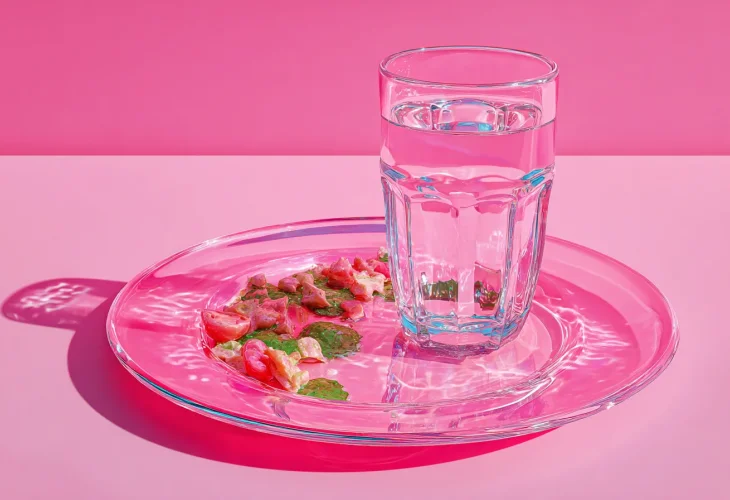
Many people trying to lose weight have heard the same advice: drink a glass of water with your meal to help you feel full and eat less. It sounds sensible, but a new study suggests the relationship between water and appetite may be more complicated than previously thought.
Could Drinking Water During Meals Lead to Eating More?
Researchers at Cornell University analyzed data from two previous experiments involving 86 participants. The findings, published in the journal Appetite, challenged the common belief that drinking water during a meal naturally reduces food intake.
Participants were served cooked meals with unlimited water and were instructed to eat until they felt comfortably full. Surprisingly, the researchers found that for every additional 100 milliliters (about 3.4 ounces) of water consumed during the meal, participants ate roughly 40 more grams of food—equivalent to nearly 50 extra calories.
The effect was especially noticeable among people who frequently alternated between taking bites of food and sipping water.
Why Might This Happen?
The researchers suggest several possible explanations.
Unlike solid food, water leaves the stomach relatively quickly, meaning it may not contribute to a lasting feeling of fullness.
"Water empties from the stomach quickly, so it probably does not keep us full for long," explained Dr. Paige Cunningham, one of the study's authors.
She also noted that drinking water throughout a meal may actually make eating easier and more enjoyable. Water refreshes the mouth, reduces dryness, and helps with chewing and swallowing, allowing people to continue eating comfortably for a longer period.
Interestingly, participants who drank larger amounts of water at one time tended to eat more slowly. However, the researchers say it is still unclear whether this was due to the way they drank the water or because their meals lasted for a shorter period.
What Does This Mean?
The findings do not mean people should stop drinking water with their meals.
Because this was an observational analysis of previous studies, it cannot prove that drinking water directly caused participants to eat more. Other factors may also have played a role, and additional research is needed before drawing firm conclusions.
For now, the study suggests that managing appetite may depend more on overall eating habits—such as eating slowly, choosing nutritious foods, and paying attention to hunger and fullness cues—than simply having a glass of water alongside your meal.

