

Israel News
Hezbollah Drone Attack Exposes Obstacles to Lebanon Buffer-Zone Pilot
The first US-backed pilot zone has stalled over Hezbollah’s weapons, unclear withdrawal terms and the lack of an agreed verification process
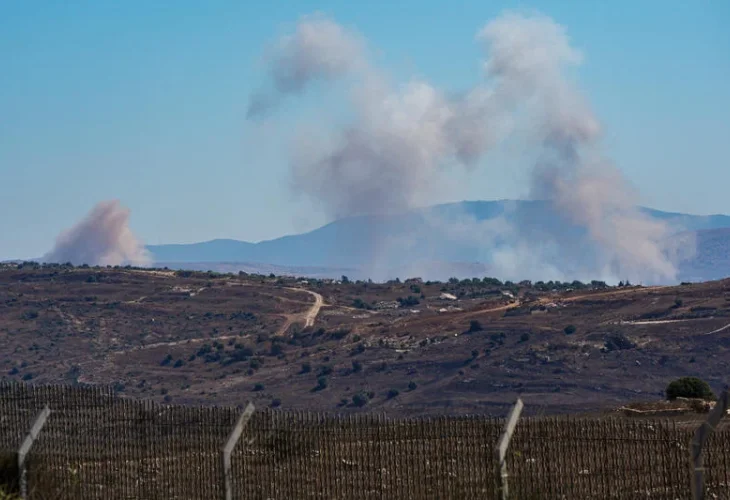 Lebanon (Ayal Margolin/Flash90)
Hezbollah launched an explosive drone at an Israeli engineering vehicle near the Ali Taher Ridge in southern Lebanon overnight Wednesday, as the first US-backed pilot zone for a gradual Israeli withdrawal continued to face major security and operational obstacles. The vehicle was hit, but no Israeli troops were injured.
The IDF called the attack a “blatant violation of the ceasefire.” It came days after the Lebanese army entered Zawtar al-Gharbiyeh, the first village where the pilot framework has been put into practice.
The program is intended to allow Israeli forces to withdraw gradually as the Lebanese army assumes full security control and Hezbollah’s military infrastructure is dismantled. However, the first test has exposed unresolved disputes over Hezbollah’s weapons, the boundaries of the designated zones and the absence of a system to verify that armed infrastructure has been removed.
A senior Lebanese military official and two foreign security officials told Reuters today that completing a full Israeli withdrawal under the current process could take more than a year. The US-mediated framework signed on June 26 does not include a fixed timetable for either the withdrawal or Hezbollah’s disarmament.
Weeks of American-mediated negotiations were required before Israeli forces pulled back from the Zawtar al-Gharbiyeh area and the Lebanese army deployed in the village. Lebanese troops then spent days clearing rubble, searching for unexploded ordnance and preparing the area for the controlled return of residents.
Tensions emerged soon after the deployment. Israel said Lebanese soldiers accompanied by an engineering vehicle crossed approximately 150 meters into an adjacent area outside the agreed pilot zone, passed Israeli barriers and approached Israeli troops.
The IDF said its forces fired warning shots into the air, prompting the Lebanese unit to withdraw. The Lebanese army said the Israeli fire endangered its troops and could obstruct implementation of the agreement. No injuries were reported.
The central obstacle remains Hezbollah’s refusal to surrender its weapons. The terrorist organization is not a formal party to the Israeli-Lebanese framework and has rejected demands that it dismantle its military capabilities.
Hezbollah lawmaker Hassan Fadlallah warned that any attempt by the Lebanese government to forcibly disarm the group, even with US support, could trigger a civil war. Hezbollah has said it will not surrender its weapons by force.
The Ali Taher Ridge has emerged as another major test for the framework. Lebanese security sources suspect Hezbollah maintains command facilities and weapons stores in the strategically important area, which overlooks parts of southern Lebanon.
Israel has indicated that it will not withdraw from nearby positions while it believes Hezbollah continues to operate there. Following the drone attack, the IDF said: “IDF troops continue to operate in the ridge area and will not allow terrorists in the area to advance or carry out terrorist attacks against IDF forces.”
The framework requires Hezbollah infrastructure to be dismantled and verified before additional Israeli withdrawals take place. However, no third party has yet been publicly selected to conduct that verification, and no detailed mechanism has been announced for determining whether an area has been fully cleared.
Civilian returns to Zawtar have also remained limited. Around 15 families reportedly returned during the first week, while nearly half of the village’s approximately 500 homes were destroyed and many remaining buildings are uninhabitable.
“Without security and peace of mind, we cannot rebuild,” the village mayor said. “We cannot lay a single stone on top of another in Zawtar.”
Lebanon wants Israel to withdraw from larger areas at a time, rather than negotiating a separate withdrawal from each village. Israel has not agreed publicly and says it will withdraw only after the Lebanese army removes Hezbollah’s military infrastructure from each area.
Israeli Ambassador to the United States Yechiel Leiter said Israel would proceed with additional pilot zones only “to the extent that the Lebanese army dismantles and disarms Hezbollah.”
The pilot was meant to show how the Lebanese army could take control of an area as Israeli forces withdrew. Instead, it has shown that the process cannot expand while Hezbollah remains armed, the sides disagree over where Israeli troops may remain and no one has been appointed to verify that Hezbollah’s infrastructure has been removed.

