

Behind the News
Breakthrough Brain Implant Helps Man With Complete Paralysis Move, Feel Touch, and Feed Himself
A pioneering study published in Nature Medicine reveals how a revolutionary double neural bypass restored both movement and sensation in a man with complete paralysis, offering new hope for spinal cord injury treatment
- Yitzchak Eitan
- | Updated
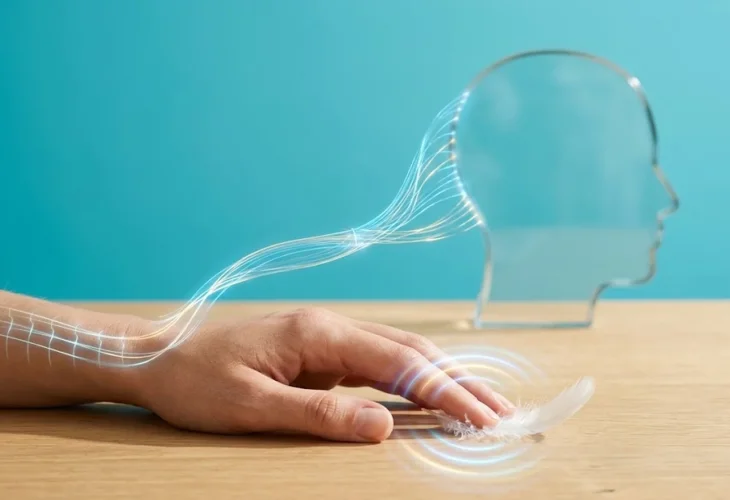
A man living with complete paralysis in all four limbs has regained the ability to raise his arm, eat independently, drink from a cup, and feel touch, thanks to a groundbreaking neurotechnology system developed in the United States. The study, published in Nature Medicine by researchers at the Feinstein Institutes for Medical Research, introduces a promising new approach to treating severe spinal cord injuries.
A Double Neural Bypass Restores Movement and Touch
Spinal cord injuries often sever the communication pathways between the brain and the limbs, resulting in the loss of both movement and sensation. While previous brain computer interface technologies have restored limited movement, the new system employs an innovative technique known as a "double neural bypass." Rather than simply decoding signals sent from the brain, the technology simultaneously transmits those commands to the spinal cord while also restoring sensory feedback to the brain.
The system interprets the user's intention to move the hand in real time and delivers precise electrical stimulation to the spinal cord, activating the appropriate muscles. At the same time, it sends signals to the somatosensory cortex, the region of the brain responsible for processing touch. This sensory feedback is essential for performing delicate tasks, such as gripping an object without crushing it, because the brain relies on information about the amount of pressure being applied.
A Historic Milestone in Paralysis Research
The study involved a 42 year old man with complete paralysis. When the full system was activated, he was able to open and close his hand, grasp a cup, drink from it, and feed himself. According to the researchers, this marks the first time that both motor control and sensory perception have been restored simultaneously in a person with complete paralysis.
Researchers also observed an unexpected and encouraging finding. The participant retained some of his functional improvements even after the device was turned off. He developed sensory awareness in his wrist that remained for two months after electrical stimulation had ceased, suggesting that the technology may promote the nervous system's own natural healing and reorganization.
The researchers describe the system as the first bidirectional neural interface of its kind. However, they caution that this was a single patient study requiring surgery to implant components in the brain. Larger clinical trials will be needed to determine whether the technology can be safely and effectively applied on a broader scale.

