

World News
Website Leak Reveals How China Tracks Thousands of Foreign Nationals
A cybersecurity researcher stumbled upon a website used by Chinese authorities to monitor and collect information on foreign nationals living in the country. The list included Israeli citizens.
- Shlomi Diaz
- | Updated
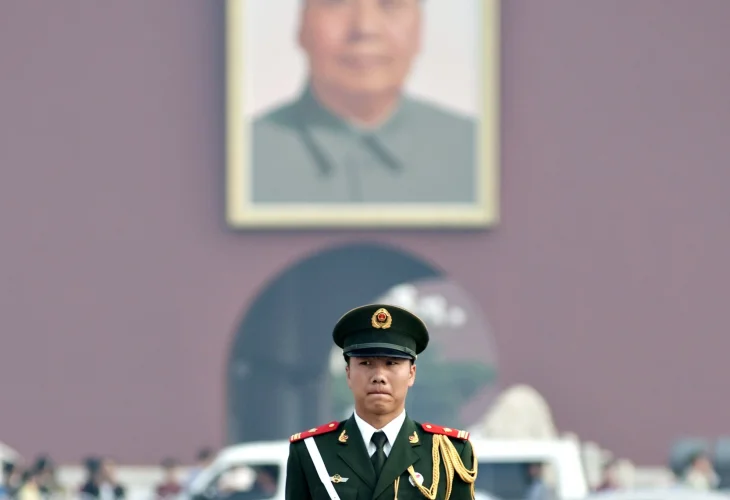 China (file photo: Jorge Novominsky, Flash90)
The New York Times reported today (Sunday) on the discovery of a Chinese website used by authorities to track roughly 12,000 people—all foreign nationals in the country. The database includes information on hundreds of journalists, businesspeople, tourists, and others. Those being monitored include Americans and Israelis.
The website was discovered by chance by Mark Hopper, a cybersecurity researcher and journalist who lives in Amsterdam. According to the report, he was conducting a routine online search for clues about how China monitors its citizens when he came across an unusual webpage.
The page Hopper found, which was open to anyone, contained data on nearly 12,000 foreign residents in China and revealed the scope of the Chinese regime’s surveillance. Hopper shared the information with the American newspaper, saying he believed the dashboard he accessed had been designed for the Public Security Bureau in the Chinese city of Zhangjiakou.
It included information that only Chinese authorities could have accessed, and the user log Hopper saw listed eight police stations in Zhangjiakou and three more from other cities. The database included cases in which people were recorded by cameras at intersections, markets, malls, and other locations.
According to Hopper, the system’s existence illustrates how Chinese authorities consolidate vast amounts of information from surveillance cameras, medical records, accounts, facial-recognition tools, and other sources in order to monitor and analyze the behavior of foreign residents.
The system included fields listing places people regularly visited, hospital visits, and fuel payments, as well as the flights and trains they had taken. It also categorized people by nationality, gender, marital status, and profession. The system included citizens of Australia, Canada, New Zealand, Britain, and the United States.
Foreign nationals from countries identified as "key countries" were also flagged, including Israel, Egypt, Iran, Morocco, Pakistan, and Sudan. In addition, the dashboard listed more than 700 foreign residents living in the city and 12,000 people overall, including residents from Hong Kong and Taiwan, as well as more than 300 foreign journalists.

