

Health Recipes
Healthy Chocolate Fondue with Fresh Fruit
Discover the health benefits of apples, kiwi, and pineapple, plus an easy chocolate fondue recipe made with wholesome ingredients
- Chen Tovi
- | Updated
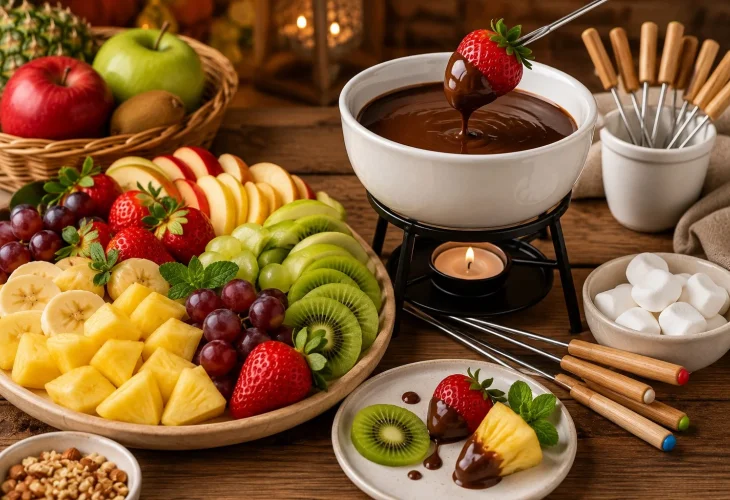
Once upon a time, many centuries ago, somewhere in the snowy mountains of Switzerland, someone sat inside a cozy wooden cabin beside a crackling fireplace. They lit a candle beneath a bowl and melted cheese over the gentle heat. A cube of stale bread from the previous day's meal was speared on a long fork, dipped into the warm cheese, and brought back to life.
That brilliant invention became known as fondue, a word that means "melted."
Centuries later, in bustling New York City, someone had another inspired idea. Instead of melting cheese, they melted chocolate, and chocolate fondue was born.
Suddenly, fruit skewered on those same long forks looked even more irresistible.
Of course, the healthiest way to enjoy fruit is exactly as it is — fresh, colorful, beautifully sliced, and attractively arranged on a platter. But when there's something to celebrate such as a Rosh Chodesh meal, Tu B'Shevat, a family birthday, excellent report cards, or simply a free afternoon with children who need an enjoyable activity, it's the perfect time to take the fondue pot down from the top shelf.
Keep in mind that while fondue is a wonderful family activity, it can also be quite messy. An adult should always supervise children whenever the fondue candle is lit.
Homemade Chocolate Fondue
Ingredients
¼ cup cocoa butter
¼ cup cocoa paste, coconut oil, or your favorite nut butter
1 heaping tablespoon cocoa powder
4 tablespoons honey, pure date syrup (made from 100% dates), or pure maple syrup
Alternatively, purchase a high-quality chocolate bar. Look for one in which cocoa butter or cocoa mass appears first on the ingredient list, ahead of sugar, and choose a product without unnecessary additives or artificial ingredients.
Light the fondue candle and place the chocolate or chocolate ingredients into the fondue pot to melt. While the chocolate is warming, prepare a colorful assortment of fresh fruit.
"From every tree of the garden you may freely eat." (Genesis 2:16)
Apple
Apples are packed with phytochemicals which are natural plant compounds that continue to be the subject of scientific research. Many of these compounds play an important role in supporting human health.
Among the most beneficial are quercetin, catechin, and phloridzin, powerful antioxidants that help protect cells and may reduce the risk of various diseases. Apples also contain flavonoids with antiviral and anti-inflammatory properties.
Another valuable component is pectin, a type of dietary fiber that supports healthy digestion, helps regulate blood sugar absorption, and offers numerous additional health benefits.
Perhaps that's why the famous saying remains true: "An apple a day keeps the doctor away."
Most of these nutrients are concentrated in the peel, so there's no need to peel an apple. Simply wash it well and enjoy its colorful skin, whether it's red, green, or yellow.
Kiwi
Kiwi is famous for its impressive vitamin C content which has far more than most citrus fruits. In fact, a single medium kiwi provides approximately the recommended daily intake of vitamin C for an adult.
This "Chinese gooseberry" also supplies potassium, vitamins E and K, and a digestive enzyme called actinidin, which helps break down proteins.
Natural beauty tip: Place a few slices of fresh kiwi on clean skin for about 15 minutes. The vitamins may help leave your skin feeling refreshed, smooth, and radiant.
Kiwi also contains the phytochemicals lutein and zeaxanthin, nutrients known for supporting healthy vision and protecting the eyes.
Pineapple
Say "tropical," and pineapple immediately comes to mind. Pineapple is rich in vitamin C, B vitamins, magnesium, manganese, potassium, and powerful antioxidants.
The combination of manganese and vitamin C supports the body's production of collagen, the structural protein that has become well known for its role in skin health and healthy aging.
Pineapple also contains beta-carotene, which contributes to eye health.
Perhaps its most fascinating feature is the digestive enzyme bromelain, which helps break down proteins. This is the reason that pineapple is often paired with meat dishes. Bromelain is also recognized for its anti-inflammatory properties, natural blood-thinning effects, and potential pain-relieving benefits.
Another enzyme found in pineapple is papain. Some suggest that, together with bromelain, it may help create an environment that is unfavorable for certain intestinal parasites.
There is so much more to say about this remarkable fruit that it deserves an article of its own. For now, it's safe to say that pineapple truly lives up to its name, and perhaps even its price.
Let the Fun Begin
What other fruits would you add to your fondue platter?
Serve your colorful fruit alongside the fondue pot filled with warm, melted chocolate, and let the celebration begin.
Ironically, the healthiest part of the entire experience may not be the nutrient-rich fruit or even the homemade chocolate. It may be the laughter, excitement, and pure joy of children dipping fruit into warm chocolate, watching it drip onto the table, their hands, and inevitably the floor!

