

World News
El-Sayed Favored to Deliver Major Defeat to Democratic Leadership
The Michigan primary tests whether Democratic voters are ready to reject party leaders and move further left
 Screenshot/X
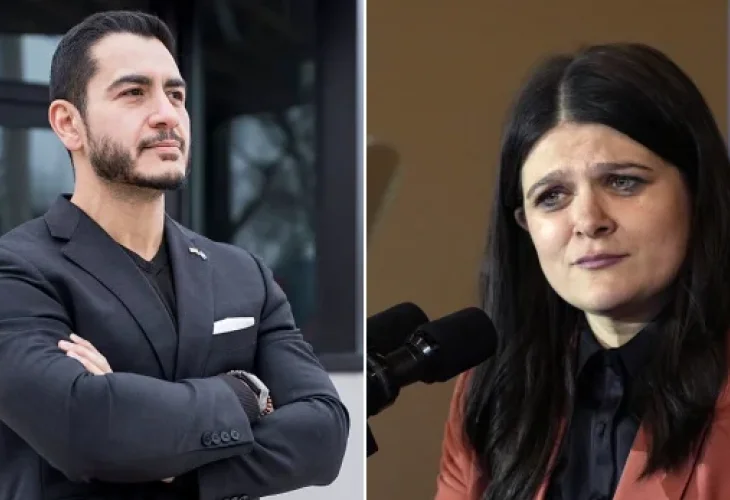
Progressive Abdul El-Sayed enters Tuesday’s Michigan Democratic Senate primary as the overwhelming favorite to defeat Rep. Haley Stevens, according to prediction markets, in a race CNN described as the party leadership’s biggest test of the election cycle so far.
CNN chief data analyst Harry Enten said Monday that Kalshi traders gave El-Sayed a 98% chance of becoming the Democratic nominee, up from 28% on April 3.
“I think that tomorrow Abdul El-Sayed will deliver the biggest blow so far against the establishment of the Democratic Party,” Enten said.
That “establishment” includes the elected officials, major donors and party organizations that generally support candidates they consider experienced and capable of winning closely contested elections. Stevens has the backing of Michigan Gov. Gretchen Whitmer, retiring Sen. Gary Peters and Senate Democratic leader Chuck Schumer.
El-Sayed is instead supported by leading progressives, including Sen. Bernie Sanders and Rep. Alexandria Ocasio-Cortez. He supports Medicare for All and has campaigned against the influence of large donors and outside political groups.
“The notion that we’ve been able to build a movement, not about me, but about what we all want—money out of politics, money in our pocket, Medicare for All—that has resonated with the state,” El-Sayed said during his final campaign push.
CNN suggested that El-Sayed is benefiting from widespread frustration within the party. 57% of Democrats and Democratic-leaning voters now believe the party needs at least major changes, compared with 33% in 2022.
The network also reported that 80% of Democrats who describe themselves as very liberal are extremely motivated to vote in 2026, compared with 59% of other Democrats. That difference matters in a primary, where candidates depend on their strongest supporters actually turning out.
Stevens has argued that her record makes her the safer choice for November. She first entered Congress after flipping a Republican-held district in 2018 and presents herself as a Democrat who has already demonstrated that she can win competitive races.
“The GOP should be worried about running against me,” Stevens told supporters. “Because, friends, I am a tough-as-nails Democrat.”
The candidates are also sharply divided over Israel. El-Sayed opposes unconditional U.S. military assistance to Israel and has accused it of committing genocide in Gaza. Stevens is a longtime supporter of Israel and has received substantial help from pro-Israel political groups.
AIPAC and affiliated organizations have spent close to $30 million supporting Stevens or opposing El-Sayed, their largest investment in a single race. El-Sayed has pointed to that spending as evidence that wealthy outside groups are trying to determine Michigan’s nominee.
The winner is expected to face Republican Mike Rogers in November. That makes the primary a bigger test than progressive victories in heavily Democratic districts: Michigan is closely divided, and Democrats need to retain the seat as they seek control of the Senate.
Stevens’ supporters warn that El-Sayed’s positions could make the November race more difficult. But general-election polls have produced mixed and sometimes opposite results, meaning neither side has conclusively proved which candidate would be more electable, although Kalshi traders currently give El-Sayed a 65% chance of winning the seat.
Tuesday’s result will therefore answer the first question facing Democrats: whether their primary voters are prepared to reject the party’s preferred candidate. The second question, whether that choice can win across Michigan, will be decided in November.

