

Health and Nutrition
Making a Berry Smoothie? Think Twice Before Adding a Banana
Bananas and berries are both healthy, but research suggests blending them together may reduce flavanol absorption by 84 percent. Here’s why.
- Yitzchak Eitan
- | Updated
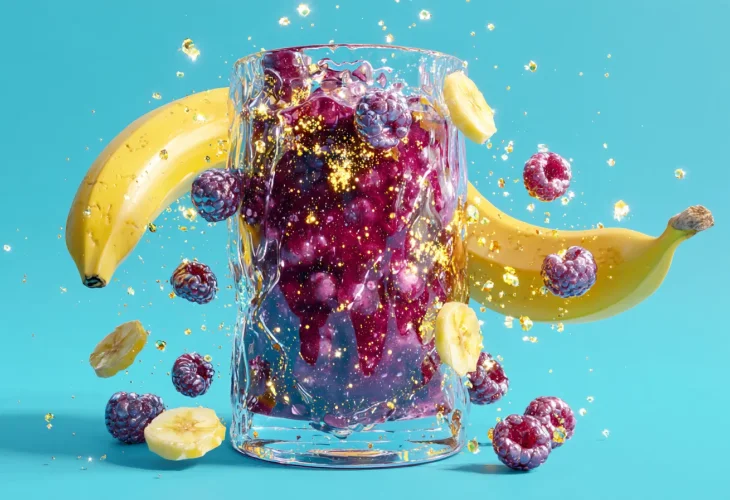
Bananas and berries are both nutritious foods, but does blending them together affect the nutritional benefits of your smoothie? Research suggests that the combination may significantly reduce the amount of certain beneficial compounds available to the body.
The surprising effect comes down to an enzyme naturally found in bananas and what happens when fruit is cut, blended, and exposed to air.
Why Bananas May Affect the Flavanols in Your Smoothie
Researchers at the University of California, Davis, examined how different smoothie ingredients affect the body's absorption of flavanols, naturally occurring plant compounds found in foods such as berries, grapes, tea, and cocoa.
The study compared smoothies containing ingredients with different levels of an enzyme called polyphenol oxidase, or PPO. Bananas have particularly high PPO activity, which is also responsible for the familiar browning that occurs after a banana is cut or bruised.
The results were striking. Participants who consumed the banana-based, high-PPO smoothie had approximately 84 percent lower levels of flavanols in their bodies compared with those who consumed a low-PPO smoothie.
The reaction begins quickly. Once the fruit is blended and exposed to oxygen, PPO can interact with the flavanols and reduce the amount available for absorption.
Nutritionist Derek Simnett of the Simnett Nutrition YouTube channel recently highlighted the findings, explaining why people who regularly combine bananas with flavanol-rich fruits may want to reconsider how they make their smoothies.
Does This Mean Banana Smoothies Are Unhealthy?
Not at all.
The findings do not suggest that bananas are unhealthy or that drinking a banana and berry smoothie is dangerous. Bananas remain a nutritious fruit that provides fiber, potassium, vitamin B6, and other nutrients.
The issue is much narrower: Combining high-PPO ingredients such as bananas with flavanol-rich ingredients may reduce the amount of flavanols the body ultimately absorbs.
Flavanols have been studied for their potential role in supporting cardiovascular health and healthy blood flow, among other benefits. For someone specifically trying to maximize their flavanol intake, smoothie combinations may therefore matter.
Even Simnett said the findings would not persuade him to give up his own banana and berry smoothies.
What Can You Use Instead?
If you want to maximize the flavanols you get from berries, consider making smoothies with fruits that have lower PPO activity. Pineapple, oranges, mango, and certain other fruits can provide sweetness and texture without having the same effect as bananas.
Another easy solution is simply to eat the banana and berries separately. You can still enjoy both foods without necessarily combining them in the blender.
But there is no reason to become overly concerned about a single food combination. Nutrition is determined by the overall pattern of what we eat, not one smoothie.
If you enjoy banana and berry smoothies, you do not necessarily need to stop drinking them. But if maximizing the nutritional benefits of berries is your goal, changing the combination may help you get more from your morning smoothie.

