

Israel News
Israel Tightens Gaza Strike Rules: IDF Chief Must Personally Approve Targeted Killings
Amid international pressure, the IDF has tightened its approval process for strikes in Gaza. At the same time, political tensions are growing over the next stage of the ceasefire deal and the proposed deployment of an international stabilization force.
- Yuval Aviv
- | Updated
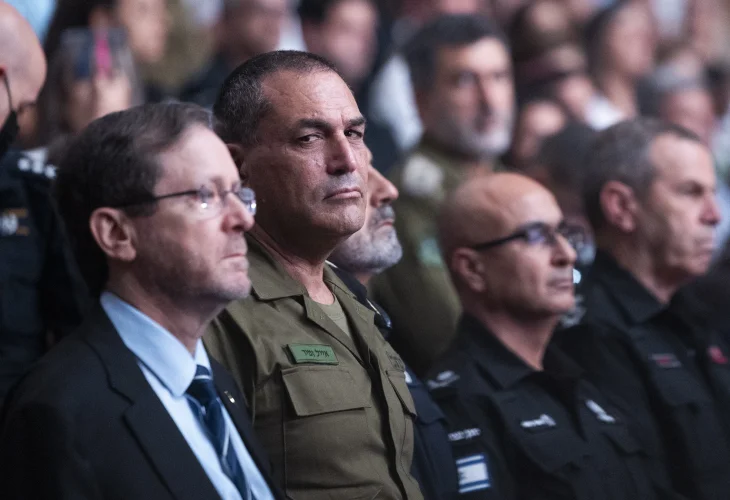 Zamir (Photo: Oren Ben Hakoun, Flash90)
Under a new directive issued to troops today (Tuesday), every targeted killing of a terrorist who does not pose an immediate threat will now require the personal approval of the IDF chief of staff. Forces on the ground will continue to be authorized to open fire only when there is an immediate danger to their lives.
The new directive represents a tightening of Southern Command's strike policy. Until now, killings of this kind could also be approved at lower levels, including by the division commander and the regional command chief. Now, concentrating that authority solely in the hands of the IDF chief of staff significantly limits the ability to carry out proactive strikes against targets not defined as an immediate threat.
In practice, the change is already being felt on the ground. According to the data, the IDF carried out just one strike in Gaza over the past 48 hours. The most recent strike took place yesterday at 10:00 p.m., and nearly a full day has passed since then without additional strikes—a figure reflecting a sharp drop in the scope of offensive activity.
The policy shift comes alongside pressure on Israel from the Gaza Peace Board, which is seeking to advance the transition to Phase Two of the agreement to end the war. As part of those efforts, Gaza Peace Board CEO Nikolay Mladenov and board adviser Aryeh Lightstone met yesterday with Prime Minister Benjamin Netanyahu. During the meeting, the two made clear that Israel must halt its strikes in Gaza, in line with its commitments under U.S. President Donald Trump's 20-point plan.
A political source stressed that "Israel will not withdraw from its current line in Gaza and will continue to thwart every threat to our civilians and soldiers." In practical terms, this means rejecting the two main demands presented by the United States: returning to the yellow line and ending the policy of targeted killings.
Alongside the dispute over the continuation of the fighting, political opposition is also growing to the deployment of the International Stabilization Force (ISF) in Gaza. Finance Minister Bezalel Smotrich and Settlements Minister Orit Strock sent an appeal to the prime minister demanding that the move be halted immediately. In their words, "the cabinet's decision was made on the basis of incorrect information," adding that "the roadmap document published by the Peace Board is dangerous for Israel and completely contradicts the disarmament of Hamas and the demilitarization of Gaza."
The ministers' appeal comes just days after Trump announced that the Peace Board had reached an agreement with Hamas and the other armed groups in Gaza on disarmament. That same evening, senior U.S. officials confirmed that the terrorist organization had agreed to the terms of the deal to hand over its weapons. Within hours, however, Hamas denied the understandings and claimed that no such agreement had been reached.

