

Rosh Hashanah
Shabbat Shuvah: How to Make the Most of the Shabbat Before Yom Kippur
The Shabbat between Rosh Hashanah and Yom Kippur offers a unique opportunity for Torah study, teshuvah, and spiritual repair.
- BeHalakha UVeAggadah
- | Updated
 (Photo: shutterstock)
There is significant disagreement among halachic authorities regarding the proper time for Shabbat to end. According to Maran the Shulchan Aruch and the overwhelming majority of the early rabbis, Shabbat ends according to Rabbenu Tam’s opinion. In practical terms, this is approximately half an hour after the standard listed end time of Shabbat during the winter and approximately 45 minutes later during the summer, according to the times published in Jewish calendars.
Strictly speaking, the accepted ruling follows the opinion of the Geonim, according to whom the standard listed time for the end of Shabbat is primary. Nevertheless, at least during the Ten Days of Repentance, one should be careful to observe Shabbat until Rabbenu Tam’s time, as published in calendars. This is considered an important stringency because the question involves the possibility of violating a Torah prohibition of Shabbat.
As explained in the booklet Shabbat in Halacha and Aggadah, there is particular value in waiting until Rabbenu Tam’s time before ending Shabbat. When a person is careful about stringencies involving rabbinic laws, there is even greater reason to be cautious when there is a possible Torah prohibition involved, particularly one as serious as Shabbat desecration.
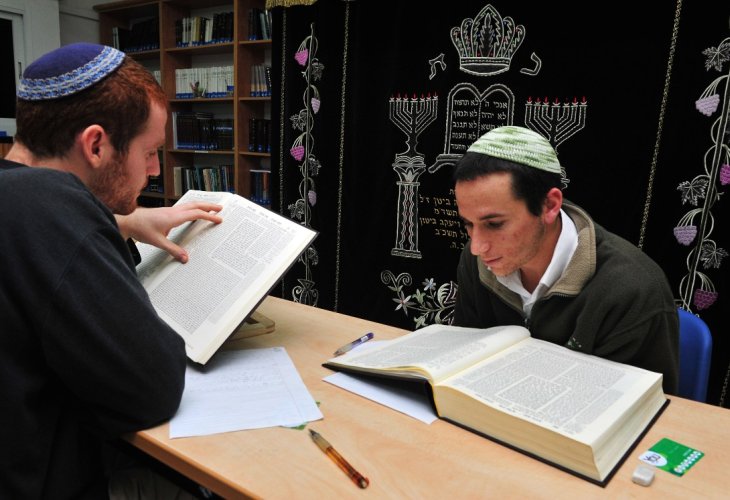
Some communities have established a Torah class in Aggadah every Saturday night, beginning after Maariv and continuing until Rabbenu Tam’s time. This has the additional merit of encouraging Torah study during a time when relatively few people are learning. Those who organize and participate in such public Torah study have the great merit of bringing others closer to Torah.
Why Studying Practical Halacha Matters
Our sages teach in Berachot 8a that from the day the Temple was destroyed, Hashem has nothing in His world except the four cubits of halacha. The Gemara expounds on the verse, "Hashem loves the gates of Zion more than all the dwellings of Jacob," explaining that Hashem loves the gates distinguished by halacha more than synagogues and study halls.
The Maharsha explains that Hashem especially cherishes study halls in which definitive halacha is studied, comparing them to the Chamber of Hewn Stone, where the Divine Presence rested. The Yaavetz writes similarly.
The practical lesson is clear. A person who does not know halacha can easily stumble in everyday Jewish observance. As our sages teach, an ignorant person cannot fear sin, and an unlearned person cannot be pious.
The Shach (Yoreh De’ah 246:5) addresses people who regularly study Gemara with Rashi and Tosafot but neglect the halachic authorities. He emphasizes the importance of studying the Torah’s laws from works that teach practical halacha, calling this the root and foundation of Torah learning. Someone with only three or four hours available for Torah study each day should therefore not devote all of that time exclusively to Gemara.
Rabbi Shneur Zalman of Liadi similarly writes that a person with limited time for Torah study should focus on practical laws that every Jew needs to know in order to fulfill the mitzvot correctly and avoid prohibitions.
Teshuvah Me’Ahavah likewise emphasizes the importance of the Shulchan Aruch, particularly Orach Chaim, which contains many of the laws governing everyday Jewish life, including major areas of Shabbat and blessings. A person might study a page of Gemara every day and yet remain unfamiliar with basic laws that affect daily observance.
This is particularly important for those beginning a journey of teshuvah. At the beginning of that process, practical halacha provides the knowledge necessary to live a Torah observant life and avoid inadvertently violating Shabbat, reciting unnecessary blessings, or stumbling in other areas.
This idea can also be seen in the wording of the Amidah: "Bring us back, our Father, to Your Torah... and return us in complete repentance before You." First comes Torah, through which a person learns how to conduct himself, and then comes complete repentance.
Thank Hashem, awareness of the importance of studying halacha has grown significantly. Many communities now offer not only halacha classes but also tests that encourage participants to review and remember what they have learned. Clear and accessible materials have made practical halacha increasingly available to men and women, young and old. Those who encourage this learning through classes, examinations, certificates, and prizes have the tremendous merit of bringing Torah knowledge to the public.
Shabbat Shuvah: A Special Opportunity for Torah and Teshuvah
The Shabbat between Rosh Hashanah and Yom Kippur is known as Shabbat Shuvah, named for the Haftarah read on that day: "Return, Israel, to Hashem your God, for you have stumbled in your sin. Take words with you and return to Hashem" (Hosea 14:2).
It is a longstanding Jewish custom for communities to gather on Shabbat Shuvah for additional sermons and Torah classes. These teachings traditionally focus on practical halacha and ethical instruction, encouraging people to strengthen their Torah observance, establish regular times for Torah study, and educate their children in Torah and fear of Heaven.
Synagogue leaders therefore carry an important responsibility to prepare for Shabbat Shuvah in advance, invite Torah scholars to speak, and publicize the classes so that as many people as possible can attend and be strengthened in Torah, mitzvot, and good deeds.
Those who help create opportunities for communal Torah study have the special merit of benefiting the public. As our sages teach, one who brings merit to the many is protected from being led to sin through that merit.
How the Ten Days of Repentance Can Repair the Past Year
The seven days between Rosh Hashanah and Yom Kippur correspond to the seven days of the week throughout the previous year. These days therefore offer a special opportunity to reflect on and repair how we used each corresponding day.
On Sunday during the Ten Days of Repentance, for example, a person can intend to repair the mistakes made on all the Sundays of the previous year, while increasing Torah study and teshuvah according to his ability. The same principle applies to each successive day.
Shabbat Shuvah carries particular significance. On this Shabbat, a person can intend to repair what was lacking in his observance of all the Shabbatot of the previous year.
The Ten Days of Repentance are therefore not only a period of general introspection before Yom Kippur. Each day provides a focused opportunity to look back, strengthen practical Torah observance, and begin the coming year with greater knowledge and commitment.

