

Shabbat
The Secret to a Joyful Shabbat: Ziva Meir's Timeless Wisdom
Mother and parent coach Ziva Meir shares practical advice for peaceful Shabbat preparation, raising children who love Shabbat, creating meaningful family traditions, and bringing more blessing, warmth, and harmony into every Jewish home
- Moriah Luz
- | Updated
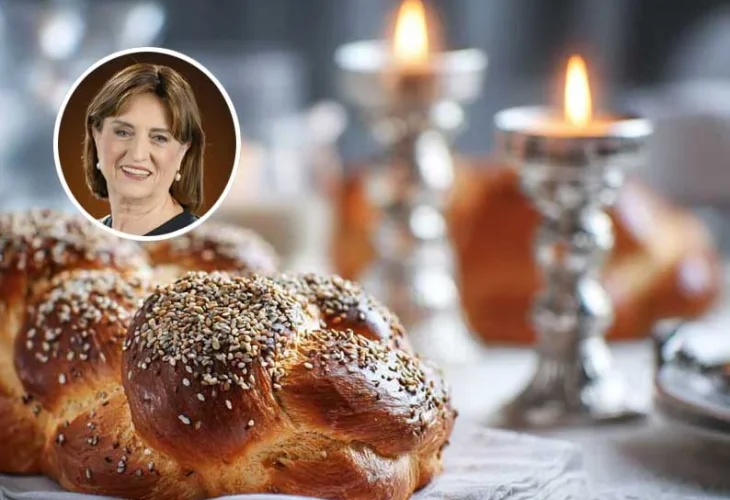 Inset: Ziva Meir
For Ziva Meir, educator, certified parent coach, and mother of eleven, Shabbat is far more than a day of rest. It is the heartbeat of the Jewish home, a source of blessing, and a weekly opportunity to build lasting family memories. In this conversation, she shares how she prepares for Shabbat, nurtures a warm family atmosphere, and creates traditions that continue to inspire her children and grandchildren.
What does Shabbat mean to you?
"Shabbat is the source of blessing. It is a taste of the World to Come."
What is your favorite part of Shabbat?
"The entire Shabbat. Its beauty lies in the harmony of the whole experience. In order to enjoy Seudah Shelishit, you first need candle lighting, Friday night, and Shabbat morning. It is a journey that begins with the preparations, continues through Friday night, and unfolds throughout the entire day."
What is the greatest challenge for you?
"The challenge is mainly in preparing for Shabbat, and it changes with the different stages of life. For example, when my children were young, the preparations were much more demanding. Cooking for Shabbat is a privilege, but I don't want to romanticize the difficulty. There are long hours on your feet, pressure, and plenty of tension. As our sages say, the yetzer hara especially likes to visit on Friday."
"We all strive for everything to be at its best: the home, the food, the clothing, and ourselves. We don't want to arrive at Shabbat completely exhausted. There is a reason our sages taught, 'Whoever prepares on Friday will eat on Shabbat.' Preparation includes recognizing the challenges in advance and planning for them."
"Personally, I make Friday rest a priority. My children still laugh when they remember that, as little children, they would shower on Friday afternoon and then wear undershirts so they wouldn't wrinkle their Shabbat shirts before candle lighting. I truly believe that resting is part of preparing. It allows us to enter Shabbat refreshed instead of drained."
Raising Children Who Want to Help
As a mother of eleven and now a certified parent coach, Meir has spent years helping families create healthier home dynamics.
"I don't like painting challenges in rosy colors because that isn't fair. Many mothers wonder, 'Why is this only hard for me? Why do other people's children help while mine don't? Why does my daughter always wake up late on Friday morning?' It is important to know that these struggles are completely normal. Most families experience them."
"Of course we want our children to help and even enjoy helping. That is absolutely possible, but it requires thought, learning, and intentional effort."
She shares a recent conversation with one of her daughters.
"She asked me, 'Mom, how is it that I helped you so much growing up, but my own children don't help me?' I smiled and said, 'Let me tell you the secret. You remember how much you helped. What you don't remember is how much work I invested to make that happen.'"
"I wasn't talking about prizes or rewards. I meant my own inner work. Sometimes that meant overlooking things. Sometimes it meant stepping aside. Sometimes it meant giving my daughter the 'important' jobs while I quietly handled the simpler tasks myself. There was a great deal of thought, patience, and emotional work behind it."
How do you help children fall in love with Shabbat?
"Shabbat doesn't need us to sell it. It speaks for itself. My job was mainly not to ruin it."
"Think about it. The entire family is together. The food is delicious. The table is beautifully set. What usually ruins the experience? Arguments. Yelling. Tension. 'Come here.' 'Sit down.' 'Why weren't you at Kiddush?' 'Be quiet.' That kind of atmosphere makes the Shabbat table unbearable."
She recalls an important parenting decision.
"When my children were young, one of my greatest joys was hearing them sing Shabbat songs. One day, one of my sons said to me, 'Mom, singing has to come from the heart. You can't ask someone to sing.'"
"I decided, with considerable self-control, never to pressure them again."
"It wasn't easy. Sometimes I felt disappointed after investing so much in preparing for Shabbat. But today I can honestly say it was worth it. Sometimes they sing more, sometimes less, and sometimes they simply enjoy talking together. But when they do sing, it comes from genuine joy rather than obligation."
She applies the same philosophy to every aspect of the Shabbat table.
"If a child gets up during the meal, that's okay. The important thing is that Shabbat remains enjoyable."
Of course, she emphasizes, enjoyable does not mean without boundaries.
"We still come for Kiddush. We still wash for bread. Every enjoyable experience has rules. Even on an airplane you have to buckle your seatbelt, and even at an amusement park there are rules. The difference is that our boundaries should come from love."
"'Children, come. Daddy is home. Let's make Kiddush.' That's an invitation rooted in warmth."
The Invisible Work Behind a Beautiful Shabbat
Meir often hears stories from women who are new to religious observance.
"They visit a family for Shabbat, see the beautiful table and the warm atmosphere, and immediately say, 'This is exactly what I want.'"
"What they don't see is everything that came before. They only see the 'wow' moment."
"The real investment isn't making another salad or baking another cake. It's refining your character. It's learning when to speak, when to remain silent, when to insist, and when to let go. Not in a blanket way, but with precision. That's the key."
A Childhood Memory of Shabbat
Meir's own childhood took a heartbreaking turn when her parents, Rabbi Shlomo Zalman Kook, the Chief Rabbi of Rehovot, and her mother Yehudit, were killed in a car accident while she was still a teenager. She and her siblings were then raised by their grandparents.
"My strongest Shabbat memories come from my grandparents' home."
"My grandmother prepared very simple meals. There wasn't a huge variety, but every dish was filled with heart. You could taste the love, and somehow it reached your soul."
"My grandfather had a beautiful custom. Before Kiddush, he blessed all of the children and grandchildren, even those who weren't with us that Shabbat. My husband continues that tradition today. It takes time because, thank God, our family has grown."
"Shabbat truly is the source of blessing. That isn't just a beautiful phrase. We all long for blessing in our lives, and Shabbat is where that blessing begins."
An Unforgettable Family Shabbat
Asked about one particularly memorable Shabbat, Meir immediately smiles.
"A few weeks ago, our entire family gathered for a simcha. Having everyone together has become increasingly rare, so it was incredibly emotional."
"The children wanted to recreate memories from their childhood."
One tradition stood out.
"When they were little, every child who was bathed, dressed, and ready before candle lighting received a special Shabbat treat."
"This time, my children insisted that their own children experience the same tradition."
"My grandchildren lined up one by one to receive their Shabbat candy from Grandma. It became a little ceremony, and for me, it was one of the sweetest moments imaginable."
When does your preparation begin?
"I begin no later than Thursday, and I work hard to finish relatively early on Friday. I usually make a detailed list of everything I plan to prepare and aim to finish by noon or one o'clock. Once the list is complete, I don't add anything else. Whatever is on the list gets done. After that, I close the kitchen and focus on preparing the house for Shabbat."
"On Thursday I usually prepare the cooked salads, meat dishes, cakes, and desserts. On Friday I bake the challah, both for the mitzvah and because fresh challah is important to me. I also prepare the soup and any dishes that are best made that day."
"I also want to express my gratitude. I've always had help. When my children were home, they took on a great deal of responsibility. Today, whenever I'm preparing for Shabbat, there is almost always a grandchild by my side eager to help."
What's on the Shabbat Menu?
"Our meal begins with homemade whole spelt challah, which everyone loves. We also serve a generous variety of salads. They may not be as spicy as those prepared by many Sephardic families, but we certainly have plenty to choose from."
"Next comes the soup. In winter it's usually meat soup, while in summer it's a hearty vegetable soup."
"The main course on Friday night is fish served with vegetables, rice, and potatoes."
"And then comes dessert. Everyone waits for dessert, especially the children."
"There are usually two desserts. One is healthier, sweetened with maple syrup and made with fruit and natural ingredients. The second might be ice cream, cake, or mousse."
"On Shabbat morning we always have cheesecake. Every week it's a different recipe. We even enjoy a slice on Friday afternoon with a cup of coffee before candle lighting."
"The Shabbat morning meal includes fish, liver or salads with challah. During the winter we serve cholent, while in summer we prepare dishes such as grilled chicken with rice, vegetables, or casseroles."
"We also invest in Seudah Shelishit. That meal is especially precious because it is known as the time of Ra'ava d'Ra'avin, the 'Will of Wills.' We begin early enough before sunset, set the table beautifully, sing the special melodies for that time, and serve salads together with a special dish prepared specifically for the meal, such as individual kugels, casseroles, or smoked fish."
Setting the Shabbat Table
"I love creating a table that is both elegant and inviting. I usually set it on Thursday or Friday morning, paying close attention to every detail: the napkins, the silverware, the polished Kiddush cups, and the challah boards."
"There are always flowers, usually white."
"I used to own a very large china set, but a few years ago I replaced it with a set for exactly twelve people. Now, if more than twelve guests come, we simply use disposable dishes. It saves us from mountains of dishes afterward."
Advice for Every Homemaker
"What is the best advice I can give? Plan ahead. Decide what you want to prepare and what you're willing to skip. Planning is incredibly important."
"My second tip is to begin with the things you usually leave until the last minute. Do those first."
"And above all, don't arrive at Shabbat completely exhausted."
"I want every woman to feel like a queen at the Shabbat table, not like an overworked servant. You can invest tremendous effort and still experience Shabbat as royalty. It's all about the mindset."
Ziva Meir's Favorite Shabbat Recipe
Crumb Cheesecake
Crust
3 cups flour
1 cup sugar
1 packet baking powder
½ package butter or ¾ cup oil
1 packet vanilla sugar
1 egg
Filling
750 g farmer's cheese or soft white cheese
3 tablespoons flour
Slightly less than 1 cup sugar
2 packets vanilla sugar
½ cup milk
1 container sour cream
3 eggs
Optional: ½ cup blueberries, checked for insects
Instructions
Mix the crust ingredients until a dough forms. Reserve one quarter of the dough for the crumb topping.
Press the remaining dough evenly into the bottom of a baking pan.
Mix all of the filling ingredients until smooth, then pour evenly over the crust.
Crumble the reserved dough over the filling.
Bake for several minutes at 200°C (390°F), then reduce the temperature to 180°C (350°F) and continue baking for approximately one hour.
For best results, leave the cake in the turned-off oven until it cools completely.

