

World News
Europe Is Burning: Record Heat, Blackouts and Massive Wildfires Push Countries Into Emergency Mode
Europe’s extreme heat wave is no longer just a weather event. An infrastructure crisis is spreading, disrupting electricity, industry, farming and shipping as authorities prepare for a new reality.
- Yuval Aviv
- | Updated
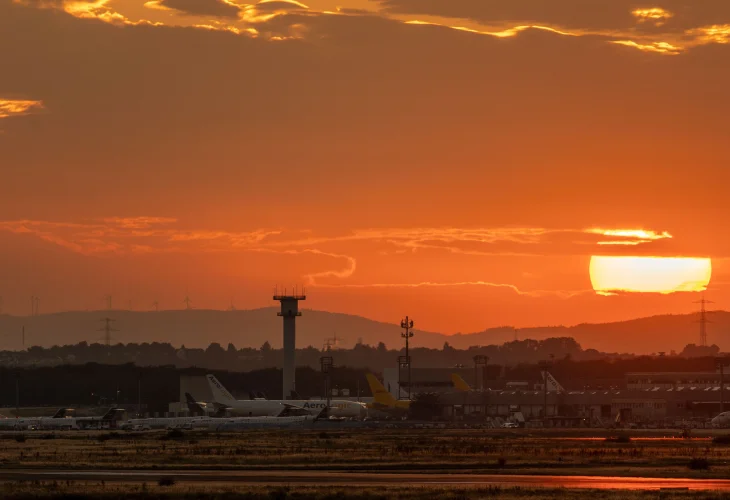
Europe is currently facing one of the most severe climate crises in its history. But unlike previous heat waves, this time the consequences extend far beyond extreme temperatures. What began as an unusual weather event has become a wide-ranging crisis affecting energy, transportation, industry and agriculture across the continent.
The energy sector has been directly hit by falling river levels. In Hungary, where temperatures are nearing 40 degrees Celsius, the government called on the public and businesses to immediately reduce electricity consumption. At the same time, the Paks nuclear power plant, which normally supplies about 40% of the country’s electricity, was forced to shut down three of its four turbines. As a result, the plant’s output fell from 2,000 megawatts to just 240 megawatts. Prime Minister Péter Magyar even warned that a complete shutdown of the plant—an event that has not occurred since it began operating 44 years ago—is closer than ever if the Danube’s water level continues to fall.
Meanwhile, Romania’s government declared a national state of emergency following a drop in electricity production and difficulties importing energy from neighboring countries. In an effort to save operations at the Cernavodă nuclear power plant, the military dispatched units that carried out controlled explosions using about 180 kilograms of explosives in the Bala channel of the Danube, aiming to divert water toward the plant’s pumping facilities. Despite the operation, one of the two active reactors was shut down, and major factories—including Dacia and Ford auto plants—were forced to temporarily halt production lines to reduce pressure on the power grid.
The crisis is not limited to those two countries. In Slovenia, output at the Krško nuclear power plant, which also supplies electricity to Croatia, was reduced to 80% of capacity because the Sava River’s water has warmed and its flow has declined. In Serbia, hydroelectric plant output has been affected, while Moldova has warned of a situation approaching catastrophe.
Alongside the energy crisis, shipping and industry are also taking a serious hit. On the Rhine, one of Europe’s most important shipping routes, the water level in the Kaub area fell to just about 24 centimeters—far below the 78-centimeter threshold needed for normal navigation. As a result, commercial vessels can carry only about 30% of their cargo capacity, shipping costs have soared, and steel company Thyssenkrupp has already reduced production at its plants in Duisburg. According to estimates by ING economists and the Kiel Institute, the disruption to shipping could cut as much as 0.3% from Germany’s GDP this year and cause the economy losses of up to 2.3 billion euros during the third quarter.
Europe’s aging refineries are also struggling to adapt to the new conditions. Facilities built in the 1960s and 1970s, which rely on cooling systems based on water and cool air, are being forced to slow production because cooling has become less efficient and because regulations prohibit releasing hot water into rivers. Against the backdrop of tensions in the Middle East, diesel refining margins have surged to levels not seen in nearly two decades.
Agriculture is paying a heavy price as well. In the United Kingdom, the grain harvest is expected to be the worst since 1984. In Italy, milk production has fallen by about 10% and the grape harvest has begun earlier, while massive wildfires are raging in Greece and Albania. Climate experts warn that vegetation that grew after the rainy spring has become “combustible material,” and that the peak of fire season is still ahead.
Meanwhile, Austria broke its national heat record twice within 24 hours, with 41.2 degrees Celsius measured in the town of Bad Deutsch-Altenburg—just one day after Vienna recorded a high of 41 degrees. In Italy, the Health Ministry declared a red alert in all 27 monitored cities—the first time every city has been included in the highest warning category—following reports of deaths among workers who were outdoors.

