

Israel News
Defense Minister Orders Urgent Probe Into Claims of Mistreatment of Wounded IDF Soldiers at Rambam
Yehoshua Shani, father of Capt. Uri Shani of blessed memory, has called for a thorough investigation into the care his nephew received after being severely wounded in fighting in Lebanon and hospitalized at Rambam. Shani says his nephew told his brother that staff turned him over in bed brutally, slamming his head into the mattress.
- Shlomi Diaz
- | Updated
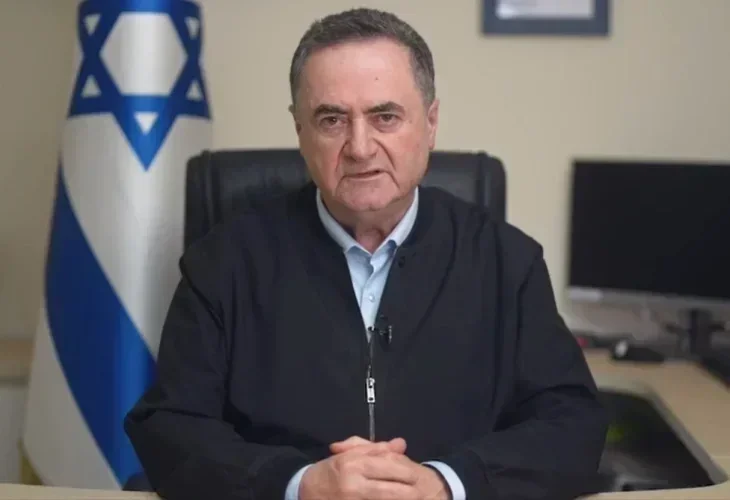 (Archive photo: Defense Ministry Spokesperson)
Defense Minister Israel Katz today (Sunday) instructed the IDF to investigate a family’s allegations of inappropriate conduct by Rambam Hospital employees toward wounded IDF soldiers hospitalized there. Katz ordered that the findings of the investigation be presented to him.
The minister specifically requested an examination of the claims regarding how the wounded soldiers were treated, as well as the treatment given to them and their family members. He said that if the allegations are found to be true and serious acts were committed, the necessary steps must be taken against those responsible and lessons must be learned to ensure such events do not happen again.
Katz said: "I view the testimonies published regarding the treatment of wounded IDF soldiers at the hospital with great severity. The heroic IDF soldiers who were wounded while defending the State of Israel deserve the most dedicated and best care, as well as respectful treatment for them and their family members.
"If it becomes clear that any staff member behaved toward the wounded soldiers in an inappropriate or serious manner, this will not be allowed to pass without consequences. We will not allow any party to treat IDF soldiers who were wounded defending the country this way. We will demand answers, draw conclusions, and act to ensure that such a case does not happen again."
The defense minister’s directive followed remarks published by bereaved father Yehoshua Shani, the father of Capt. Uri Shani of blessed memory, who fell in the fighting on October 7. Shani is the uncle of Eitan, who was severely wounded last week in southern Lebanon and is hospitalized at Rambam along with three other soldiers injured in the same incident.
The bereaved father wrote: "Eitan was sedated and on a ventilator. Only yesterday afternoon did he wake up, suffering from burns all over his body, pain, fever, and hallucinations. Then night came. A new shift entered the ward. Every member of the nursing staff on that shift was Arabic-speaking. At a certain point, all the families were removed from the ward and the doors were locked,
"It is important to understand the situation: four severely wounded IDF soldiers, who had just returned from fighting in Lebanon, were left alone behind locked doors, without their family members. I am saying this clearly: in the security reality we are living in, this is a situation that raises serious questions and a sense of insecurity for the families. These feelings must not be dismissed, and the questions must not be swept under the rug."
The father added: "Family members asked to enter. Not to interfere with the staff’s work. Not to sit there for hours. Just to go in for a second and see that Eitan was okay. Again and again they asked, and again and again they were refused. At a certain point, David, Eitan’s brother, decided he had to see for himself what was happening with his brother. He forced open the door and entered the ward. What he says he saw there is simply unimaginable. Eitan was not okay,.
"According to David, his wounded brother was lying there begging for water, and at that moment no staff member was near him to help. A soldier severely wounded in Lebanon. Just hours earlier, he had awakened from sedation and ventilation. Suffering from burns, pain, fever, and hallucinations. Begging for water, with no family member beside him. Eitan whispered something even more serious to his brother. According to David, Eitan told him that when staff members turned him over in bed, they did so brutally, ‘like a sardine,’ in Eitan’s words, and his head was slammed into the bed. I am not willing to let this pass without consequences."
Shani concluded: "When David cried out over what he was seeing, instead of someone stopping and asking the simple question—what happened here, and why is a wounded soldier begging for help?—a security officer was called to deal with David, who had entered the ward to check on his brother. We also tried to involve the IDF’s *Ram 2*. There was no representative available there for the family.
When a terrorist or security detainee is hospitalized, the State of Israel makes sure to post security around him, in part to ensure that no harm comes to him during his hospitalization. Yet here, four IDF soldiers severely wounded in fighting in Lebanon are lying in the hospital, while their family members are removed from the ward. They remain behind locked doors, without an IDF representative there for them, while the entire staff on shift, according to the family’s testimony, was Arabic-speaking. We know how to post a guard over a terrorist. But who is watching over our soldiers? I am not claiming that every Arabic-speaking staff member poses a danger. Certainly not. But in the reality of war, when wounded and helpless soldiers are hospitalized after battle, the IDF’s responsibility toward them does not end the moment the helicopter arrives at the hospital. The IDF must make sure they are protected, cared for, and that the family has an available military contact."

