

Parashat Shoftim
A “Beware of Dog” Sign Without a Dog: Is It Permitted?
A child’s clever idea to deter burglars raises a fascinating halachic question about honesty, deception, and protecting your property.
- Rabbi Erez Hazani
- | Updated
“A false witness testified against his brother” (Devarim 19:18).
Can You Put Up a “Beware of Dog” Sign Without a Dog?
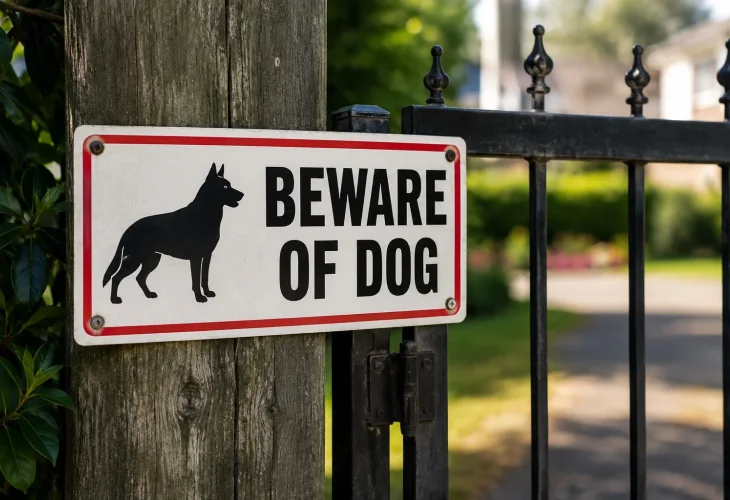
“A sweet young boy came to us,” related the great Rabbi Yitzchak Zilberstein, shlit”a, “holding a sign with large red letters that read: ‘Beware of Dog in the Yard.’ Next to the warning was a picture of a large, intimidating dog.
“The boy asked, ‘May I hang this sign at the entrance to our yard?’
“‘What’s the question?’ we wondered. ‘Why wouldn’t you be allowed to hang it?’
“The boy explained: ‘The problem is that we don’t actually have a dog. But we’re worried about burglars, and we want to put up the sign to scare them away and keep them from breaking into our home.’
“So the boy wanted to know: ‘Is it permitted to put up this warning sign, or would that be considered misleading or dishonest?’”
Is the Sign Considered Deceptive?
It appears that there is no prohibition against misleading others in this case. The homeowner is not trying to obtain anything from anyone through deception. He simply wants to protect himself and his property from burglars. In such a situation, it appears that there is no prohibition against misleading others.
There is also no concern of lying.
We find a similar idea in the Gemara (Yevamot 115b). If a container is found with the word “Terumah” written on it, the fruit inside is considered ordinary, non sacred fruit. We do not automatically assume that it is actually terumah.
Why? Because we assume that the owner may have deliberately left the label on the container so that people would stay away from the fruit, believing it to be sacred. This indicates that when a person is trying to protect his property, there is no concern of lying.
So, Is a “Beware of Dog” Sign Permitted?
In summary, even if there is no dog on the property, it is permitted to hang a “Beware of Dog in the Yard” sign in order to deter burglars.
The best approach, however, would be to avoid making an explicitly false statement. For example, if the sign originally read, “Beware of Dog in the Yard,” it would be preferable to leave out the words “in the yard” and simply write, “Beware of Dog.”
This story is from the book Achat Sha’alti, based on the teachings of the great Rabbi Yitzchak Zilberstein.

