

World News
Jellyfish Swarm Shuts Down Most Reactors at France’s Largest Nuclear Plant
A massive swarm of jellyfish disrupted operations at the Gravelines nuclear power plant, forcing most of its reactors offline. It is the second time in a year that jellyfish have interfered with operations at Western Europe’s largest nuclear facility.
- Yuval Aviv
- | Updated
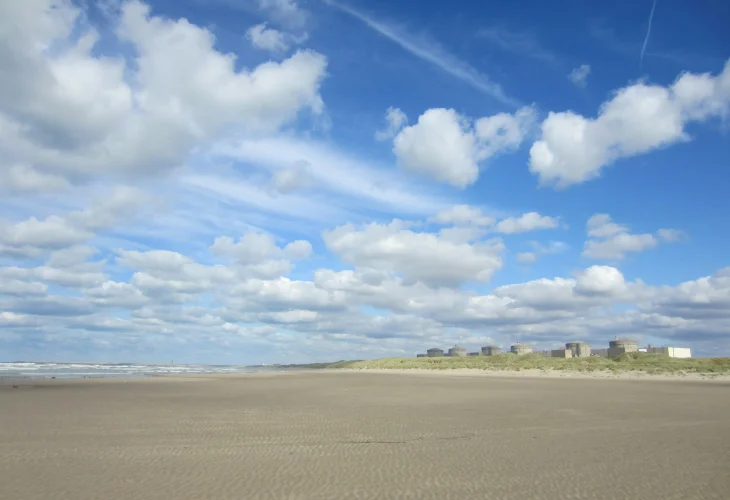 The power plant in Gravelines, France
Three of the six reactors at the Gravelines nuclear power plant in northern France were shut down yesterday (Tuesday), after a massive swarm of jellyfish entered the cooling-water intake systems and disrupted their operation. At the same time, a fourth reactor was forced to cut its output by roughly half, while another reactor had already been taken offline for maintenance. That left just one reactor operating at full capacity at Western Europe’s largest nuclear power plant.
French electricity company EDF, which operates the site, said the incident was similar to one that occurred last year, when it was also forced to carry out a comparable shutdown because of a jellyfish swarm. Despite the impact on electricity production, the company stressed that "the situation has no impact on the safety of the facilities, the safety of personnel, or the environment."
The Gravelines plant has six generating units, each producing 900 megawatts of electricity. Together, the plant has a total generating capacity of 5.4 gigawatts, so any disruption to its operations has a significant effect on the country’s energy output.
The latest incident adds to a series of challenges facing France’s nuclear energy industry in recent months. Heat waves and drought conditions affecting the country forced EDF to shut down several reactors during June and July because of high temperatures. Even before the Gravelines reactors were taken offline, France recorded a 15.6% shortfall in nuclear energy production on Sunday. In addition, one reactor in the country’s northeast was shut down for most of the summer due to low water levels in the Meuse River, while another returned to only partial operation and remained largely offline throughout most of July.
After last year’s incident, EDF introduced a series of measures aimed at reducing the risk posed by jellyfish swarms in the future. Among other steps, permanent cameras were installed in the intake channels and the filter-drum system, to identify blockages quickly and prevent them from spreading. At the same time, the company began working with a French fishing organization and a maritime rescue organization, which monitor jellyfish swarm movements and carry out proactive efforts to thin them out before they reach the plant area.
Despite those preparations, the swarm’s impact could not be completely prevented this time either. Fishing boats were able to reduce the scale of the damage, but the jellyfish still blocked the cooling systems. The jellyfish are now being removed using pumping trucks, and the company estimates that, since no additional swarms have been identified approaching the area, the offline units can be brought back into operation soon.

