

World News
Iranian Official: No Talks on Extending Ceasefire With U.S.
The U.S. military fired Hellfire missiles at a cargo ship accused of violating a naval blockade on its way to Iran. An Iranian official says the Strait of Hormuz will remain closed without U.S. concessions.
- Shlomi Diaz
- | Updated
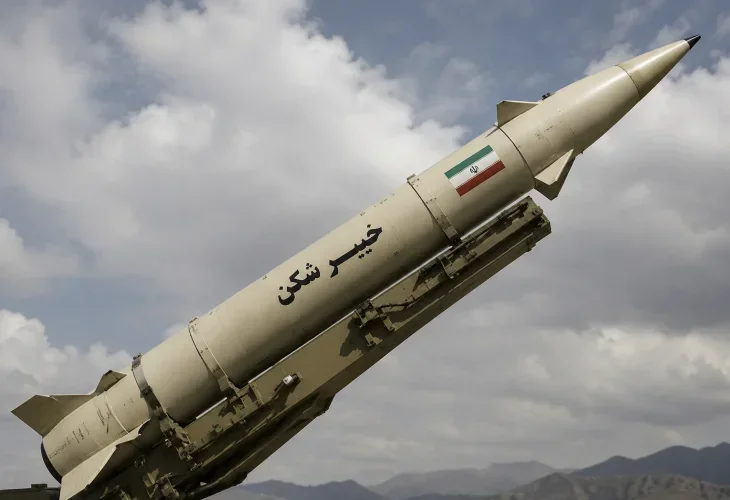
Reuters quoted a senior Iranian official on Wednesday afternoon as saying that "there are no discussions about extending the ceasefire between Iran and the United States."
At the same time, the U.S. military said that a U.S. Navy MH-60 helicopter fired two Hellfire missiles to disable the steering system of a Panama-flagged cargo ship that was attempting to reach Iran. The ship ignored repeated warnings to stop violating a naval blockade on Iranian ports, according to U.S. Central Command. Maritime sources told Reuters that the vessel was struck off the coast of Pakistan while sailing toward the Strait of Hormuz.
As a reminder, Iranian security official Mohsen Rezaee said last night that the vital shipping route through the Strait of Hormuz will remain closed unless the United States accepts Iran's terms for ending the war: releasing Iran's frozen assets and ending conflicts across the region, including in Lebanon and Gaza. This followed a new demand by Trump on Monday that Iran pay compensation for people killed in 50 years of wars, attacks, and protests.
Raising the possibility of further escalation, Mohammad Reza Naqdi, an adviser to the commander of Iran's Revolutionary Guards, said on Iranian state television that the force is developing the ability to carry out operations "on enemy soil."
"We must be able to move operations onto enemy soil whenever necessary and when ordered to do so," he said. "This is the defining feature of the offensive doctrine that must be achieved."
Overnight, U.S. President Donald Trump addressed his handling of Iran and said that he "does not trust Iran." According to him, "They lied to me constantly." The American president claimed: "We have complete control over the Strait of Hormuz; we own it. They have no control. Maybe at some point they will do something and they will be bombed. But right now, we are in a very good position. Here is a country that was the bully of the Middle East for 50 years—and it is no longer that."
Meanwhile, according to a CNN report, the U.S. State Department instructed American embassies in the Middle East to prepare plans that would allow them to continue operating with reduced staff, amid concerns about the possibility of a return to war with Iran. In addition, staff members who were evacuated from their posts at diplomatic missions in the Middle East are increasingly being given options to end their assignments.

