

Faith (Emunah)
Embroidering Psalms: How 150 Women Stitched Prayer, Art, and Unity Together
A unique Israeli art project brings the 150 chapters of Psalms to life through embroidery, uniting women from diverse backgrounds through creativity, faith, prayer, and a shared hope for healing
- Michal Arieli
- | Updated
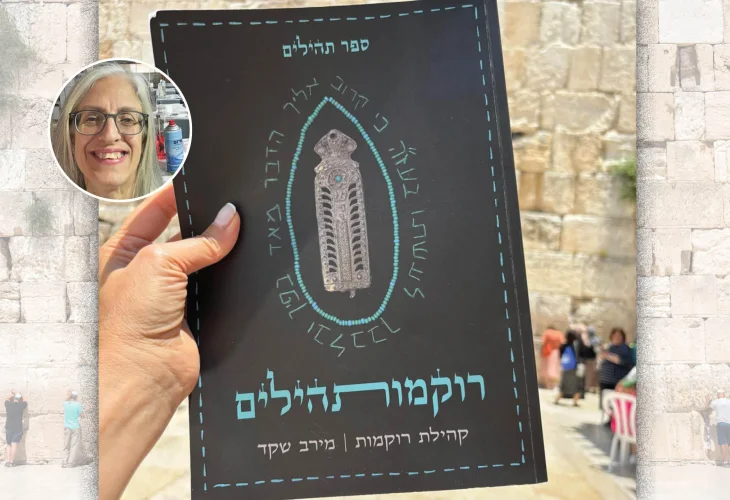 (Inset: Meirav Shaked)
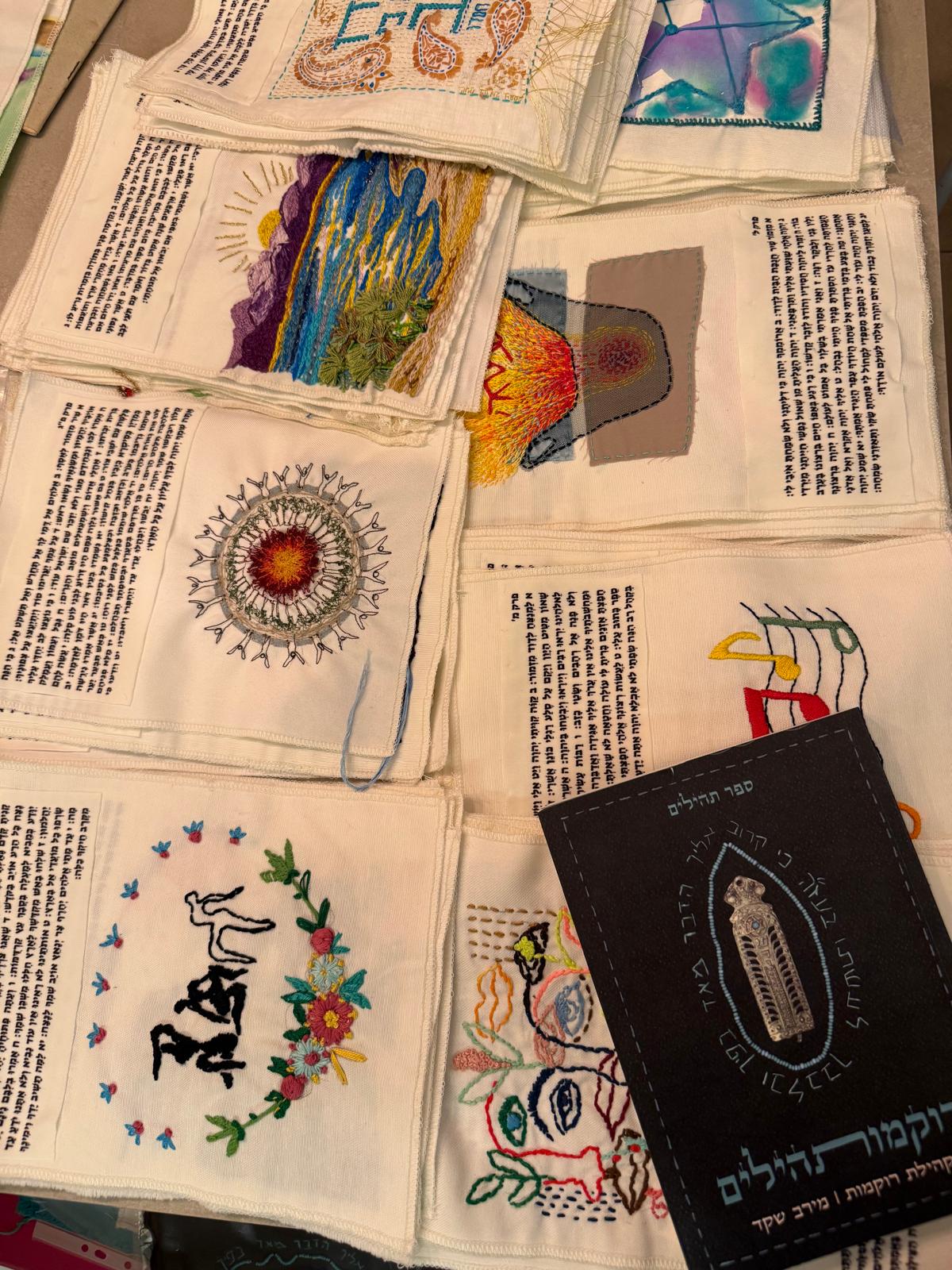
At the heart of a new exhibition at Emunah College, bearing the intriguing title “When Design Meets Psalms,” stands a wall that stops visitors in their tracks. It is covered with small pieces of fabric, each measuring just 10 by 10 centimeters, which together form a mesmerizing visual mosaic. Some are woven with gold threads, others feature intricate embroidery, and still others are original works created by students at the college.
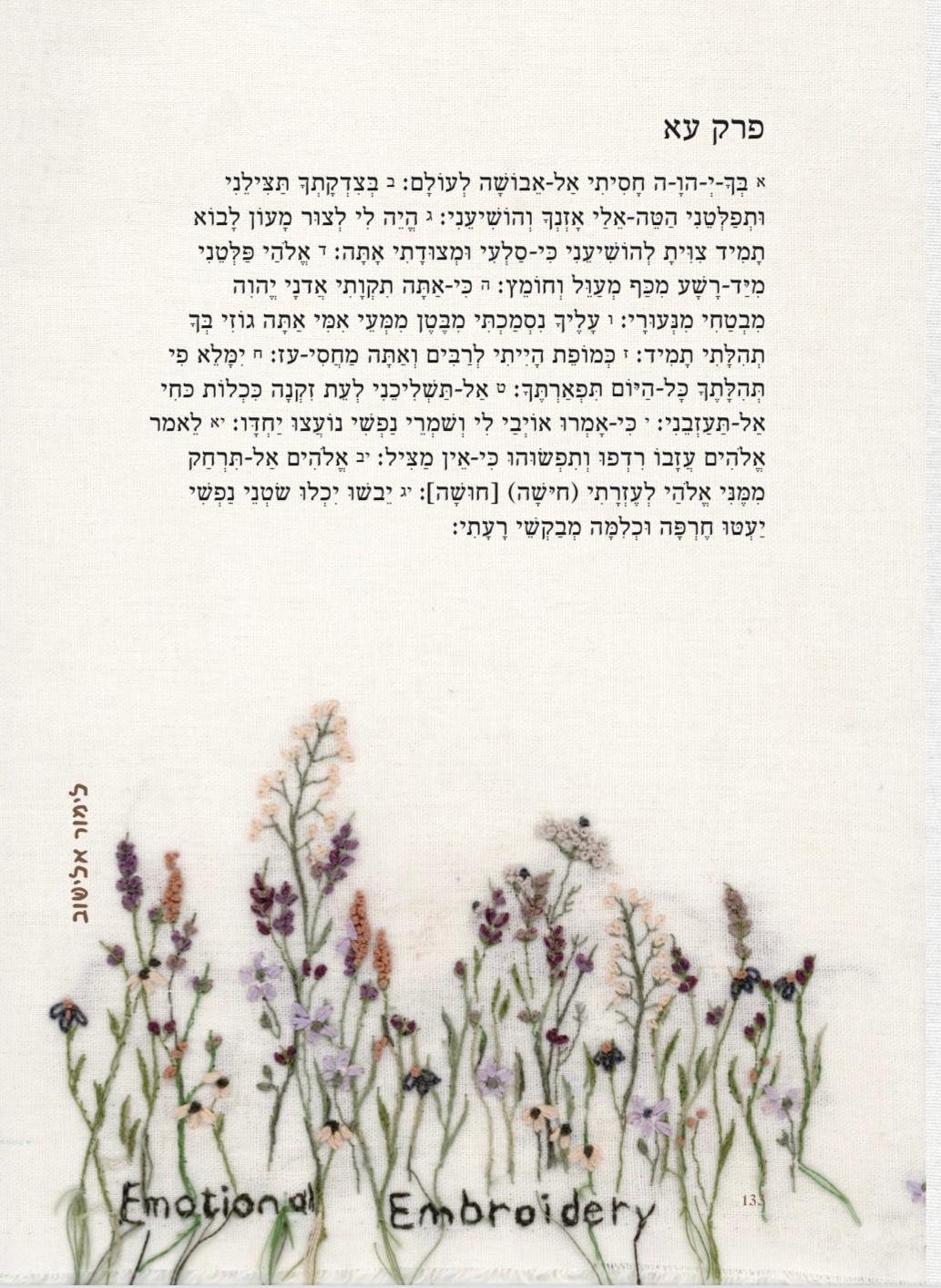
Behind this remarkable display is “Embroidering Psalms,” an ambitious project that has produced an exquisite Book of Psalms unlike any other. Each of the 150 chapters has been given its own visual interpretation through handcrafted artwork created by women from across the spectrum of Israeli society: religious and secular, women from the center of the country and the periphery, from the political right and left. Each woman chose the chapter that spoke most deeply to her heart.
“The project was born from a profound belief in the power of prayer to bring hearts closer together,” explains artist Merav Shaked, who initiated the project. “My dream was to make the Book of Psalms accessible to every woman through beauty and art. What emerged is not simply a book, but proof that even when our opinions differ, our hands can still embroider a shared story of unity.”
The Crisis That Inspired the Project
For Merav, the connection to Psalms began during a severe personal crisis nearly a decade ago.
“I was in tremendous distress. I felt as though my world was about to collapse,” she recalls. “I was searching for something spiritual to hold on to, so I opened a Book of Psalms and began reciting chapters, praying for things to work out. Within a short time, and completely unexpectedly, the situation was resolved in the best possible way. I was stunned. From that morning on, Psalms became an inseparable part of my life.”
About three years ago, Merav had an idea that would take her love of Psalms in a new direction, combining prayer with art. She issued an open invitation for women to join a community of embroiderers, guided by the belief that art does not belong exclusively to professionals. Anyone can pick up a needle and thread and create.
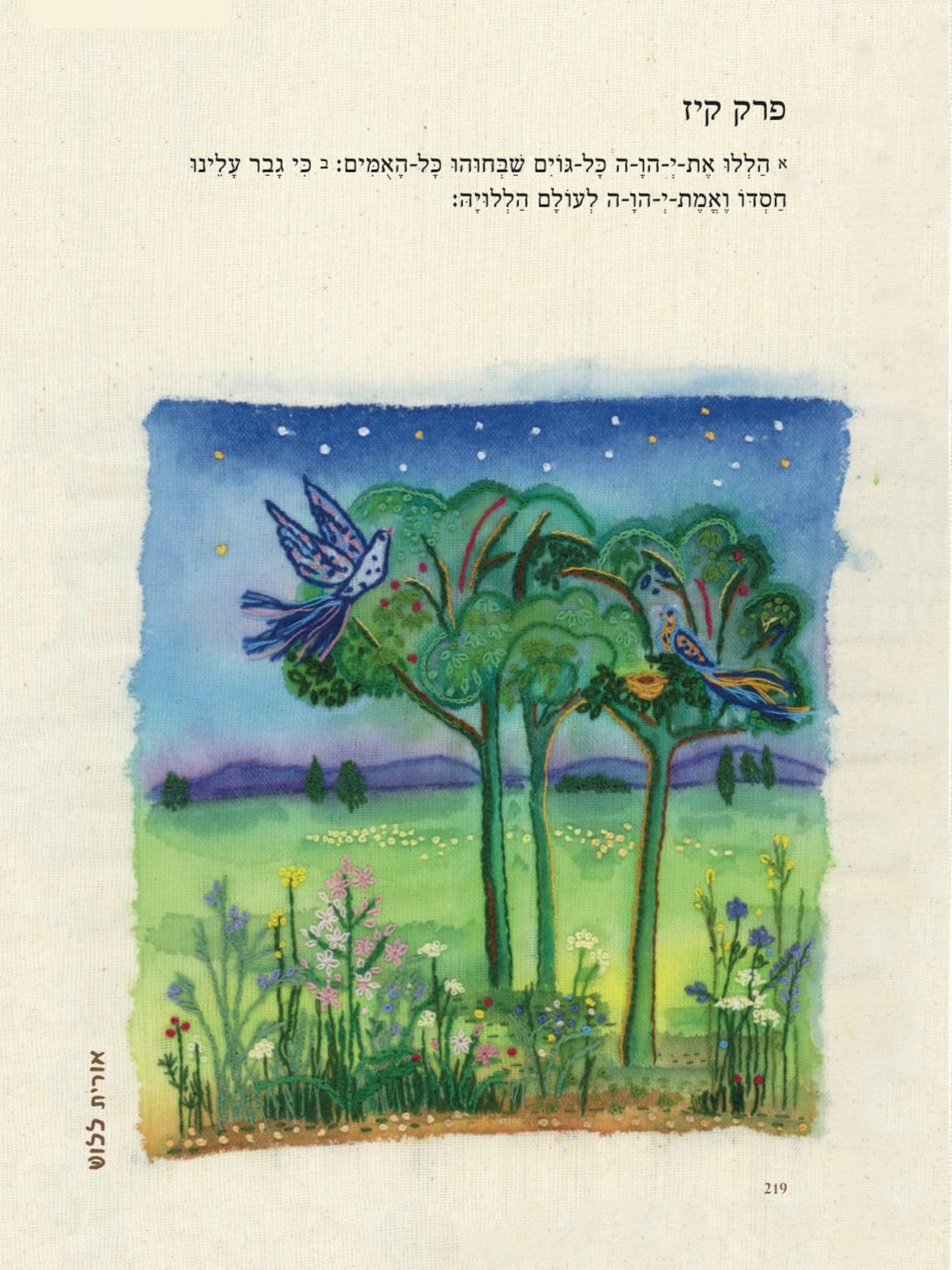
Each participant was asked to choose a chapter of Psalms to which she felt a particular connection and simply begin creating.
When Merav sat down to embroider her own chapter, Psalm 1, “Happy is the man,” she intended to be the first to finish. Then the war broke out.
“For a while, I simply could not create,” she admits. “I just sat and read Psalms and prayed for the Jewish people. From there, I found the strength to continue moving forward and to encourage the other women taking part in the project.”
A World Within Every Piece of Fabric
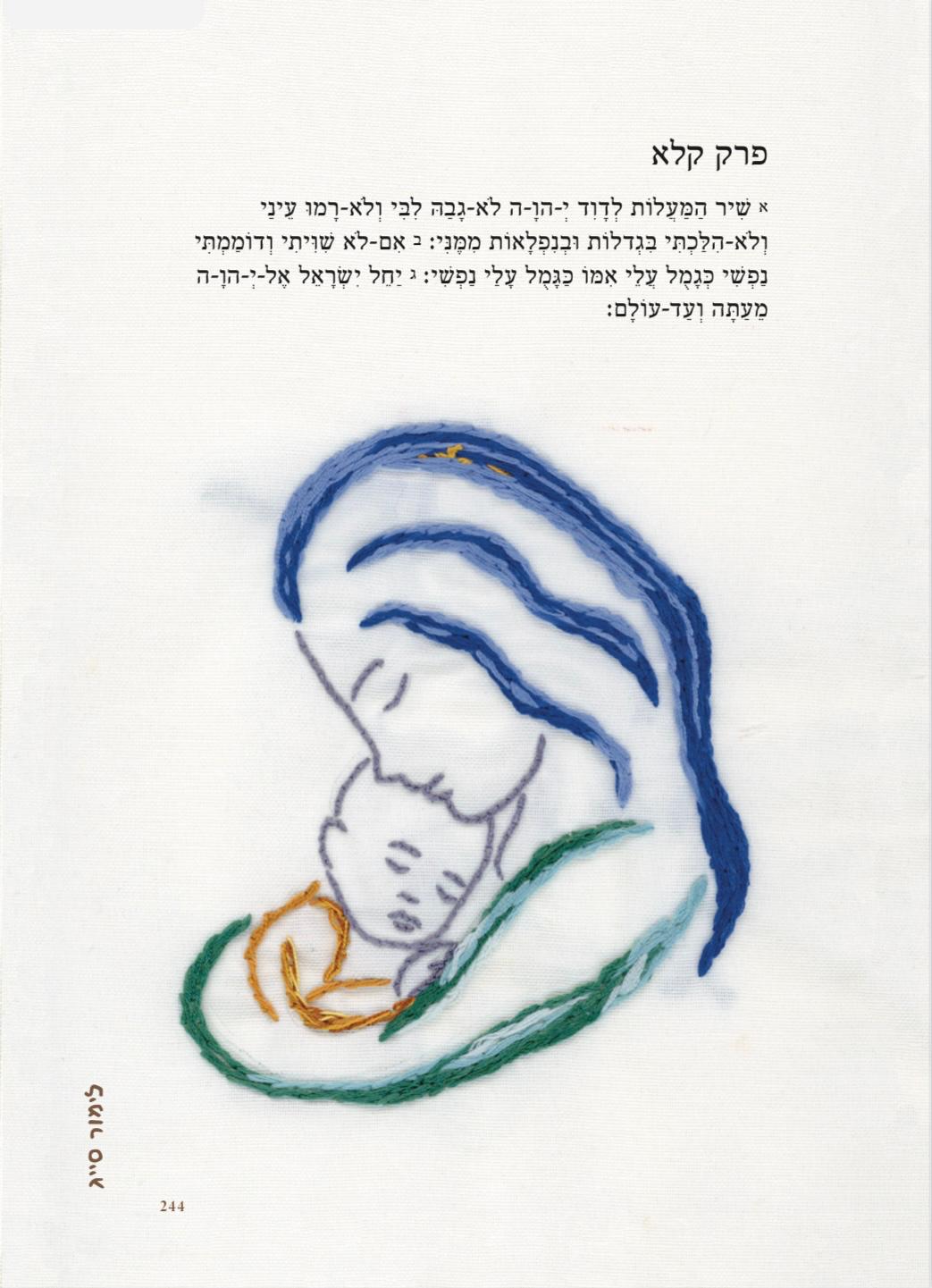
Turning the pages of the beautifully produced book, which contains photographs of all 150 Psalms as interpreted in embroidery, it is difficult not to feel the heart beating behind every creation. Each tiny piece of fabric seems to contain an entire world.
Among the works is an embroidery by 97-year-old Devora Shosha, who created a circle containing the names of Jerusalem. She has not stopped embroidering since. Today, she continues making small fabric bags for Books of Psalms that are distributed to IDF soldiers.
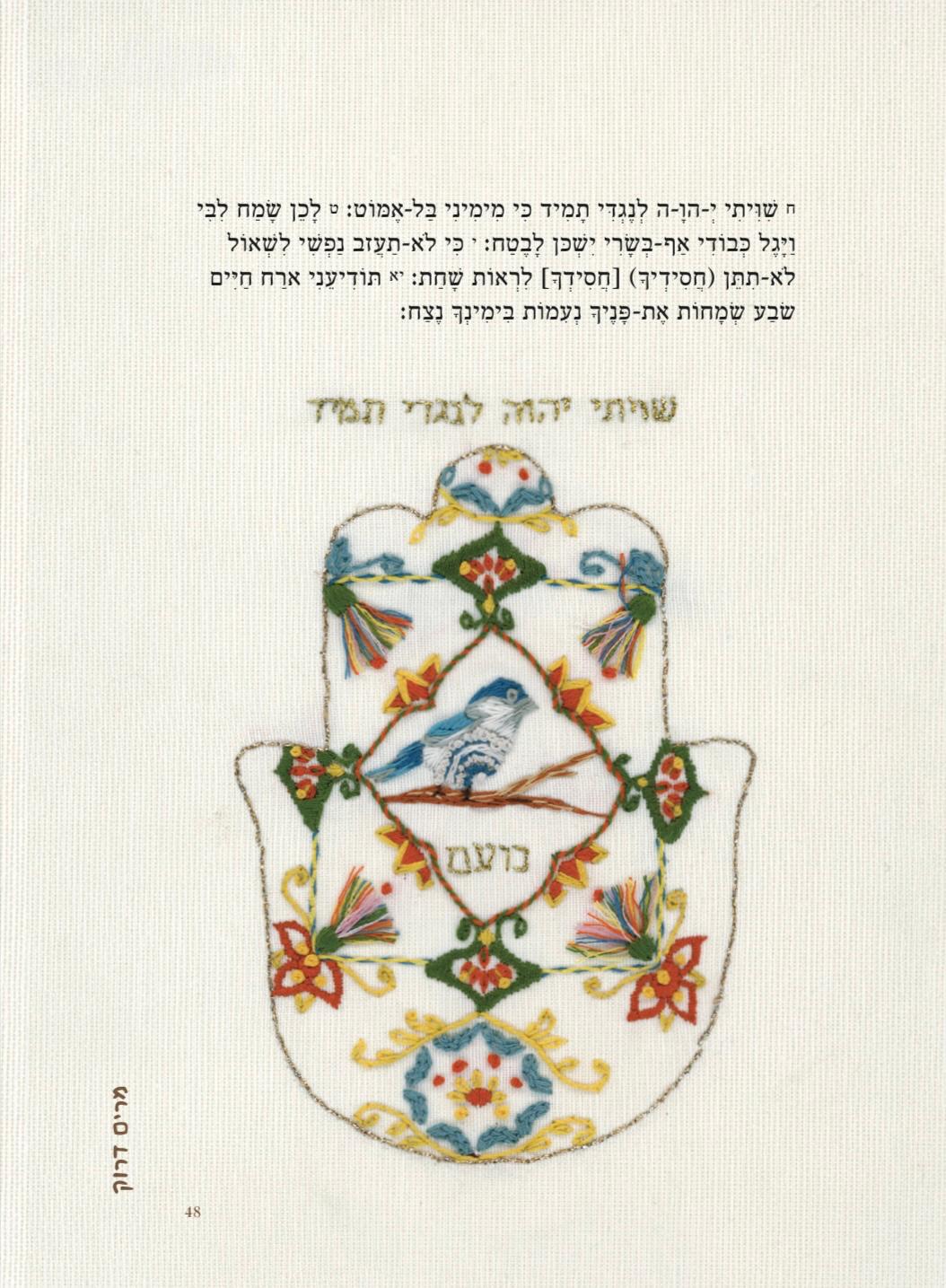
Alongside her work is the creation of Tefillah Arkadi, a young woman who is blind and refused to allow her disability to prevent her from participating. Using her sense of touch, she embroidered the “holy mountain” described in Psalm 15.
At the heart of the book is a deeply moving work by artist Rivka Sapir. Twenty years ago, while suffering from a serious lung disease, she promised that if she recovered, she would give thanks to Hashem. She chose Psalm 116, “How can I repay Hashem?”
But as she prepared to create her piece, tragedy struck. Her eldest son, Yehonatan Tzur, was killed in battle on Simchat Torah. Through her tears, she embroidered crowds of people ascending in pilgrimage, accompanied by a prayer for the complete Redemption to come soon.
Haredi artist Sigal Maor also joined the project. She chose Psalm 30 and surrounded it with an open brown sack from which emerge a seed of light and the Hebrew word simcha, joy. Her work serves as a reminder that even within suffering and pain, it is possible to search for light.
The remarkable human mosaic continues throughout the book. Adele Simon Aminoff, a homeopath and artist, interpreted Psalm 41 as a rising, curling spiral representing the cyclical movement of life and the desire to bring healing and charity into the world. Carmel Karati, a computer engineer who later retrained as a homeopath, created a mandala of freely flowing circles around Psalm 23. Rakafet Berger, who works in high tech, embroidered points of light spreading outward beyond the center of the fabric.
Piece by piece, the book filled with strikingly creative and deeply personal interpretations of Psalms.
Living With Psalms
Embroidering Psalms quickly developed into an unusual cultural phenomenon.
“To date, I have sold thousands of copies of the book, and most of them have actually been purchased by women who are not religious,” Merav reveals.
She believes the reason lies in the unique language through which the project introduces women to Psalms.
“I think the secret of its success is that Psalms meets the secular woman without making her feel threatened. It speaks to her through art, aesthetics, and beauty. Once art lowers the barriers of resistance, the heart opens. The eyes begin reading the chapters, and it becomes very difficult to remain indifferent.”
The emotional response to the book has continued to create new circles of connection. Merav has heard from women who opened the book and immediately burst into tears. Others were inspired by it to begin lighting Shabbat candles or reciting Psalms.
The project also inspired Shaked to establish a women’s group that gathers to recite Psalms together, with the intention of bringing additional merit and Divine mercy to the Jewish people.
“In the end,” she says, “this exhibition proves one thing: every one of us can connect to the Book of Psalms. Each woman can come from her own place, with her own heart and her own prayer. May we merit to experience that connection.”

