

Faith (Emunah)
After Losing Her 5-Year-Old Son, a Mother Shares Her Journey of Faith
Shira Madlai opens up about raising four children on the autism spectrum, the devastating loss of her young son Harel, and how grief, family, and an unshakable connection to God helped her find the strength to choose life and rebuild after tragedy
- Miri Ben-David Levy
- | Updated
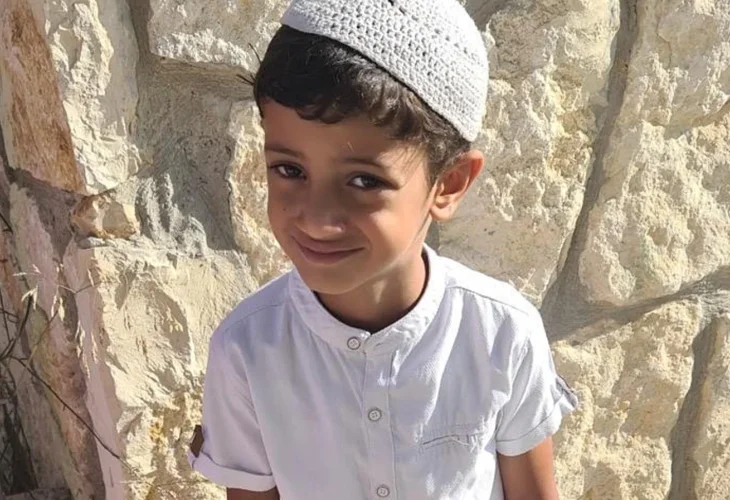 Harel Madlai, of blessed memory
For a long time, Shira Madlai, 42, an educational support professional from Kfar Tapuach in Samaria, thought the greatest challenge of her life was the fact that four of her five children were on the autism spectrum.
“Then, five years ago, my husband and I found ourselves facing the most painful tragedy, one that accompanies us every day and every hour. It became the journey of our lives.”
Shira takes a deep breath and goes back to the beginning.
“When the children were young, we thought we were a regular family.”
She takes out a family photograph of herself with her husband, Liron, and their five children: Hallel, now 21; Rani, 18 and a half; Noa, 17; Gilad, 12; and little Harel, who will forever remain five and a half.
“Of course, we had the everyday challenges that many young families have: work, making a living, raising the children. At a certain point, when Hallel was already in fourth grade, we discovered that she was on the autism spectrum with high functioning autism. That raised more and more red flags, and eventually we realized that two more of our children were also on the spectrum. Later, Harel was born, and because by then we were already aware of the signs, he too was diagnosed as he grew older.”
How surprising was it for you?
“The signs had been there all along. The education system simply did not recognize them in time. We are very involved parents. First and foremost, I am my children’s mother. That means meetings, assessments, running from place to place, doing everything possible to help them progress. With Hallel, it simply fell through the cracks.”
For Shira, the diagnosis became a turning point.
“It is very demanding and difficult. At the same time, we found, and continue to find, the good in each child and appreciate each one for who they are. But of course, there are constant moments of inner struggle. From the moment Liron and I understood that we were facing a major challenge, we went for parental guidance. It was important for me to understand that it wasn’t us. For years, I blamed myself. I thought I had done something wrong as a mother and that this was why my children were this way.”
She clearly remembers something the psychologist told her.
“She said to me, ‘It’s not you. This has nothing to do with your mothering. You are the best mother you can be. You have helped your children reach such high levels of functioning. Not many people manage to do that.’ That sentence lifted me up and changed the way I saw myself. I told myself, that’s it. I’m done blaming myself.”
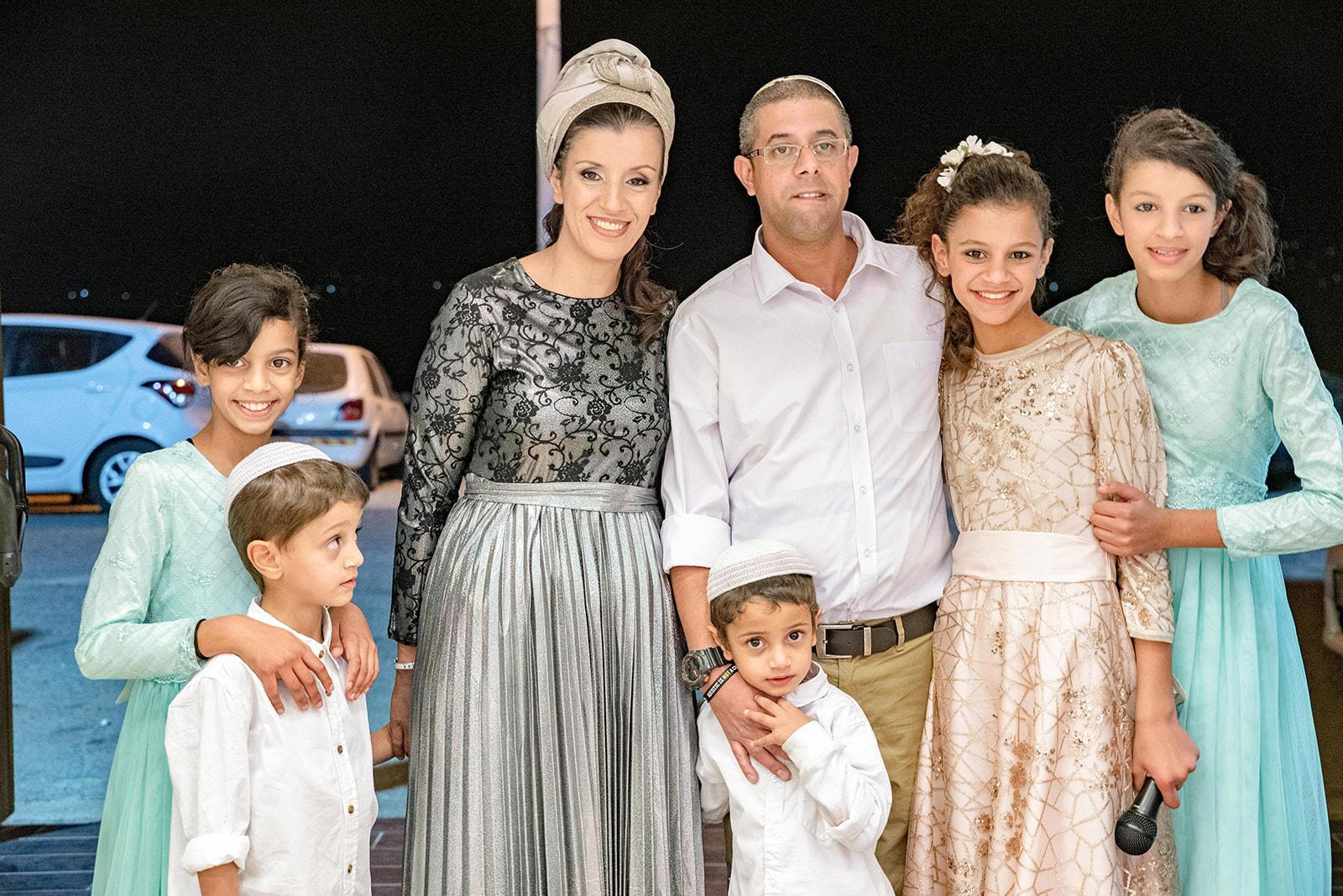 Madlai family with Harel
We Didn’t Let Autism Run Our Home
Alongside the diagnoses, Shira and Liron, 44, who coordinates transportation for special education in the Samaria Regional Council, made a clear decision: autism would not become the center of their family life.
“We decided together that we were not going to view it as something bad. We also decided not to give it too much space. Autism is not a constant topic of conversation in our home. Everyone is equal. Everyone grows up with the same expectations, and no one gets a free pass, even if the path to getting there is more complicated.
“So fine, I may have to ask ten times for someone to wash the dishes or clean their room, but eventually it gets done. Of course, I’m not going to pretend that reality is easy. It isn’t. It is extremely intensive, and our days revolve around treatments. It means constantly running to doctors, speech therapists, occupational therapy, hydrotherapy. I was always on the road, going from one place to another.”
The second significant decision they made was not to hide the diagnoses.
“Once we told the family, suddenly there was more acceptance, more understanding, more empathy, and more patience. When something has a name, it becomes easier for people to understand. We decided not to keep it to ourselves, but to share it with the people close to us.
“From a place of faith, I remember my conversations with the Holy One, blessed be He. I told Him, ‘I don’t know what You want from me. But if You gave me this, there must be something within me that is capable of handling it. Maybe I have a mission here, to help my children progress and to help others.’”
Her husband shared the same perspective.
“There were painful moments too,” she says. “During a meeting with a psychiatrist who accompanied us in one of the programs, she told us, ‘You need to stop having children.’
“I remember Liron’s response. He told her, ‘Apparently the Holy One, blessed be He, did not give us more than one child for no reason. Apparently we are doing something right, and He trusts us.’
“And truly, this was never a reason for us to give up our dream of continuing to grow our family. Thank God, despite all the challenges, we raised them with love, smiles, and joy.”
She pauses.
“Until that unforgettable summer day.”
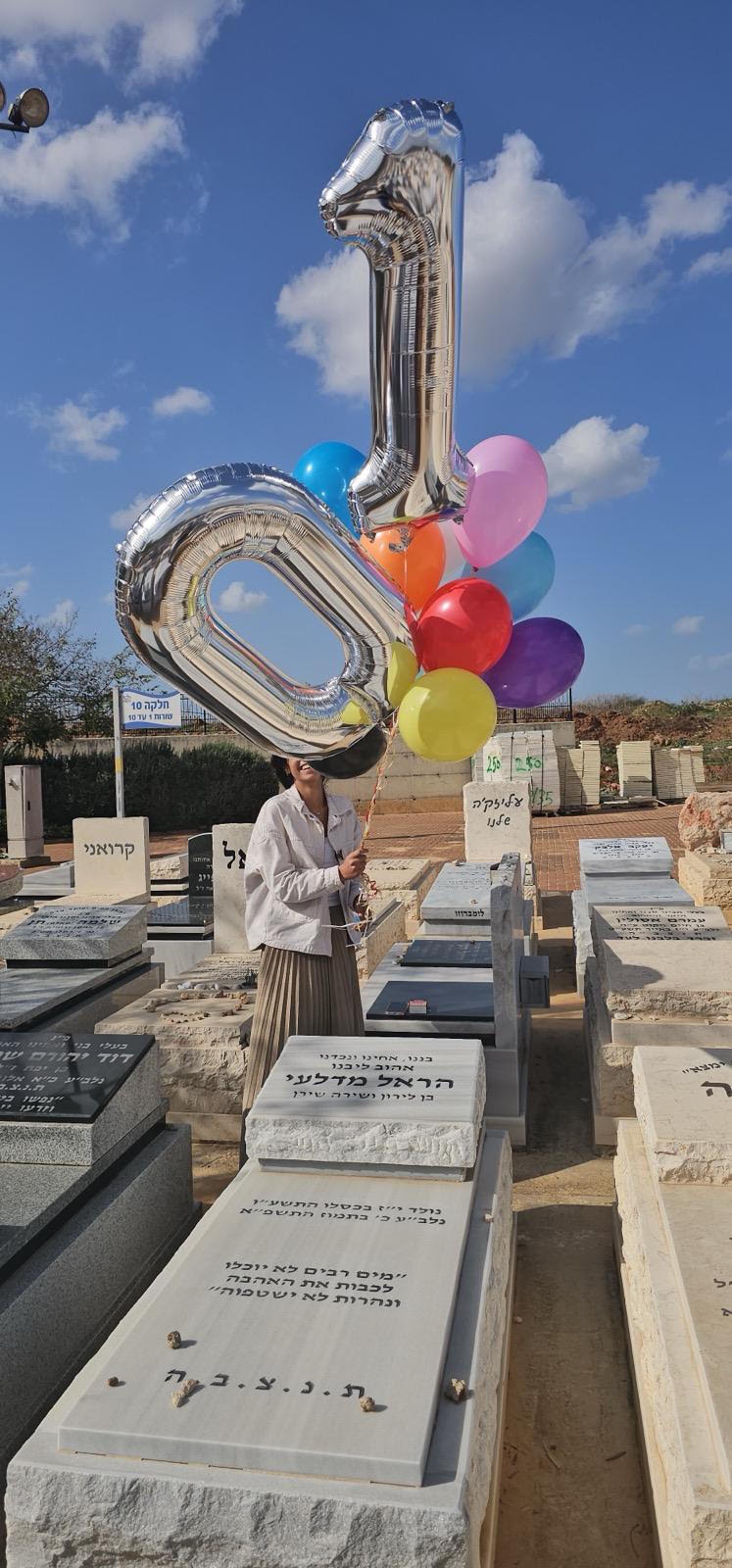 Visiting Harel's grave on his birthday
What happened that day?
“It was a Tuesday. Liron had gone with Gilad to an end of year event for children with special needs. Harel, who was five and a half at the time, asked to go to a swimming pool with a friend from kindergarten.
“I didn’t hesitate because he had already gone out with this father and his son several times. Every time, Harel came home happy and excited. I had absolutely no reason to say no.”
Only much later did Shira discover that the circumstances were very different from what she had understood.
“I understood from the father that it was a private pool. Only after everything was investigated did I learn that it was a different pool and that they had entered outside its regular operating hours, without a lifeguard. These were things I simply did not know.
“In any case, I remember every detail of the moment our lives turned upside down. Liron came toward me while speaking on the phone. He immediately said, ‘We’re going to the emergency room.’ At first, I thought perhaps something had happened to Gilad.
“Then I understood that Harel had drowned. We received a call from the doctor telling us that Harel had arrived without a pulse or breathing and that after prolonged resuscitation efforts, they had managed to revive him.”
Shira tries to remember what was going through her mind during those moments.
“I looked at Liron and realized that I had a child sitting in the back seat watching everything. I had to hold myself together. I asked Liron just to call my mother and tell her to pray.
“My father had passed away years earlier. I found myself turning to him too: ‘Abba, please fight. Fight for him. I’m begging you.’”
When they arrived at the hospital, they encountered a reality for which nothing could have prepared them.
“He was connected to so many machines and was sedated. It was an extremely difficult sight.”
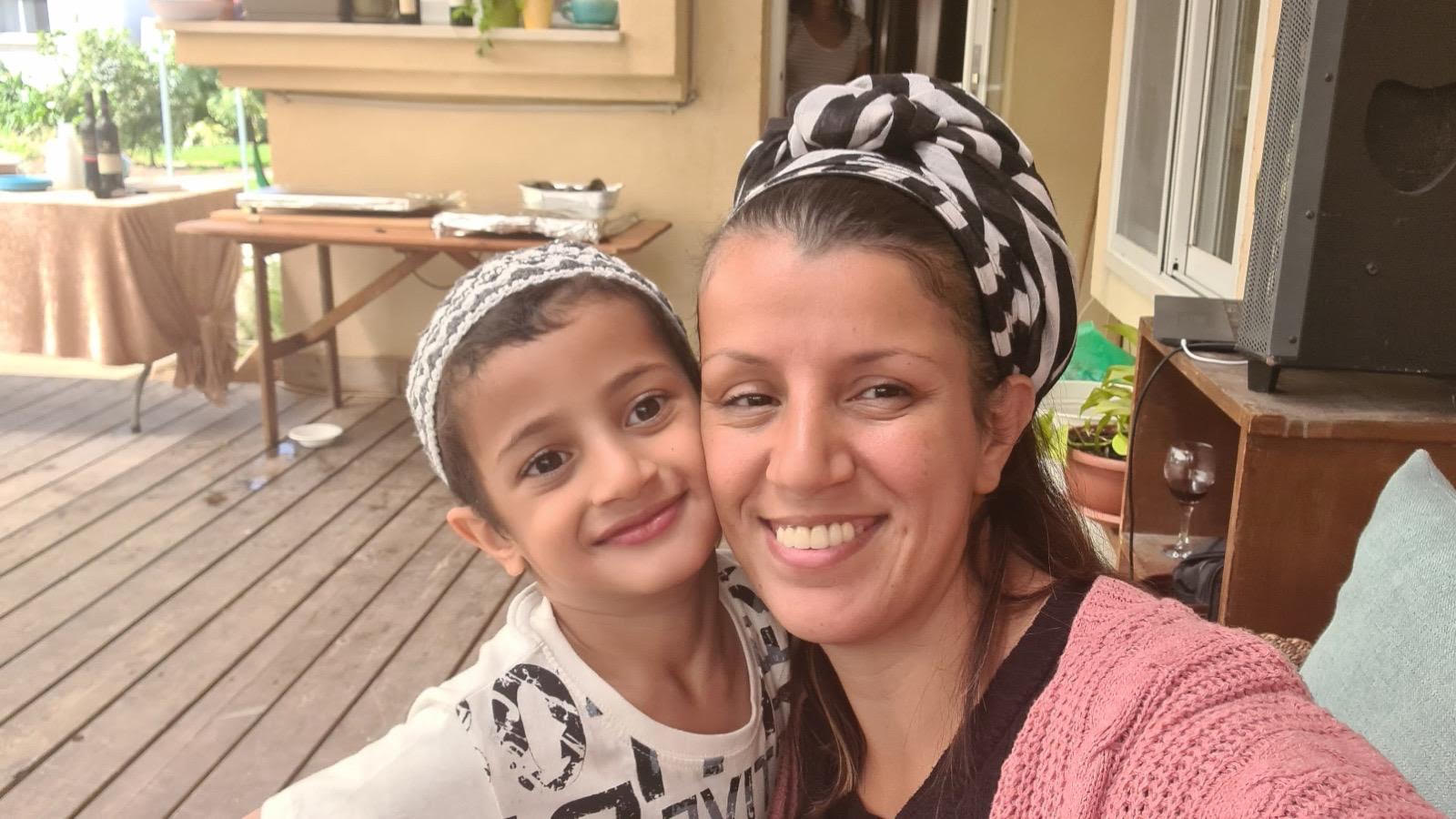 Shira with Harel
A Mother Knows. A Mother Feels.
For eight days, they remained beside Harel’s bed, holding onto every glimmer of hope. They prayed, added a name to his name, held challah separation gatherings, and continued believing that perhaps a miracle would still come.
But after several days of cautious optimism, Shira began to sense that something was changing.
“I’m a mother. A mother knows. A mother feels. During the first few days after the drowning, it seemed as though there was something to hold onto. He responded to voices and touch. There was a sense of optimism.
“But after Shabbat, something changed. They did physiotherapy with him, and I could see that his body was no longer responding to touch. I felt that something was happening. Slowly, his readings began to change, and I understood that something was wrong.”
A week later came the moment she had feared most.
“The doctors took Harel for tests to determine his neurological condition. Two hours later, they called us in, and the doctor told us that he was brain dead.
“The previous day, I had been connected with a mother whose son had drowned as a baby and remained in a vegetative state. I was not prepared for that to become our story.
“After meeting her, I walked into a field near the hospital, looked up at the sky, and said, ‘Please, don’t do this to me. If You choose to take him, it is because You chose to take him. But if You return him to me, return him to me completely. I cannot accept anything less. I cannot accept something in between. Either everything or nothing.’”
The following day, the halachic ruling was also given.
“Only the social worker was with me in the room. I fell to the floor and screamed, ‘Why?’
“That was the first time I truly felt my faith begin to shake. A thought went through my mind that I would open the door, throw off my head covering and say, ‘I’m finished with You. I don’t want this anymore. That’s it. It’s over.’”
But almost in the same breath, another thought emerged.
“I said to Him, ‘Do You hear me? You chose this for me, so You are going to lift me out of it. No one else. Only You. Right now, I am holding tightly onto You. Whatever happens to me from this moment forward is Yours. This belongs to You.’
“And when I look back, from that point onward, my faith only grew stronger and stronger.”
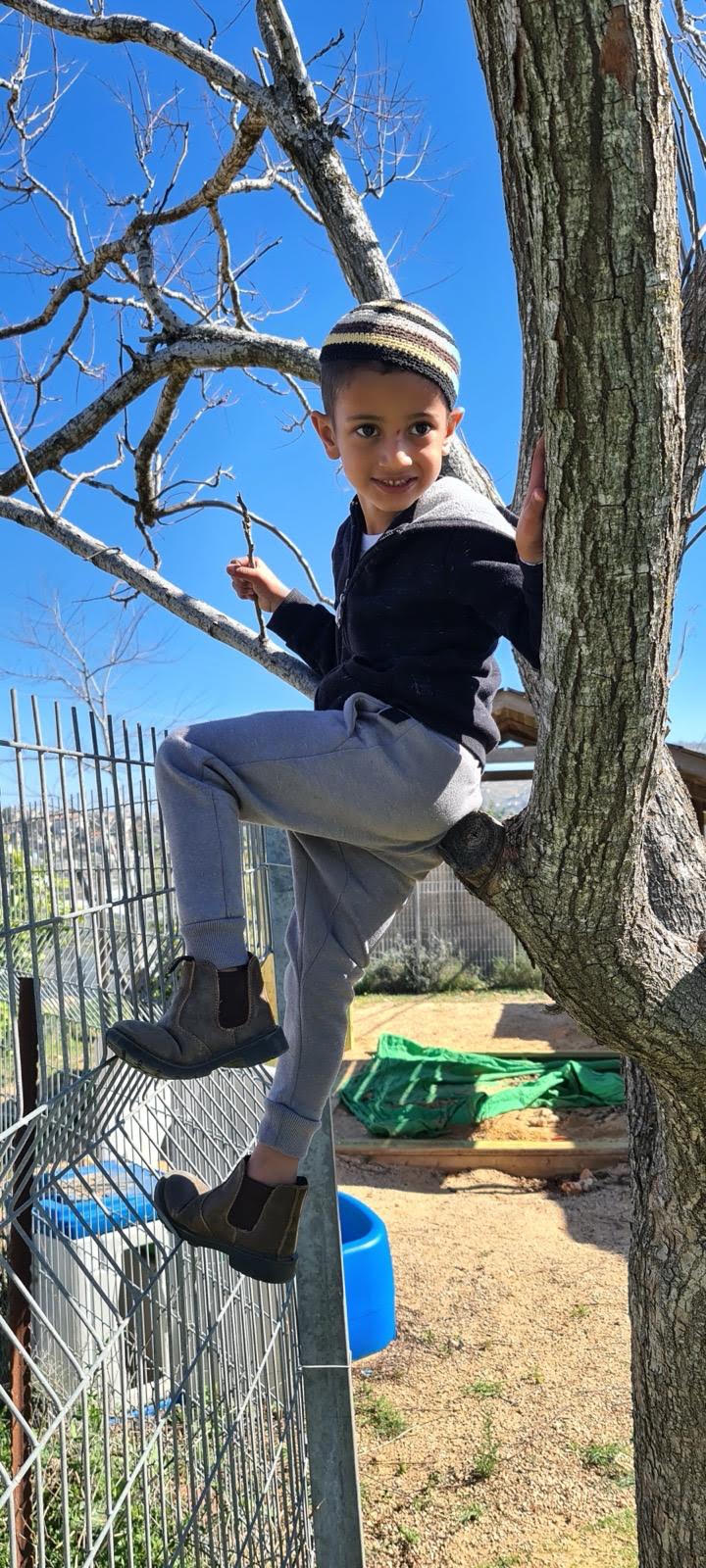 Harel
HarelDid you say goodbye to Harel?
“Absolutely. I went into the intensive care unit. I approached him and came close to his bed. I said, ‘Hareli, I’m not angry. I love you. And I’m letting you go. Go.’
“From that moment, I understood that an entirely new journey was beginning for me.”
How do you even get up in the morning after a tragedy like this?
“It is a struggle that never truly ends. In the middle of that enormous shock, Liron and I understood that where human understanding ends, faith begins.
“Only faith. Only faith.
“Without faith, I felt I would lose my sanity. I remember the conversations I had with myself. I told myself not even to try to understand what had happened because otherwise I would go crazy. This was not mine to understand. These are calculations of Heaven. Don’t go there.
“There was a lot of anger inside me, like there can be between a father and daughter. Sometimes close, sometimes distant. I don’t hide the fact that for a year and a half I could not pray. I could not open a siddur. I was blocked. I simply couldn’t do it.
“Slowly, through the High Holidays at the synagogue where my father had prayed in Kfar Saba, I found my way back. It connected me again to the things I had grown up with.”
And today?
“I have come a long way. Today, my faith in the Holy One, blessed be He, is absolute.”
During summer days like these, do the sea, swimming pools, and water bring you back to what happened?
“For four years, I couldn’t bear to look at a swimming pool. I was afraid of water. But on the very day we got up from shiva for Harel, we made a decision that our other children would not pay another price for the tragedy that had struck our family.
“We immediately took them to the Kinneret. Since then, we have gone to the beach, swimming pools, and water attractions. There was no way I was going to keep them away because of what happened to Harel.”
Where do you find your strength?
“The greatest source of strength for me is doing things. I do things in Harel’s memory, such as sharing Shabbat candle lighting times on social media. I do whatever I can in his memory, and I also try to be there for other women wherever I can.
“It gives other people strength to see that despite all the pain, we continued living. If I managed to reach a good place and truly live five years after it happened, because I want to live, not simply because I have to, then other women can too.
“I remember that on the first night in the hospital, my brother said to me, ‘Cry. Cry. But remember that we are people of faith.’
“That sentence has stayed with me to this very moment.”

