

Magazine
Widowed at 39, Then Her Baby Got Cancer: The Faith That Carried Her
After losing her husband at just 39, Dalia welcomed a baby who became the family’s ray of light. Then another devastating diagnosis changed their lives.
- Michal Arieli
- | Updated
The saying goes that Hashem is the greatest Director of all. For Dalia Eagle, those words took on an entirely new meaning when, at 39 years old and seven months pregnant, her life changed in an instant. What followed was a journey through devastating loss, a new baby, another frightening diagnosis, and a faith that she says became the foundation that carried her through it all.
“When people ask my age, I sometimes joke that it depends on which timeline,” Dalia says. “In many ways, my life stopped and restarted then. I see things differently now. Everything became sharper after that day. I’m not the Dalia I used to be.”
The Day Everything Changed
Dalia was 39 and seven months pregnant, eagerly awaiting the birth of her daughter. One morning, her husband, Meir, went to work as usual. They planned to meet around midday to prepare the nursery together.
But Meir never arrived.
He did not answer his phone, and Dalia immediately sensed that something was wrong.
“My eldest daughter, who was 12 at the time, came home, and I told her, ‘I have a bad feeling. I think something happened to Dad.’ I told my sister the same thing. I knew something had happened to Meir, although in my mind I imagined a car accident.”
After hours of calls and waiting, two of Dalia’s brothers-in-law appeared at her door.
One began to cry.
“Something happened to Meir,” he told her.
“Don’t mess with me,” Dalia responded. “If something happened, you would be at the hospital, not here.”
Then came the news she could never have prepared herself to hear.
Meir had suffered a heart attack at work. Emergency responders had tried to revive him, but he had passed away.
He was just 39 years old.
“He was the picture of health,” Dalia says. Only the previous summer, he had served in the Second Lebanon War and had been considered completely fit.
Dalia had known Meir since she was fifteen and a half.
“For years, we were one unit—Dalia and Meir. We had an extraordinary partnership. Suddenly, we had separated without even saying goodbye.”
And amid the shock came another painful realization: Their unborn daughter would never meet her father.
“I kept thinking about how I was supposed to give birth without him. I always used to say that Meir was my epidural.”
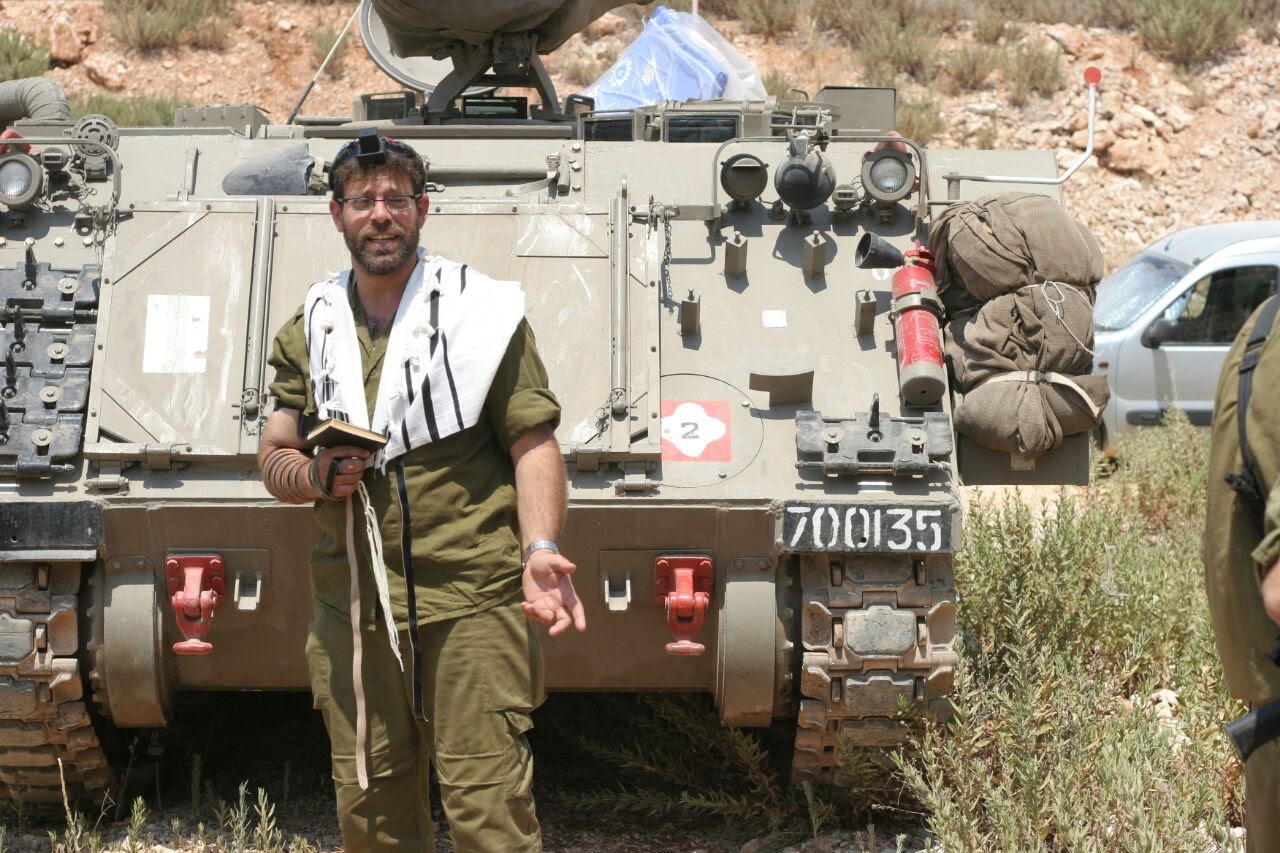 Meir Eagle z"l
Life and Death Side by Side
The situation felt almost impossible to comprehend. Dalia was preparing to bring a new life into the world while mourning the life of the man she had expected to grow old beside.
She describes that period as “life and death in a dance.”
Her children were grieving too. Her youngest had just started second grade, another child was ten, and her eldest was approaching her Bat Mitzvah.
Dalia tried to give them a framework through which they could understand what had happened.
“I often told them that being orphaned gives a person strength, and that if Hashem chose us for this, it meant we had the strength to get through it. I repeated many ideas like that. I don’t know how much they understood, but for me, that was my belief system.”
After the shiva, life could not simply return to normal.
“There was a tremendously deep rupture,” she says. “It was a terrible time, with so much crying and pain. I couldn’t understand how we were supposed to continue.”
But she knew her children needed her. And she was carrying another child who would soon need her too.
“My mission was to bring her into the world and raise healthy, joyful children, physically and emotionally.”
Dalia did everything she could to maintain a routine. The children returned to school. She left her job so that she could focus on them. She cried often, but she continued functioning.
Her family, friends, and neighbors surrounded her with support. When the time finally came to give birth, a close friend who was also a midwife accompanied her. Afterward, her sister arranged for someone to sleep at the house each night and help care for the newborn.
And throughout it all, Dalia says, she spoke constantly to Hashem.
“Before anything else, Hashem gave me strength. I drew strength from the simple knowledge that Hashem was involved and orchestrating everything.”
Long Shabbat nights were particularly difficult. Once the children were asleep, Dalia was left alone with her thoughts. During those hours, she would open Nesivos Shalom by the Slonim Rebbe and immerse herself in its teachings.
A Ray of Light Enters the Home
The new baby, Chen, brought desperately needed joy.
“She was a huge ray of light,” Dalia recalls. “It was as though a great spotlight had entered our home.”
The children adored their baby sister.
Still, joy and grief existed side by side. Dalia remembers feeding the baby during the night with tears streaming down her face, while deliberately smiling at her daughter.
“I knew she needed to see a joyful, strong mother. Ultimately, I think that was the greatest gift I could give her—the ability to love and care for her even during my darkest time.”
But only months later, the family would face another devastating challenge.
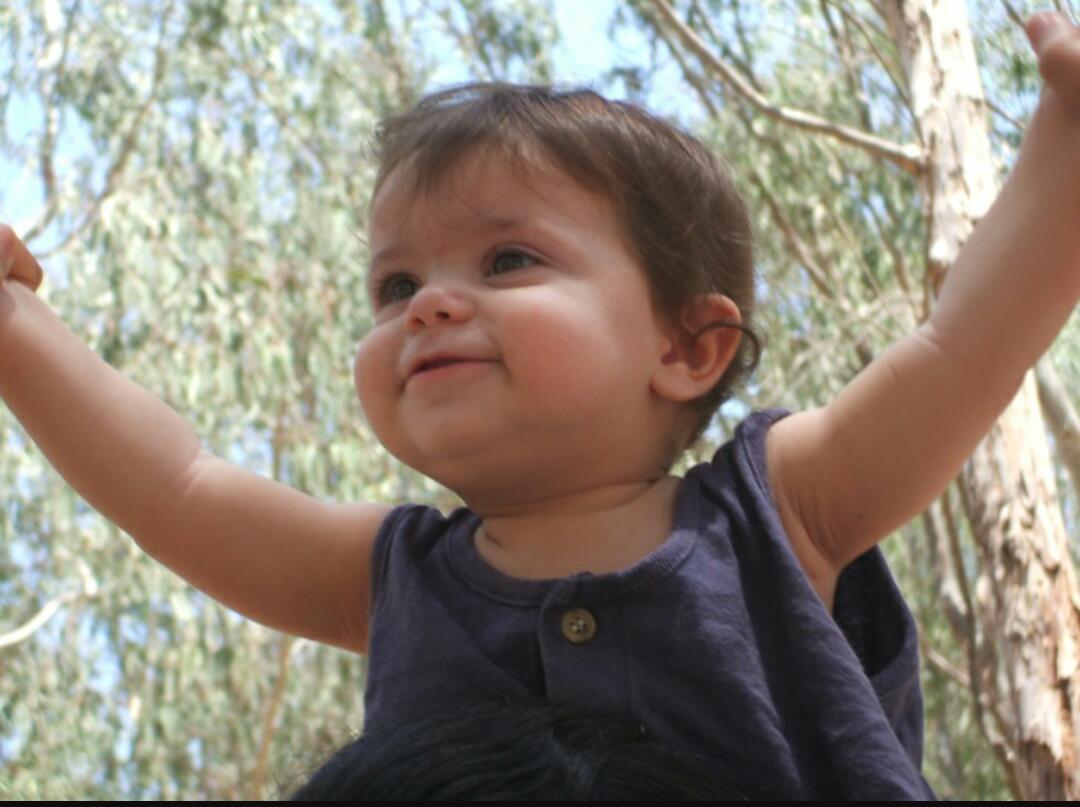 Dalia's daughter, Chen
Another Diagnosis
When Chen was eight months old, Dalia took her to an ophthalmologist because of what appeared to be a problem with the alignment of her eyes.
She was not particularly worried.
Then the doctor examined Chen and her expression changed.
“Why only now?” she asked.
Dalia immediately understood that something was seriously wrong.
“My husband died less than a year ago,” she explained.
The doctor softened and told her that something appeared to be covering part of Chen’s eye. She instructed Dalia to take her to Schneider Children’s Medical Center the following day for further testing.
There, Dalia received another diagnosis she never imagined she would hear.
Her baby had retinoblastoma, a cancer of the retina that occurs primarily in young children.
Further examinations brought even more frightening news: tumors were present in both eyes.
“I felt as though a building had collapsed on top of me,” Dalia says.
She turned to Hashem.
“How am I going to cope? I’m alone. I have three children at home, and now this baby—our ray of light—is in danger?”
Yet Dalia says she did not feel anger toward Hashem.
“I felt confusion. I asked, ‘What does He want from me?’ When Meir died, I told myself that Hashem was calling me to a meeting and trusting in my abilities. But now, in this second meeting, I felt incapable. I pleaded, ‘No more. I can’t.’”
Tens of Thousands Began to Pray
Chen began treatment. Dalia traveled repeatedly with her baby for procedures, many of which required fasting beforehand because Chen needed anesthesia. There was chemotherapy, nausea, vomiting, and the constant fear that her daughter could lose her sight.
Then a neighbor named Ilan asked Dalia what he could do to help.
“We only need prayers,” she told him.
Ilan took those words seriously. He circulated a letter asking people to pray for Chen, and according to Dalia, the effort eventually grew into a group of 70,000 people praying daily.
Messages began arriving from around the world. Some people offered medical advice. Others reported praying at the Western Wall or organizing hafrashat challah in Chen’s merit.
One message suggested consulting Rabbi Mordechai Eliyahu, zt”l, regarding the baby’s name. Following the consultation, the family changed her name from Yahal Chen to simply Chen.
Meanwhile, Dalia continued doing everything she could.
“I ran between the gravesites of tzaddikim and the homes of rabbis. I felt that I had to do everything possible, to shake heaven and earth so that my daughter’s eyes would be saved.”
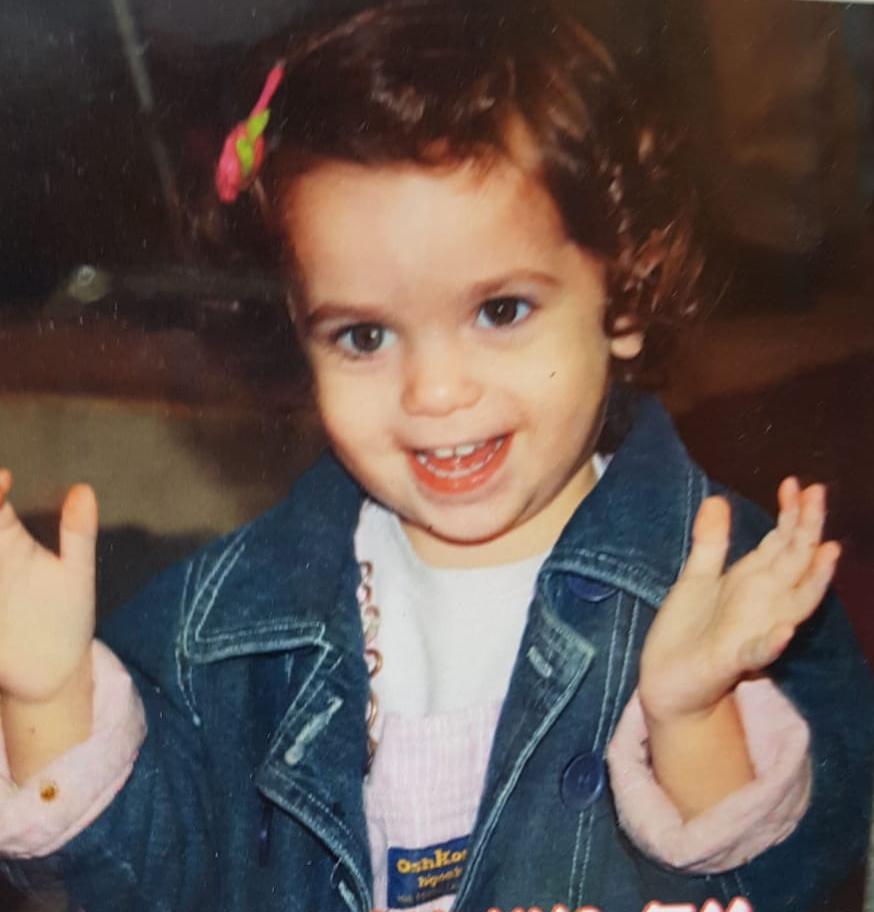
Signing the Form She Never Wanted to Sign
Eventually, doctors determined that one of Chen’s eyes could not be saved.
The physician explained that delaying its removal could put her at greater risk. Dalia scheduled the surgery, but until the final moment, she continued hoping for a miracle.
The evening before the operation, she took Chen to Meir’s grave.
It was an image she would never forget: a baby in a stroller in a cemetery, visiting the father she would never know.
Dalia pointed toward the grave.
“Your father is here,” she told her daughter, “and he will cry out to Hashem for a miracle.”
Then Dalia herself pleaded with Hashem.
Before surgery, doctors performed one final ultrasound.
The tumors were still there.
Dalia had to sign the consent form authorizing the removal of her daughter’s eye.
She compares that moment to Akeidat Yitzchak—the Binding of Isaac. She had desperately hoped the outcome would change, yet now she had to accept a reality she did not want.
The Miracle Was Somewhere Else
The miracle Dalia had prayed for did not come in the form she had imagined.
Chen lost one eye.
But something remarkable happened in the other.
Contrary to the frightening possibilities the family had faced, the tumors stopped before destroying Chen’s vision. Her remaining eye was preserved, and Chen developed excellent eyesight.
Dalia made sure her daughter grew up focusing on what she had rather than what she had lost.
“I would tell her, ‘Hashem gave us two eyes to see the beauty of creation, but you see even better with one.’”
And, Dalia says, it often seemed true. Even as a small child, Chen would notice tiny crumbs on the floor that others overlooked.
Five years later, the family held a joyful thanksgiving celebration. When Chen reached her Bat Mitzvah, the theme they chose was fitting: “good eyesight.”
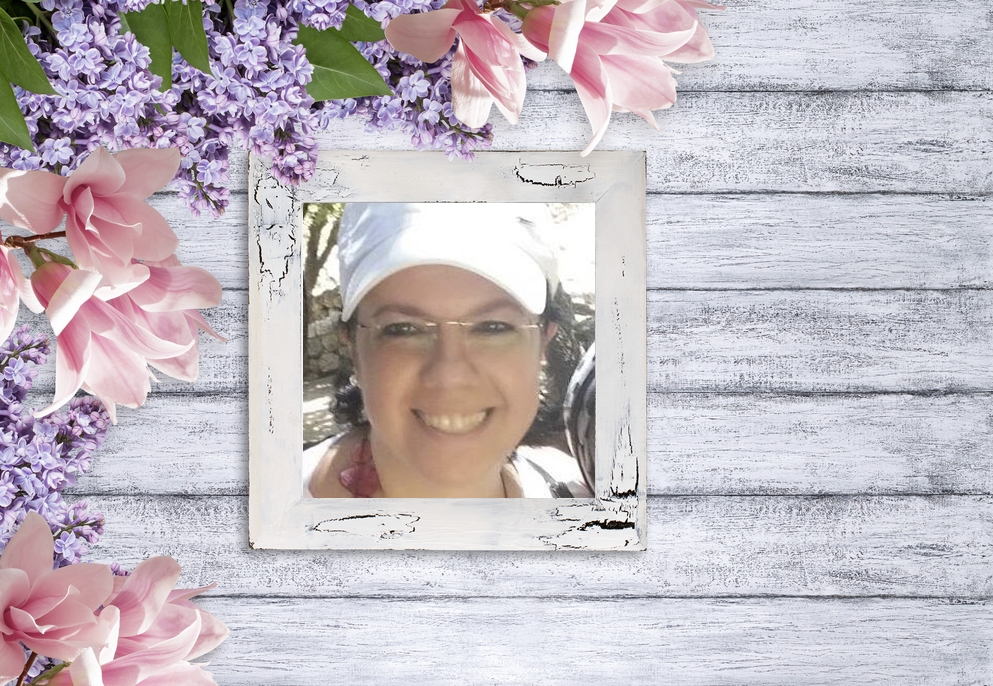 Dalia Eagle
Hand in Hand With Hashem
Dalia’s life never returned to what it had been before Meir’s death. Instead, she built something new.
She devoted herself to Torah study, Chassidut, personal growth, and teaching and strengthening other Jewish women.
From everything she experienced, one lesson stands above the others.
“We cannot choose what happens to us,” Dalia says, “but we can choose how we respond.”
She speaks often about Avraham Avinu, whose trials became a source of inspiration for her. His ability to continue moving forward, beginning again even after tremendous challenges, taught her something about the strength that exists within every Jew.
She also learned to look deliberately for the good that remains, rather than allowing suffering to become the only thing she can see.
“The world was created from chaos and darkness, and from there came magnificent light,” she says. “We have to remember that darkness is temporary. It is an interim stage until dawn.”
Dalia closes with an idea that has accompanied her throughout her journey. She recalls a story about the Rebbe of Sanz, who arrived in Israel after the Holocaust having suffered unimaginable losses. When asked how he maintained his faith, he explained that after everything he had endured, he looked back and recognized that behind it all was his Father—and a father loves his child.
“I felt exactly that,” Dalia says.
“After everything I went through, I turned around, raised my eyes toward Heaven, and recognized that it was my Father.
“And ever since, I walk with Him, hand in hand.”

