

Raising Children
How to Get Kids to Help at Home Without Rewards or Sticker Charts
A child psychologist explains how replacing chores with family contributions can build responsibility, independence, and lasting motivation
- Yitzchak Eitan
- | Updated
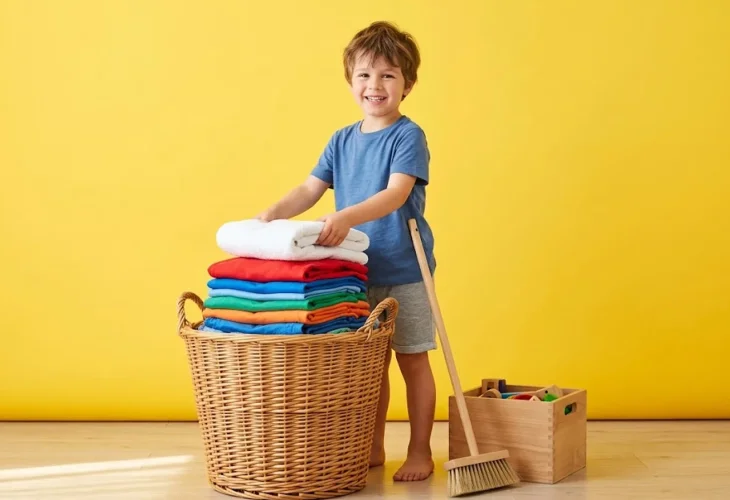
During summer vacation, some families spend hours searching for ways to get their children to help around the house without arguments. Often, the solution involves sticker charts and promises of money or other rewards. But child psychology experts point out that these external incentives may not build lasting internal motivation. Instead, they suggest a very different approach, one based on the idea that every member of the family contributes to the household.
Psychologist Caitlin Slavens argues that sticker charts and rewards can create a transactional, even competitive, attitude toward household responsibilities. When children become accustomed to receiving something in return every time they help, their first question may become: “What do I get for doing it?”
Instead of relying on rewards, Slavens recommends changing the language used at home. Rather than talking about “chores,” parents can frame household responsibilities as “contributions to the family.” This subtle shift sends an important message: everyone in the household is part of the same team, and everyone plays a role in caring for the home they share.
Set Clear Boundaries Without Power Struggles
To put this approach into practice without constant arguments, parents can use a simple “when-then” structure. For example: “When the toys are put away, then we can watch the movie.”
The key is to make the expectation brief and clear, and then maintain the boundary consistently without turning the situation into a power struggle.
Rather than repeatedly negotiating, threatening, or offering new rewards, the parent calmly connects the desired activity with the responsibility that needs to be completed first.
Give Children Responsibilities That Match Their Age
Choosing age-appropriate responsibilities is also essential.
For children between the ages of two and five, simple tasks are usually enough. They might bring their cup to the counter, put dirty clothes in the laundry basket, or help pick up their toys. At this age, parents should not expect the job to be done perfectly. The goal is to introduce the idea of participating and contributing.
Children between six and eleven can generally take on more consistent responsibilities, such as feeding a pet or organizing their schoolbag each day.
From around age twelve and up, children can begin taking responsibility for tasks that also teach important life skills. These might include preparing simple meals, doing laundry, and cleaning their rooms.
Building Skills That Last Beyond Childhood
According to Slavens, children may not initially be enthusiastic about this approach. That does not necessarily mean it is failing.
Consistency can gradually help children develop a sense of competence, belonging, and personal responsibility. Instead of learning that helping is worthwhile only when there is a prize attached, they begin to understand that contributing is simply part of belonging to a family.
As Slavens explains, even when children initially show little enthusiasm, consistently following this model can help develop “a sense of competence, belonging, and personal responsibility that will accompany them throughout their lives.”

