

Health and Nutrition
Too Tired to Remove Your Makeup? Your Skin May Pay the Price
Falling asleep in makeup once is unlikely to cause lasting damage, but doing it regularly is another story. here’s what dermatologists want you to know.
- Tehila Cohen
- | Updated
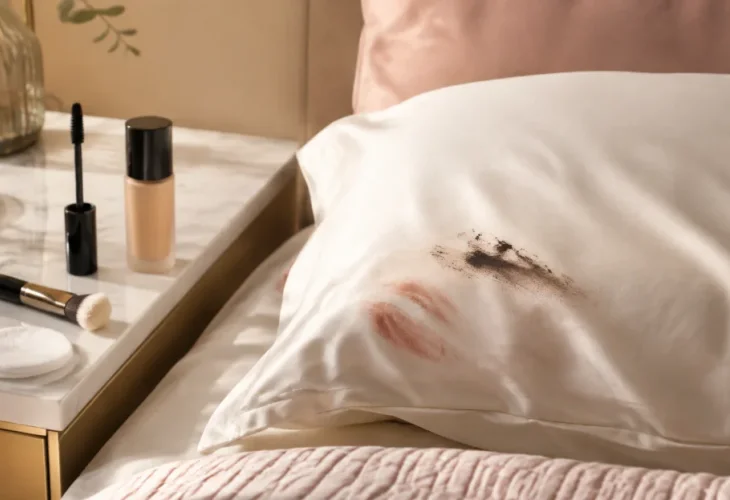
It’s late, your eyes are already closing, and all you want to do is get into bed. Your foundation is still on, mascara is still on your lashes, and the tempting thought arrives almost immediately: What could really happen if I leave it until morning and sleep in my makeup?
Your skin isn’t going to suddenly “age” after one night, and falling asleep in makeup once is unlikely to cause permanent damage. But leaving makeup on for hours extends your skin’s contact with cosmetics, oil, sweat, dead skin cells, and dirt that have accumulated throughout the day.
And when sleeping in makeup becomes a habit, your skin may begin to react.
What Happens to Your Skin Overnight?
Throughout the day, natural oils, sweat, dust, and particles from the environment collect on the surface of your skin. Makeup mixes with all of them, and if you don’t cleanse your face before bed, that mixture remains there for several more hours.
That doesn’t mean makeup itself is necessarily harmful. Many products are designed for long wear, and some are labeled “non-comedogenic,” meaning they are formulated to reduce the likelihood of clogged pores.
Even so, dermatologists generally recommend removing makeup before going to sleep. The American Academy of Dermatology notes that sleeping in makeup, including non-comedogenic products, can contribute to acne breakouts.
Makeup, oil, and dead skin cells can accumulate around the openings of hair follicles. For people who are already prone to acne, leaving this mixture on the skin overnight may increase the likelihood of blackheads, whiteheads, and pimples.
Of course, not everyone who falls asleep in foundation once will wake up with a breakout. Your skin’s response depends on factors such as your skin type, the ingredients in the products you use, how much makeup you are wearing, and how often you sleep in it.
Still, if you are trying to understand why breakouts keep returning, your nighttime makeup-removal habits are worth considering.
What About Sensitive Skin?
The longer a product remains on your face, the longer your skin is exposed to its fragrances, preservatives, and other ingredients.
For most people, these ingredients may cause no problems at all. But sensitive skin, or skin that is already prone to eczema or irritation, may respond with redness, itching, stinging, or dryness.
Cosmetics and fragrances can trigger contact dermatitis in some people. If you repeatedly notice irritation after using a particular product, stop using it and consider discussing the reaction with a dermatologist.
The eye area deserves particular attention.
Mascara, eyeliner, and eyeshadow sit close to the eyelids and eyelash follicles. While you sleep, these products can flake or smear and potentially enter the eyes, particularly as your face rubs against your pillow.
This may lead to burning, tearing, redness, or irritation around the eyelids.
Old or contaminated eye makeup can pose an additional problem. Bacteria and other microorganisms can accumulate in cosmetics over time, potentially increasing the risk of eye or skin infections. That is why it is important not only to remove eye makeup before bed, but also to replace products according to the manufacturer’s recommendations and avoid sharing mascara or eyeliner with others.
And then there is your pillowcase.
Some of the makeup left on your face can transfer onto your pillow overnight, along with skin oils and sweat. The following night, your skin comes into contact with that residue again.
There is no need to change your pillowcase every morning, but washing it regularly is a good idea, especially if you have acne-prone or sensitive skin. And if it is visibly stained with makeup, it is probably time for a clean one.
How to Remove Makeup Properly Before Bed
- Remove your makeup with micellar water, a dedicated makeup remover, cleansing oil, or cleansing balm suited to your skin type.
- If you are wearing heavy or long-lasting makeup, follow with a gentle facial cleanser to remove any remaining residue.
- Avoid very hot water and aggressive scrubbing with towels, sponges, or stiff brushes.
- Gently pat your face dry rather than rubbing it.
- If your skin feels dry, finish with a moisturizer suited to your skin type.
Be particularly gentle around the eyes, where the skin is thinner and more delicate.
And if you occasionally fall asleep without taking off your makeup? There is no reason to panic. Simply cleanse your face gently when you wake up and return to your usual skincare routine.
The bigger concern is not one exhausted night. It is allowing sleeping in makeup to become a regular habit.

