

World News
Report: Pentagon Weighs Reducing U.S. Military Presence in Gulf States
According to The Washington Post, the commander of U.S. Central Command supports moving forces westward to reduce the risk to American bases. The possible shift has sparked a debate within the administration: continue deterring Iran, or refocus on threats from China.
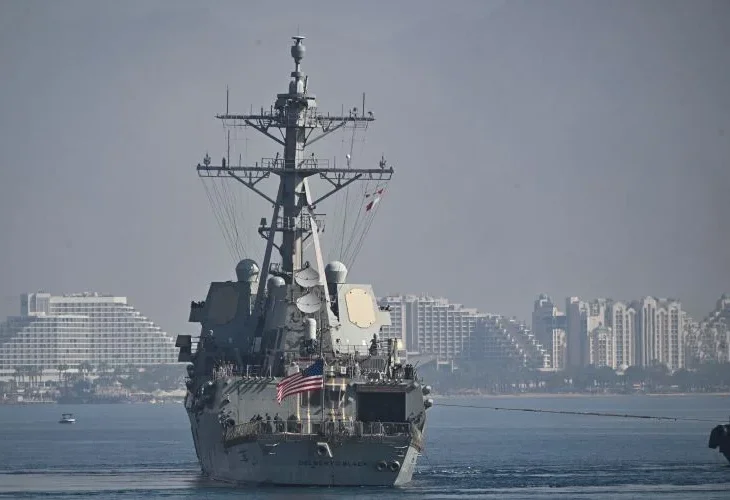 An American warship in Eilat (Photo: Yehuda Ben Itach, Flash90)
The Washington Post reported Tuesday evening that the U.S. Pentagon is reassessing the scale of the American military presence needed in the Middle East. According to the report, officials are considering reducing the deployment of U.S. forces in Gulf states.
The U.S. Defense Department has held several discussions on the issue, attended by the commander of U.S. Central Command, Gen. Brad Cooper, who supports examining the possibility of moving American forces westward from the Persian Gulf region.
The report noted that the main U.S. goal is to reduce the possibility of strikes on American bases, while also lowering the risk to populations in Gulf states. Defense Secretary Pete Hegseth has not yet ordered a formal review of the U.S. posture in the region, a military official told the newspaper.
The newspaper added that U.S. Central Command, which oversees American military operations in the Middle East, typically stations about 40,000 troops at nearly 20 locations across a 1,500-mile arc stretching from Jordan to Oman. In addition, since the start of the year, the U.S. military has moved warships, fighter jets, air-defense systems and other military equipment into the region to protect U.S. forces and carry out more than 13,000 strikes against Iran.
America's largest and most permanent bases in the Middle East are located in the Persian Gulf, where Bahrain hosts the headquarters of the U.S. Fifth Fleet, while other countries, including Kuwait, house Army and Air Force assets.
The report said Gulf allies have relied on U.S. forces for their defense for decades. Any regional withdrawal could leave countries without the ability to defend themselves against Iranian attacks. People familiar with the Pentagon's analysis said the issue is expected to intensify a debate between factions within the administration that support military interventions and others who argue that the Pentagon should reduce some of its security commitments in order to refocus on defending the U.S. homeland or deterring more powerful rivals, such as China.

