

5 Points to Ponder
How Does Your Body Know? 5 Everyday Wonders Explained
From tingling feet and protective eyelashes to growing bones and the light of the sun, these five everyday wonders are more remarkable than they seem.
- Dr. Ariel Kaduri
- | Updated
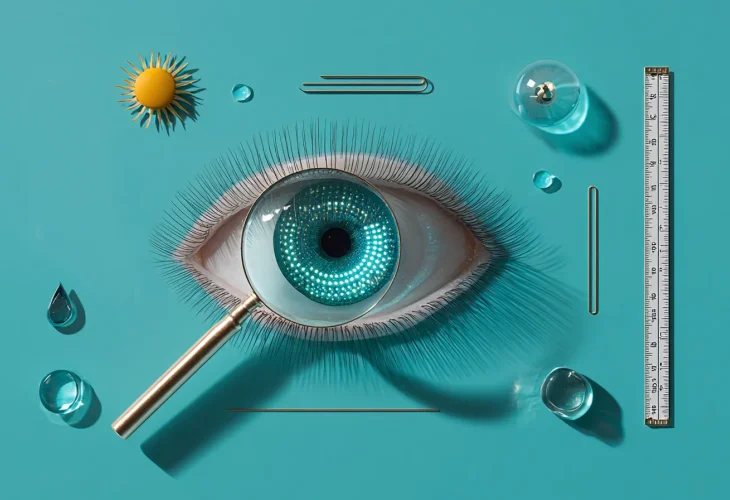
We rarely stop to think about the countless systems working inside and around us every moment. A foot that tingles after sitting too long, eyelashes that help protect our eyes, bones that grow in remarkable coordination, and even the sunlight that fills the world each morning can seem completely ordinary—until we take a closer look. Here are five everyday wonders that reveal just how extraordinary the seemingly simple things around us really are.
1. When Your Foot “Falls Asleep”
Picture this: You’re sitting cross-legged, maybe on the floor or while taking a break during a hike. At first, you’re perfectly comfortable. But after a few minutes, you begin to feel something strange. Your foot falls asleep. First comes the numbness, followed by that familiar tingling sensation, as though hundreds of tiny pins are pricking your skin. You shift your position, and soon it disappears.
But what is actually happening?
When you sit for a long time in a position that puts pressure on certain nerves, their normal signaling can be temporarily disrupted. Pressure may also affect nearby blood vessels. The result is numbness, followed by the familiar “pins and needles” sensation as the pressure is released and normal nerve function returns.
The moment you move your leg, the body gets to work. The pressure is relieved, the nerves begin transmitting normally again, and sensation gradually returns to your foot, often accompanied by those unmistakable tingles.
It all happens without conscious thought. There is no power button and no instruction manual. The body detects the change, alerts you through sensation, and returns to normal once the pressure is removed.
But how does the body produce these sensations at exactly the right moment, prompting us to change position?
2. How Tiny Hairs Help Protect Your Eyes
Eyelashes may be tiny, but they perform an important protective role almost without us noticing.
They do more than frame the eyes. Positioned along the edge of the eyelids, eyelashes help protect the eyes from dust, debris, and other particles. They are also highly sensitive to touch. When something comes close enough to disturb them, they can help trigger the blink reflex, causing the eyelids to close and protect the eye.
Their growth is carefully regulated as well. Like other hairs on the body, eyelashes follow a natural growth cycle that determines how long they grow before entering a resting phase and eventually falling out.
How does such a tiny structure grow in just the right place, follow its own growth cycle, and help protect something as delicate as the eye?
3. The World’s Biggest Streetlight
During a nighttime drive, I noticed something simple but thought-provoking. Streetlights were scattered along the road, each illuminating only a short stretch ahead. Then, along one section of the highway, several lights went out, and suddenly the road was plunged into darkness.
I found myself thinking: What a revolution it would be if someone could invent a single streetlight capable of illuminating not just a few yards, but entire miles. One light that could illuminate a neighborhood, perhaps even a whole city. No need for endless rows of poles, just one enormous source of light.
Imagine the reaction if someone invented such a thing. They would be hailed as a genius. Newspapers would write about them, awards would follow, and the invention could transform the way we think about lighting and technology.
But then I remembered: We already have something infinitely more impressive.
The sun.
Every day, it illuminates vast portions of the Earth from approximately 93 million miles away. But its role goes far beyond giving us light. The sun provides the energy that warms our planet, drives photosynthesis, and supports the ecosystems on which life depends.
And because it is part of our everyday reality, we barely stop to think about it. We marvel at a new piece of technology or an energy-efficient lightbulb, yet can easily forget to look upward and appreciate the extraordinary source of light that has been there all along.
4. How Do Bones “Know” When to Stop Growing?
Bone growth is one of the remarkable processes of the human body. From infancy through childhood and adolescence, the skeleton grows according to an intricate biological process involving growth plates, hormones, genes, and nutrition.
Long bones grow primarily at areas of cartilage known as growth plates. Throughout childhood, new tissue is produced there and gradually replaced by bone. As puberty progresses, sex hormones contribute to the eventual closure of these growth plates, bringing growth in length to an end.
Yet understanding the biological mechanism does not make the coordination any less remarkable. Different bones grow at different rates and at different stages, while the body develops according to an overall pattern that allows its many parts to function together.
Both arms generally reach similar lengths. Both legs develop according to the same basic plan. The skeleton changes dramatically from infancy to adulthood, yet its many individual parts develop as components of one functioning body.
The more we understand about the mechanisms behind human growth, the more there is to appreciate about their extraordinary coordination.
5. Your Eyes Have Their Own Cleaning System
Anyone who wears glasses knows how quickly lenses become dirty. Sometimes they need to be cleaned several times a day just to keep everything looking clear.
But how often do you need to stop and manually clean the surface of your eyes so you can see properly?
The answer, of course, is never under normal circumstances. That is because your eyes already have a built-in system constantly working to keep their surfaces moist, clean, and protected.
Every time you blink, your eyelids spread a thin tear film across the surface of the eye, almost like tiny windshield wipers. Tears help keep the cornea smooth and moist while washing away small particles and providing substances that help protect the eye.
And we blink thousands of times a day, usually without giving it a moment’s thought.
An entire system, delicate and precisely coordinated, works throughout the day without our conscious involvement. No power button, no instructions, and usually no need for us to think about it at all.

