

Health and Nutrition
6 Secrets to a Longer, Healthier Life According to Jewish Wisdom
What do the Talmud and Maimonides say about longevity? Discover how gratitude, purpose, family, community, moderation, and healthy habits may contribute to a longer life
- Omer Arbel
- | Updated
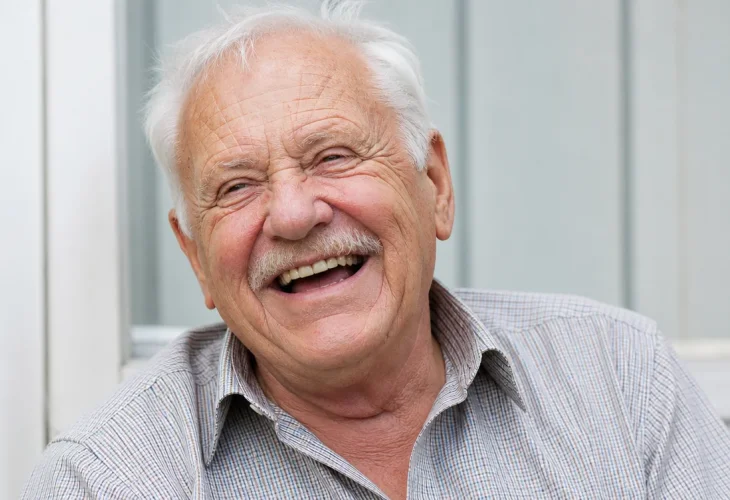
How much time do we have on this earth? In a lecture exploring the relationship between Torah and science, Rabbi Zamir Cohen draws attention to a striking statement in the Jerusalem Talmud: “Ninety-nine through negligence, and one by the hand of Heaven.” He explains this teaching to mean that many people do not reach the natural lifespan that might otherwise have been available to them. Instead, their lives are shortened by the way they live, while only a small minority reach the precise end of their natural lifespan.
From there, Rabbi Cohen turns to modern research into communities known as Blue Zones, which are places around the world that have attracted attention for their unusually high numbers of people living into their 90s and beyond, often while remaining remarkably active.
He points to several lifestyle characteristics associated with these communities and argues that many of the same principles can already be found in the Talmud and the writings of Maimonides.
Six Factors That May Contribute to a Longer Life
1. Faith, Joy, and Gratitude
One of the recurring themes in research on healthy aging is the importance of reducing stress and maintaining emotional well-being. Rabbi Cohen connects this idea with the verse, “The spirit of a man will sustain his illness” (Proverbs 18:14).
“A person’s emotional state affects his physical condition,” he explains. “There is a direct relationship between joy in life, calmness, tranquility, and the physical health of the body.”
He sees the Jewish practice of regularly expressing gratitude, including through blessings over food and Birkat Hamazon, Grace After Meals, as an important way of cultivating this outlook.
When a person becomes accustomed to thanking God for what he has, he begins to notice how much good already exists in his life. People often become preoccupied with the small percentage of what they lack while overlooking everything they already possess. A daily practice of gratitude can help reverse that pattern of thinking.
2. A Sense of Meaning and Purpose
A strong sense of purpose has also been associated with healthier aging and longevity.
Rabbi Cohen connects this principle to Mesillat Yesharim, the classic work by Rabbi Moshe Chaim Luzzatto, which begins by addressing the fundamental question of a person’s purpose in this world.
Without a larger purpose, life can begin to seem strangely circular. A person spends decades working, building a home, raising a family, and establishing himself, only to eventually leave everything behind.
Judaism offers a different perspective. When this world is understood as a passage toward the World to Come, everyday life becomes part of something larger. Work, relationships, spiritual growth, and moral choices all acquire enduring meaning.
Material prosperity alone does not guarantee emotional well-being. Even societies with relative security and abundance can struggle with despair and suicide. In his view, this illustrates the profound human need for meaning, not merely comfort.
3. Moderation, Even in Pleasure
Research into some long-lived populations has noted patterns of moderate alcohol consumption, particularly wine consumed with meals. According to the Talmud, excess can be harmful while a small amount can be beneficial.
For him, the larger lesson extends beyond wine. Judaism does not generally demand complete withdrawal from the physical pleasures of the world. Instead, it teaches a person to enjoy the physical world within healthy boundaries and with self-control. The key is balance.
4. Strong Family Relationships
Close relationships with children, regular family meals, and respect and care for older relatives are also commonly associated with healthier aging.
The traditional Shabbat table is a powerful expression of this principle. Week after week, family members gather around the same table, eat together, talk, sing, and spend time with one another without the usual pressures of the workweek.
He also points to one of the Torah’s best known commandments: “Honor your father and your mother, so that your days may be lengthened” (Exodus 20:12).
The connection, he suggests, can operate on a natural level as well. Children who grow up watching their parents care for and honor their own elderly parents absorb that behavior. Years later, when those parents themselves grow old, their children have already learned what honoring and caring for an older generation looks like.
5. Faith Based Community Life
Community may also play an important role in longevity. Research examines the relationship between synagogue attendance and mortality among older adults.
The Talmud relates that Rabbi Yochanan was surprised to hear that there were elderly people in Babylonia. When he learned that they regularly attended the synagogue early in the morning and late in the evening, however, he understood their longevity in light of the spiritual significance of regularly going to a place of prayer.
Beyond the spiritual dimension, participation in a religious community can provide something deeply practical: routine, relationships, social support, and a sense of belonging.
Maimonides' Practical Guide to Healthy Living
Rabbi Cohen addresses the remarkably practical health guidance found in the writings of Maimonides, who was both one of Judaism’s greatest Torah scholars and a physician.
Maimonides advises a person to develop the habit of choosing foods that are beneficial to the body rather than allowing taste alone to determine what he eats. However, the type of food is only part of the equation; quantity matters as well.
Maimonides strongly warns against overeating, describing excessive eating as profoundly harmful to the body and as a major source of illness. The principle is simple: even good food can become harmful when consumed without restraint.
Maimonides provides guidance about maintaining an appropriate amount of sleep, while the Talmud discusses sleeping positions and other aspects of physical well-being.
These sources demonstrate that Judaism does not draw a sharp line between spiritual life and care for the body. Physical health is itself part of responsible living.
Even the Way We Get Out of Bed Matters
There is an intriguing Talmudic warning against rising too suddenly from bed. This teaching aligns with modern awareness that the transition from sleep to waking involves significant physiological changes and that cardiovascular events are more common during the morning hours.
He recounts a story about a medical conference in the United States where participants were advised to wait briefly before getting out of bed, giving the cardiovascular system time to adjust gradually.
According to the story, a Jewish physician at the conference observed an interesting parallel: the traditional Modeh Ani prayer, recited immediately upon waking, contains 12 words in its standard Hebrew formulation, providing a natural pause before beginning the day.
Whether or not the parallel was historically intended, Rabbi Cohen presents it as a striking illustration of how Jewish practice can create moments of calm and deliberation even within the smallest routines of daily life.
Small Choices, Made Every Day
What appears to be a sacrifice for the sake of spiritual life may ultimately give a person far more than it takes away. An hour devoted to prayer, a family meal without a phone, a moment of restraint rather than an angry response, or a conscious decision to express gratitude may feel like small choices. But repeated day after day, small choices shape a life.
This is perhaps where the ancient sources and modern study of longevity most clearly meet. Health and longevity are influenced by many factors, including genetics, environment, medical care, and circumstances beyond our control. But the way we live also matters.
What we eat, how much we eat, how we manage stress, the relationships we nurture, the communities we build, the meaning we find in our lives, and the habits we repeat every day can all influence our well-being.
We cannot determine exactly how long we will live. But we can make choices about how we live the years we are given.
Based on a lecture by Rabbi Zamir Cohen on longevity and healthy living in this world.

