

World News
Shouting, Resignation Threats, and Accusations of Betrayal: Iran’s Leadership Split Over the War
The New York Times reported that Hossein Taeb ordered attacks on three merchant ships without the knowledge of senior regime officials, derailing an emerging understanding with Washington. Tehran is now locked in a struggle between advocates of negotiations and supporters of military escalation.
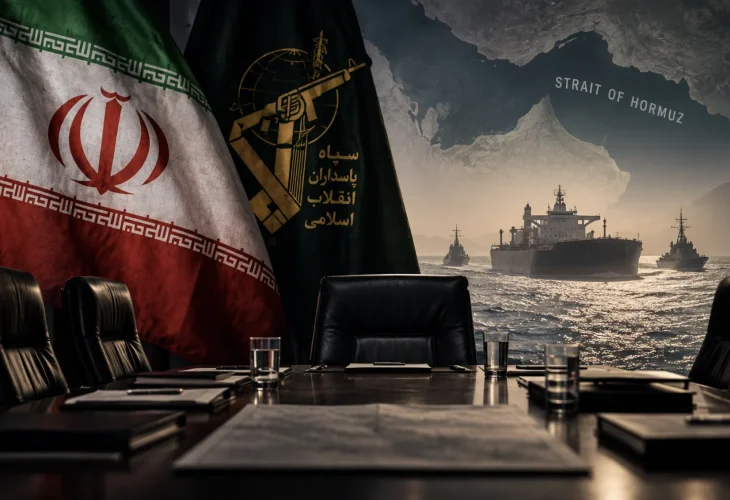
Hossein Taeb, a Shiite cleric and head of the Basij militia, was the one who ordered attacks on three merchant ships in July, a move that derailed the understanding taking shape between Iran and the United States. The New York Times reported this today (Sunday), citing three senior Iranian sources.
According to the report, a hard-line group led by Taeb made the decision without the knowledge of senior government officials or even senior figures in the Islamic Revolutionary Guard Corps. Five official sources said that IRGC commander Ahmad Vahidi made clear to President Masoud Pezeshkian in a phone call that he had not approved the attack and had not known about it in advance.
Taeb was removed in 2022 from his position as head of intelligence in the IRGC after failed attempts to harm Israelis in Turkey. But he returned to a position of influence and became a central figure in the selection of Mojtaba Khamenei as supreme leader following the killing of Ali Khamenei. According to the report, he opposed an agreement with Washington from the outset and tried to convince the new leader that ending the war and reaching a deal would be a mistake.
At the same time, Iran’s leadership is engaged in a struggle between two approaches: returning to negotiations, or escalating attacks against American targets in order to strike shipping, kill American soldiers, and drive up oil prices. Both options are intended to bring an end to the U.S. naval blockade of ports in southern Iran.
The commander of the IRGC Aerospace Force, Majid Mousavi, along with hawkish generals, presented the National Security Council with a plan to escalate the war through Iran and its proxies, including the Houthis in Yemen and Shiite organizations in Iraq, including attacks on oil facilities. On the other side, Pezeshkian and parliament speaker Ghalibaf warned that the move could lead to intense American strikes and crippling economic pressure. According to the report, the hawks currently have the upper hand.

