

Israel News
Iran Seeks Russia’s Faster, Heavier Geran Drones for Use Against Israel
Iran has asked Russia for advanced Geran-family drones to use against Israel and the United States. The newer models can reach speeds of 600 kph, carry heavier warheads, and use advanced guidance systems that include artificial intelligence.
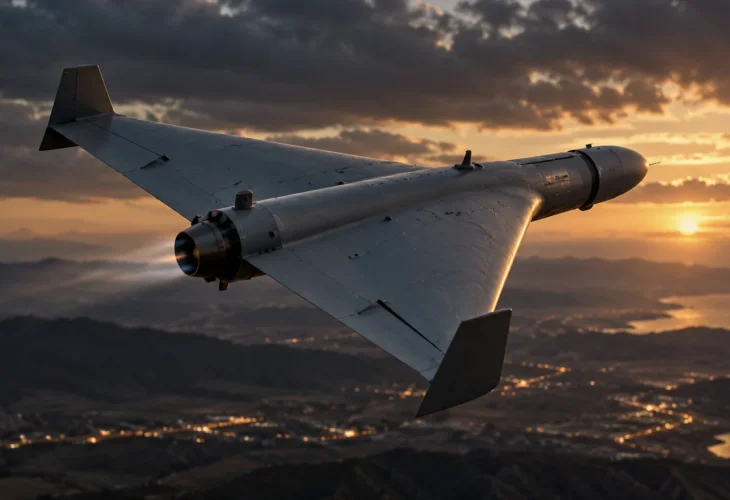
Iran asked Russia this year to provide advanced Geran-family drones for the war against Israel and the United States, the Financial Times reported Sunday, citing Western security officials and a person close to the Kremlin.
The request reflects a reversal in the countries’ military relationship. Iran supplied Russia with the design on which the Shahed drones were based, and Moscow began manufacturing them itself in 2023. Since then, it has used the experience it gained in Ukraine to develop faster, heavier, and more accurate versions. Tehran now wants to receive the upgraded generation and deploy it against Israeli and American targets.
At the center of the request are the jet-powered Geran-4 and Geran-5. While the Geran-1 carries a warhead of up to 20 kilograms and reaches 185 kph, the Geran-5, reportedly used for the first time in January, can reach 600 kph, carry 90 kilograms, and fly roughly 1,000 kilometers. The Geran-4 retains the Shahed’s design but includes a reinforced, aerodynamic body, while the Geran-5 already more closely resembles a cruise missile.
The new models include thermal cameras, artificial intelligence-based target acquisition, Russian antennas resistant to jamming, and Chinese modems for network communications.
According to Serhiy Beskrestnov, an adviser to Ukraine’s defense minister, an operator can locate a target from an altitude of two to five kilometers, lock onto it, and then the aircraft attacks automatically. He said that nearly all Russian jet-powered drones are now equipped with such cameras.
According to the Ukrainian Air Force, the interception rate for the jet-powered models stands at about 60%, compared with 90% to 95% for the older models. Their speed shortens warning time and makes defense more difficult.
Mass production allows Russia to quickly incorporate lessons from the fighting, and the drones remain significantly cheaper than cruise missiles. Analysts call the process "turning the drone into a cruise missile," and stealth capabilities may be added in the future as well.
If Moscow grants the request, the aircraft could enable Iran to carry out faster and more precise attacks against Israel and against American bases, ships, and forces in the Middle East, while placing strain on defense systems by integrating them into barrages of missiles and drones. In this way, the weapons Iran supplied to Russia could return to it from the battlefield in Ukraine faster, deadlier, and more sophisticated.

