

Wonders of Creation
Nature’s Surprise: This Flower Produces Its Own Heat to Attract Insects
Flowers usually rely on the sun for warmth, but some can generate heat themselves. Here’s the fascinating science behind thermogenic plants.
- תהילה כהן
- | Updated
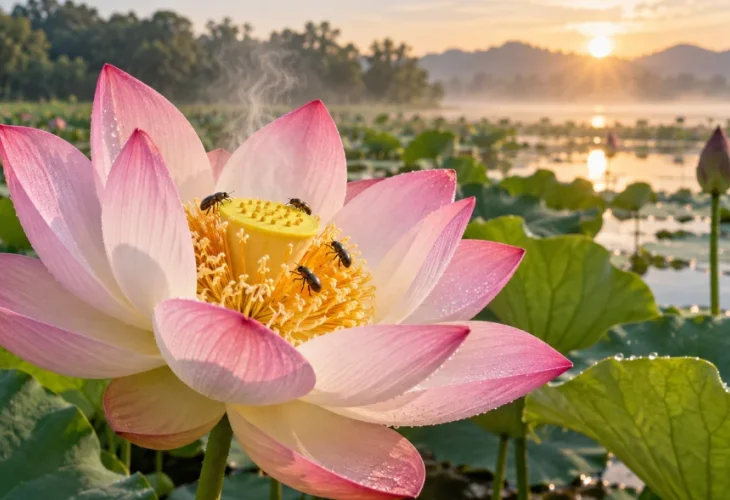
Most flowers rely on sunlight for warmth, but a small group of plants can actually generate their own heat. The process, known as thermogenesis, allows certain flowers to raise their temperature above that of the surrounding air.
One of the best-known examples is the sacred lotus, which can maintain a relatively stable temperature at the center of its flower even as outdoor temperatures change.
How Can a Flower Produce Heat?
The heat comes from an accelerated form of respiration within the plant’s cells. Normally, plants use much of the energy produced through respiration for growth and other biological processes. In thermogenic plants, some of that energy is instead released as heat.
In this sense, the process has similarities to the way animals generate body heat, although the biological mechanisms are different.
For a plant that cannot move, producing its own heat may seem like a strange use of energy. But it can serve an important purpose.
A Clever Way to Attract Pollinators
The warmth can help the flower release and spread scent compounds into the surrounding air, making it easier for beetles and other pollinating insects to find it.
In some thermogenic species, the heated flower also provides insects with a warmer environment, particularly during cooler periods. As the insects move around the flower, they pick up and transfer pollen, helping the plant reproduce.
Essentially, the plant is using heat as another tool to attract the visitors it needs.
Which Plants Can Produce Their Own Heat?
Thermogenesis is relatively unusual in the plant world and occurs only in certain groups. Examples include the sacred lotus, some philodendrons, and various members of the arum family.
Different species use thermogenesis in slightly different ways, but the advantage is similar: heat can help attract pollinators and encourage them to visit the flower at the right time.
So while flowers may seem completely dependent on the warmth of the sun, a remarkable few have another option. They can turn up the heat themselves.

