

Yom Kippur
Ten Days of Repentance: What to Focus on Before Yom Kippur
earn how to use the days between Rosh Hashanah and Yom Kippur for teshuva, Torah, better character, and stronger Shabbat observance, while remembering that wherever we are, we are always in Hashem’s hands
- Amitai Chanaya
- | Updated
Two halachot a day from Bahalacha U’VeAggadah, based on the rulings of Maran Rabbi Ovadia Yosef, of blessed memory.
What Should We Focus on During the Ten Days of Repentance?
During the Ten Days of Repentance, a person should examine his actions, repent from his wrongdoings, and increase his mitzvot, charity, and good deeds, even in areas in which he is not usually especially careful during the rest of the year.
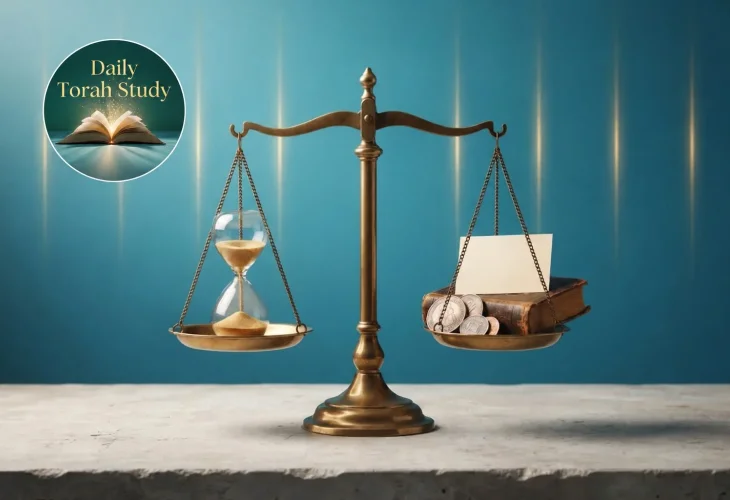
During these days, the scales of judgment are in Hashem’s hands, and those whose merits and sins are balanced remain suspended in judgment. If they merit it, they are inscribed for life; if not, they are inscribed for death.
Although teshuva and heartfelt prayer are always valuable, during these days they are especially powerful and are accepted immediately.
A person should not think that teshuva applies only to sins involving actions, such as desecrating Shabbat, theft, or forbidden relationships. We must also repent from negative character traits such as arrogance, jealousy, and the pursuit of money and honor.
What Is Special About the Week Between Rosh Hashanah and Yom Kippur?
The seven days between Rosh Hashanah and Yom Kippur correspond to the seven days of the week throughout the previous year.
Fortunate is the person who uses each day for teshuva and increases his Torah learning according to his ability. By doing so, he can atone for the sins committed on the corresponding day throughout the previous year.
For example, on Sunday, a person should intend to correct whatever he did wrong on all the Sundays of the past year. In particular, on Shabbat, he should focus on correcting whatever shortcomings occurred on the Shabbatot of the previous year.
In addition, one should be especially careful on Shabbat Shuva to observe all the details and stringencies of Shabbat, and should resolve to be more careful with the laws of Shabbat throughout the coming year.
The Daily Insight
A woman is traveling to Jerusalem with her young baby in order to meet her husband there.
Her husband calls her every half hour to ask where she is.
The first time she answers, “I just left Rishon LeZion.”
Later she says, “I’m on the ascent to Jerusalem.”
Then she answers, “I’m just passing through the tunnel.”
Finally, she tells him, “I’m getting off the bus right now.”
If it were possible to call the baby every half hour and ask him where he was, what would he answer?
Every time, his answer would be exactly the same: “I’m in my mother’s arms.” It does not matter where he is. Wherever the bus may be, he is still in his mother’s arms.
The same is true for us. No matter where we are, we must remember that we are always in our Father’s hands. “Even though I walk through the valley of the shadow of death, I will fear no evil, for You are with me.”
Rest your head on your Father and allow Him to resolve your difficulties in the best possible way, at the right time, and in the way that is ultimately best for you.

