

Israel News
East Jerusalem Spy Cell Worked for Iran, Planned to Assassinate Israeli Nuclear Scientist
Four residents of Beit Safafa were convicted of spying for Iran, including preparing to assassinate an Israeli nuclear scientist and his family, gathering intelligence, and transferring weapons.
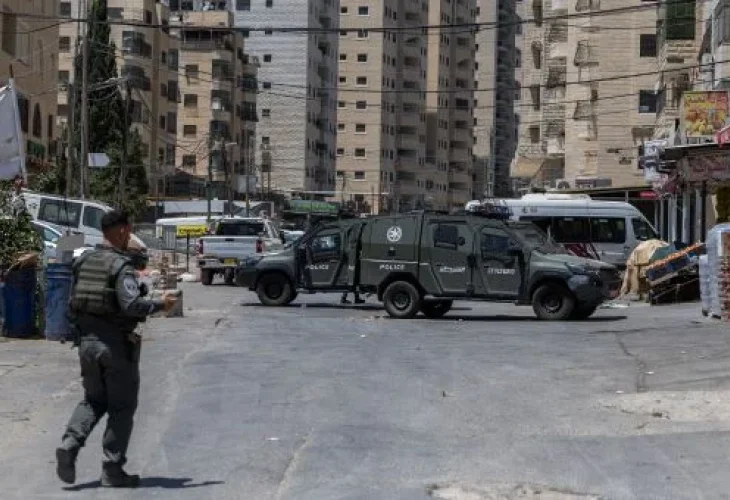 Counterterrorism operation (Photo: Chaim Goldberg/Flash90)
The Jerusalem District Court today (Wednesday) convicted four residents of Beit Safafa of security offenses and spying for Iranian agents. Arguments over sentencing will be heard on a date to be determined.
The verdict stated that the defendants, Mamdouh Khader, Omari Abu Hamida, Mahmoud Khader, and Mohammed Taha, admitted to the acts as part of a plea agreement. They acknowledged that they knew the assignments they received came from Iranian intelligence operatives.
The amended indictment alleged that the four gathered intelligence on various targets in Israel, transferred grenades and weapons to different locations, carried out propaganda activities such as spraying graffiti, and conducted surveillance and documentation. They also began preparing, under the direction of their handlers, for an attempt to assassinate an Israeli nuclear scientist and his family.
According to the amended indictment, an individual acting on Iran's behalf contacted another defendant in the case and assigned him, in exchange for payment, missions intended to harm state security. Among other things, he was instructed to establish a terror cell and work to assassinate a nuclear scientist and his family, obtain weapons and grenades, and create footage purporting to show an attack on a soldier's home and a police patrol car.
Mamdouh Khader and Omari Abu Hamida were convicted of failing to prevent an act of terrorism after joining a trip to the Weizmann Institute in Rehovot, during which they were told that this was a mission received from an Iranian operative. After the group was denied entry to the institute, they documented the entrance and sent the videos to the Iranian operative. Later, Abu Hamida asked about the purpose of the filming and was told that a person the Iranians wanted to assassinate lived there. The two did not act to prevent the act.
Mahmoud Khader and Mohammed Taha were convicted of aiding contact with a foreign agent. Khader helped spray and document graffiti in Jerusalem, drove another defendant to collect two grenades, and helped obtain a fake police license plate intended to create footage purporting to show an attack on a police patrol car.
Taha suggested throwing a stun grenade at an empty house in the village of Qatanna to create footage purporting to show an attack on a Jewish person's home. He arrived at the location with the grenade, asked his friends to throw it, documented the act, and sent the video to the defendant, who was in contact with the Iranian operative. In another incident, he kept in his possession the phone used to communicate with that operative in order to make it harder to locate him.
