

Health and Nutrition
Full After a Holiday Meal? Here's Why You Still Want Dessert
Sukkot meals can go on for hours, with one delicious dish after another. Here’s what science says about why we keep eating even when we feel full.
- Yitzchak Eitan
- | Updated
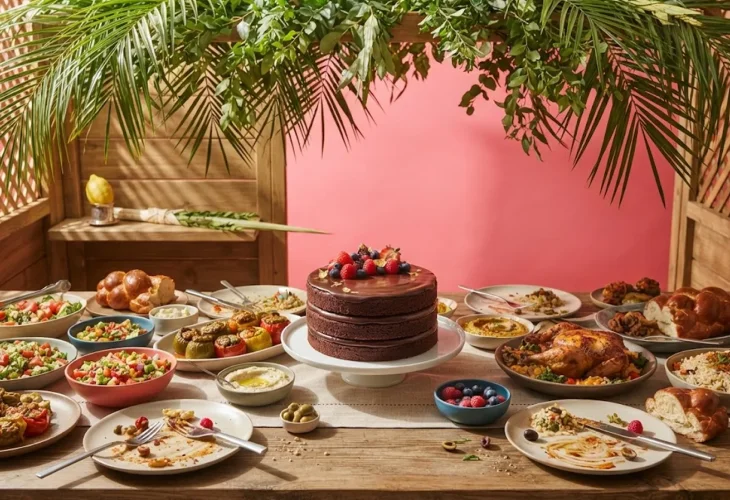
Sukkot is known for long, festive meals in the sukkah. The table fills with salads, side dishes, main courses, and all kinds of delicious foods. Then, just when everyone insists they could not possibly eat another bite, dessert appears.
And somehow, there is room.
Sound familiar?
It may feel like a simple lack of self-control, but there is actually a fascinating biological explanation for why a new dish can suddenly seem appealing even when we already feel full.
Why Does a New Food Make Us Hungry Again?
Scientists call the phenomenon sensory-specific satiety.
Researchers at the University of Oxford demonstrated that as people eat a particular food, its pleasantness gradually decreases. Meanwhile, foods they have not yet eaten can remain much more appealing.
In other words, you may have had enough of the food already on your plate, but that does not necessarily mean every other food has lost its appeal.
A dish with a different flavor, texture, or aroma provides new sensory stimulation. That can renew our interest in eating, even after we have already consumed a substantial meal.
It helps explain why you may feel completely finished with the main course, only to discover that a slice of cake suddenly sounds surprisingly tempting.
Variety Can Make Us Eat More
The number of different foods available matters, too.
Research has repeatedly found that people tend to consume more when they are offered a variety of foods than when they repeatedly eat the same food. Scientists believe sensory-specific satiety is one reason for this “variety effect.”
As we become less interested in one flavor, another offers something new.
Think about a typical Sukkot table. There may be several salads, different side dishes, breads, dips, a main course, and then multiple desserts. Even if our appetite for one dish has faded, there is almost always another flavor waiting to capture our attention.
There’s a Social Effect, Too
Holiday meals have another ingredient that can influence how much we eat: other people.
Studies of eating behavior have found that meals eaten with others can be larger and last longer than meals eaten alone. One explanation is simply that social meals tend to continue for longer. We talk, laugh, take another serving, pause, and then return to the food.
At a Sukkot meal, that effect can be especially noticeable. We may sit in the sukkah for a long time, enjoying conversation with family and guests while food remains within easy reach.
That does not mean there is anything wrong with enjoying a festive meal. Sharing food with others is part of what makes holiday gatherings special.
But the next time you finish a generous Sukkot meal, announce that you cannot eat another bite, and then find yourself reaching for dessert five minutes later, remember: your brain may have a little something to do with it.
Apparently, there really can be a separate stomach for dessert. At least, that’s what it feels like.

