

Interesting
Do the Hunza People Really Live to 120? The Truth Behind the Legend
The Hunza people became famous for claims of extraordinary health and 120-year lifespans. What’s actually true, and what can their traditional lifestyle teach us?
- Yehosef Yaavetz
- | Updated
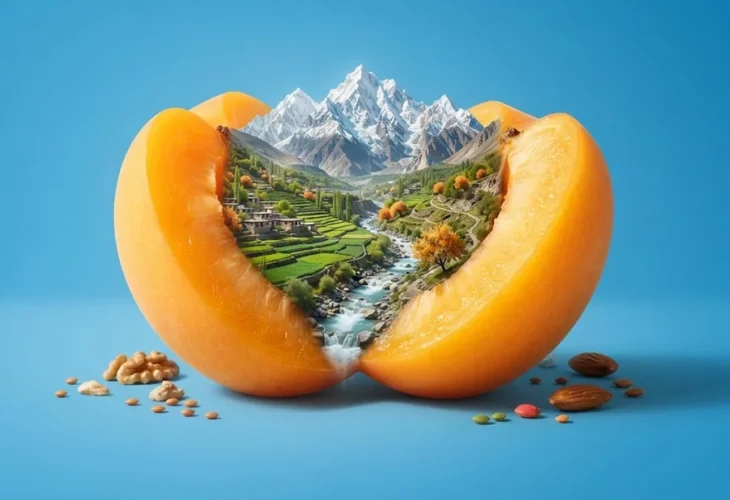
In far northern Pakistan, surrounded by the towering peaks of the Karakoram and Himalayan region, lies the lush Hunza Valley.
The journey there winds past enormous cliffs, glacial rivers, terraced fields, and villages built into steep mountain slopes. For centuries, the communities of Hunza lived relatively isolated from the outside world, developing a way of life shaped by the demanding conditions of the mountains.
Over time, Hunza also developed an almost legendary reputation.
Travel writers and health enthusiasts described older residents continuing to work in the fields and climb steep mountain paths, while stories spread of extraordinary longevity and near-perfect health.
The reality is more complicated. Some of the most dramatic claims about Hunza have never been supported by reliable scientific evidence. But beneath the myths is a traditional way of life that still offers some interesting lessons about movement, food, community, and simplicity.
The legend of extraordinary health
Hunza became particularly famous during the 20th century, when writers began portraying the valley as a kind of hidden paradise whose inhabitants enjoyed remarkable health and exceptionally long lives.
One of the best-known Western observers of the region was Dr. John Clark, an American geologist and physician who spent considerable time in Hunza and wrote about his experiences in his 1956 book Hunza: Lost Kingdom of the Himalayas.
But Clark's observations were not simply a celebration of extraordinary health. He later pushed back against the romantic image of Hunza as a place where people lived extraordinarily long lives without disease.
Claims that residents routinely lived to 120 or beyond were difficult to verify because reliable birth records were lacking. Medical observers also documented disease and nutritional deficiencies among local residents.
In other words, Hunza was never a magical place where human beings simply stopped getting sick.
What is interesting, however, is the traditional lifestyle that developed there.
A life built around movement
Life in the Hunza Valley historically required considerable physical effort.
The mountainous terrain meant that walking and climbing were part of everyday life. Farming required tending small plots and agricultural terraces, while water had to be channeled from glaciers and mountain streams through carefully constructed irrigation systems.
People did not necessarily have to schedule a workout. Movement was built into the structure of daily life.
Walking between villages, climbing to fields, carrying supplies, and working the land kept people physically active throughout the day.
Older members of the community also continued to participate in family and village life rather than automatically becoming disconnected from daily activity.
Today, regular physical activity is strongly associated with better health and a lower risk of many chronic diseases. The traditional Hunza lifestyle offers a striking example of what life can look like when movement is not a separate activity but simply part of the day.
What did the Hunza traditionally eat?
Food is another major part of the Hunza story.
Because farmland was limited and the region was historically isolated, the traditional diet depended heavily on what could be grown locally.
Apricots became one of the valley's best-known foods. Apricot trees grow throughout the region, with the fruit eaten fresh during the warmer months and dried for winter.
Traditional diets also included foods such as whole grains, particularly wheat and barley, along with legumes, vegetables, seasonal fruits, walnuts, and almonds. Meat was generally eaten less frequently than in many modern diets.
Another major difference was the relative absence of highly processed foods. Much of what people ate came directly from local farms, gardens, and orchards.
Many of these foods fit comfortably within what modern nutrition research recognizes as a healthy eating pattern: plenty of plant foods, whole grains, legumes, nuts, and relatively little heavily processed food.
That does not mean the Hunza diet prevents disease, nor does it mean one particular Hunza food holds a secret to extraordinary longevity. Rather, the overall pattern contains several elements associated with good health.
What about apricot kernels and cancer?
Apricots have become so closely associated with Hunza that an especially persistent claim developed around their kernels: that eating them explains why Hunza residents supposedly do not develop cancer.
Neither part of that claim is supported by evidence.
Cancer has occurred among people living in the Hunza region, and there is no reliable evidence that apricot kernels prevent or treat the disease.
Apricot kernels can also contain amygdalin, which can release cyanide in the body when consumed. Eating significant quantities can therefore be dangerous.
The real lesson of Hunza is not that one fruit, seed, or traditional remedy can make a person immune to disease.
Health is about more than one “secret”
The appeal of the Hunza story is easy to understand. We naturally want to believe that somewhere in the world, a community has discovered the secret to avoiding illness and aging.
But human health does not work that way.
No lifestyle can guarantee that a person will never become ill. Genetics, infections, environmental exposures, access to medical care, chance, and many other factors also play a role.
At the same time, lifestyle matters enormously.
Regular movement, nutritious food, time outdoors, meaningful relationships, and a strong sense of community are all associated with physical and emotional well-being.
And in that sense, Hunza still gives us something worth thinking about.
Judaism has long emphasized caring for the body
The importance of caring for our health is hardly a new idea.
The Rambam devotes part of Hilchot De'ot to practical guidance about eating, exercise, sleep, and other habits connected with physical well-being. He writes that maintaining a healthy body is part of serving Hashem, because when a person is physically unwell, it becomes more difficult to understand and pursue spiritual matters.
His guidance reflects a broader Jewish principle: the body is not something to neglect. Caring for it is itself meaningful.
The lesson, however, is not that healthy living guarantees a life without illness. People who take excellent care of themselves can still become sick, and illness should never be treated as proof that someone failed to live properly.
Instead, the traditional Hunza lifestyle can remind us of something much simpler.
Move your body. Eat nourishing food. Spend time outdoors. Stay connected to other people. Make room for rest. Avoid unnecessary excess where possible.
There may be no hidden valley where human beings have conquered illness and aging.
But there are still plenty of lessons to be learned from a life built around simplicity, movement, nourishing food, and community.

