

Torah Personalities
“I Am Not Old”: The Remarkable Life of the 104-Year-Old Saba Kaddisha
Jerusalem’s sages called him the “Saba Kaddisha.” Discover the extraordinary life, remarkable memory, and fearless independence of Rabbi Shlomo Eliezer Alfandari.
- יהוסף יעבץ
- | Updated
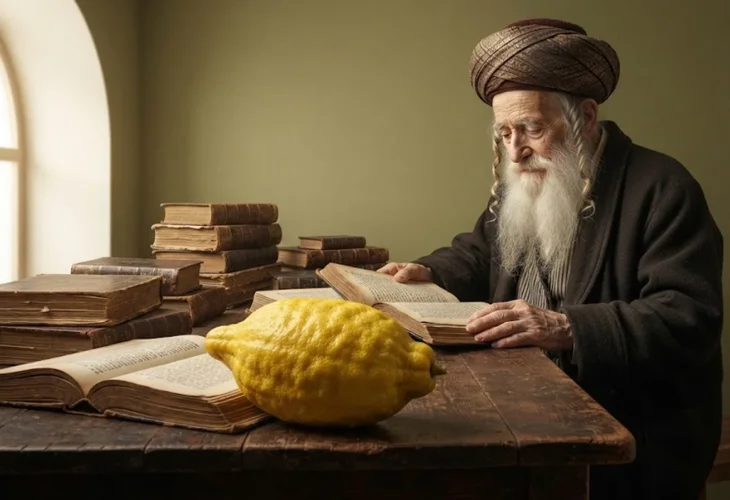
When Rabbi Shlomo Eliezer Alfandari arrived in Jerusalem in 1910, he was already renowned throughout the Torah world as one of the leading Sephardic sages of his generation.
He was an elderly man by then, following decades of rabbinic leadership in communities across the Ottoman Empire. Yet it was during his final years in Jerusalem that he became a legend.
The sages of Jerusalem called him the “Saba Kaddisha,” the holy grandfather. The title reflected not only his remarkable age, but above all his extraordinary character: a phenomenal memory, sharp halachic insight, fierce intellectual independence, and exceptional precision in every detail of Torah and halacha.
A Torah Scholar From Constantinople
Rabbi Shlomo Eliezer Alfandari was born in Constantinople, today Istanbul, in 1826, into a distinguished family of Sephardic sages.
The Alfandari family was among Constantinople’s prominent rabbinic families, with members serving as rabbis and judges for generations. From an early age, Rabbi Shlomo Eliezer was recognized for his unusual abilities.
He studied under leading sages of Turkey and immersed himself in the great Torah scholarship of the Ottoman Empire.
He was not a man who sought public office or honor. His path was one of intensive study and deep analysis. He devoted countless hours to the Gemara, the Rishonim, and the poskim, eventually becoming famous for his extraordinary ability to recall vast numbers of sources by heart.
Sages who met him related that he could address complex halachic questions by drawing on precise recollections of discussions and sources he had studied years earlier.
Over the course of his long life, Rabbi Alfandari nevertheless held important positions of Torah leadership. Among them, he served as rabbi of Damascus, one of the oldest and most significant Jewish communities in the region, and later returned to Constantinople, where he also served in rabbinic leadership.
Unafraid to Stand Alone
In Damascus, Rabbi Alfandari became known as a firm and independent leader.
When he believed that an accepted practice was halachically incorrect, he did not hesitate to oppose it, even when the custom was widespread.
That independence remained one of his defining characteristics throughout his life.
He was not automatically inclined toward either leniency or stringency. Nor was he afraid to disagree with prominent rabbis when his understanding of the sources led him to a different conclusion.
His goal was the halachic truth as he understood it.
His rulings on a wide range of subjects were later collected in Shu”t HaSaba Kaddisha.
The Saba Kaddisha Comes to Jerusalem
In 1910, Rabbi Alfandari arrived in Jerusalem.
The city was already a major center of Torah scholarship, home to different Jewish communities and a wide range of approaches to learning and communal leadership. Its sages received the elderly scholar with tremendous respect.
Despite his advanced age, Rabbi Alfandari continued studying for many hours each day and responding to halachic questions sent to him from across the Jewish world.
He lived in Jerusalem’s Beit Yisrael neighborhood, where his home became a destination for Torah scholars. Rabbis came to discuss difficult questions, hear his Torah insights, and receive his blessing.
Among the great Jerusalem sages who maintained relationships with him were figures such as Rabbi Yosef Chaim Sonnenfeld and Rabbi Avraham Yitzchak HaKohen Kook.
They did not necessarily share his approach on every public or halachic issue, but his extraordinary Torah knowledge commanded profound respect.
His Strong Position on Shmita
One of the issues on which Rabbi Alfandari became particularly known was Shmita.
At the beginning of the 20th century, rabbis were grappling with the enormous economic difficulties that observance of Shmita presented for Jewish farmers in the Land of Israel.
The heter mechira, which involved the sale of Jewish-owned agricultural land to a non-Jew for the duration of the Shmita year, became the subject of major halachic debate.
Rabbi Alfandari was among the strongest opponents of the arrangement.
He believed that great care was necessary to preserve the essential holiness of Shmita and was deeply wary of allowing a temporary solution to develop into a permanent practice.
It was another example of his willingness to take a firm position when he believed that halacha demanded it.
Prayer Means Standing Before the King
Rabbi Alfandari placed tremendous emphasis on intention in the service of Hashem.
Prayer, in his view, could never become a mechanical recitation of words. A person who prays is standing before the King.
It is told that when he saw people rushing through their prayers, he would remind them that speed has little meaning if a person has forgotten before Whom he is standing.
For Rabbi Alfandari, precision in halacha and inner devotion were not separate pursuits. Both reflected the seriousness with which a Jew should approach the service of Hashem.
His Surprising Opinion About Etrogs
Rabbi Alfandari was cautious when confronting new developments, but caution did not mean automatic stringency.
When new technologies and changing circumstances raised unfamiliar halachic questions, he insisted that each issue be examined according to established halachic principles rather than rejected simply because it was new.
His independence can also be seen in his surprising position concerning grafted etrogs.
Many people are careful to purchase etrogs from varieties with an established tradition, in part because of concerns that an etrog may have been grafted with another citrus fruit.
Rabbi Alfandari argued forcefully that grafting an etrog onto a lemon tree did not, in itself, transform the fruit into another species. In his view, it remained an etrog and was not disqualified solely because it had been grafted.
Here, too, he was willing to reach a lenient conclusion even on an issue where others were stringent.
“I Am Not Old”
One of the best-known stories about the Saba Kaddisha beautifully captures his attitude toward his extraordinary longevity.
A man once came before him and, amazed by his age, asked:
“Rabbi, how did you merit reaching such an age?”
Rabbi Alfandari replied:
“I am not old. I have simply been in the world for many years.”
The answer captured something essential about him.
He did not view himself as a man whose time had passed. As long as he was alive, he remained a Torah scholar with work to do.
A Memory That Spanned Decades
His remarkable memory became legendary.
It is told that a letter once arrived from the United States containing a complicated halachic question. The writer cited numerous sources and presented his own position on the matter.
Rabbi Alfandari read the question and remarked that he had dealt with the same issue decades earlier.
He then opened an old book and showed those present exactly where he had previously discussed it.
The story became one of many examples told about a memory capable of retrieving Torah sources across an extraordinary lifetime of learning.
The Respect of Rabbi Kook
Rabbi Avraham Yitzchak HaKohen Kook, rabbi of Jerusalem and later Ashkenazic chief rabbi of the Land of Israel, held Rabbi Alfandari in tremendous esteem.
The two differed in their approaches to certain public matters, but Rabbi Kook nevertheless regarded the Saba Kaddisha as one of the outstanding Torah giants of the generation.
It is told that when Rabbi Kook once entered Rabbi Alfandari’s home, the elderly sage stood up in his honor, something he did not ordinarily do for everyone.
When asked why he had risen, Rabbi Alfandari explained that he was honoring the Torah found within Rabbi Kook.
The story is particularly striking precisely because Rabbi Alfandari was so independent in his opinions. Disagreement did not prevent him from recognizing Torah greatness in someone whose approach differed from his own.
A Life Without Pursuing Honor
By the end of his life, Rabbi Alfandari’s age and reputation naturally drew enormous attention.
Yet he remained uninterested in personal honor.
When others attempted to publicize his praises, he would emphasize that a person should not concern himself with what others say about him. His concern should be what Hashem expects him to do.
Rabbi Shlomo Eliezer Alfandari passed away in Jerusalem on the 22nd of Iyar, 1930, at the age of 104.
He was laid to rest on the Mount of Olives.
More than a century after the elderly sage first arrived in Jerusalem, the title by which the city came to know him still captures the reverence he inspired: the Saba Kaddisha, a Torah giant remembered for his extraordinary memory, fearless independence, and a lifetime devoted to seeking the truth of halacha.

