

Sukkot
Sukkot Is Pouring Out Blessings: Did You Bring a Cup?
What does a forgotten coffee cup have to do with Sukkot? Discover how to become a vessel for the joy, emunah, and blessing of the holiday.
- הרבנית חגית שירה
- | Updated
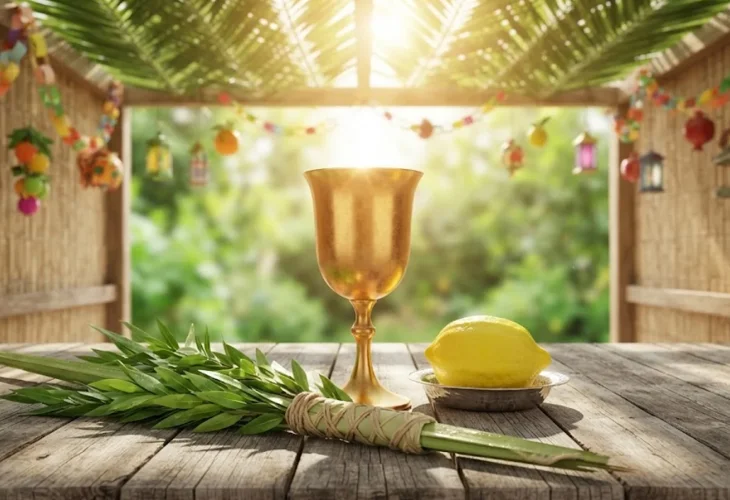
Once there was a man who woke up one morning and discovered there was no coffee left at home. He prayed, got ready, and left for work with one thought on his mind: coffee.
By the time he reached his office building, he desperately needed a cup. And then, right in front of him, he saw it: a brand-new coffee machine. Strictly kosher.
He looked at all the options: cappuccino, latte, hot chocolate, iced coffee... He didn’t even recognize half the names, but he was excited. He chose a cappuccino, opened his wallet, and amazingly, had exactly the amount he needed.
Perfect.
He put in the money, pressed the button, and watched eagerly as the machine came to life. Foamed milk, fragrant coffee... until suddenly he realized that all of it was pouring straight down the drain.
He had forgotten the cup.
Panicking, he reached for one, only then noticing the enormous sign beside the machine: “INSERT CUP! CUPS ON THE RIGHT.”
Too late. The coffee was gone.
My sister, even the most delicious cappuccino in the world is wasted if there is no cup to receive it.
Sukkot Is Pouring Something Into Us
Sukkot is certainly not a cappuccino, but the lesson is powerful. Sukkot is a time when Hashem pours so much into our lives: joy, blessing, abundance, light, mitzvot, guests, and the special spiritual influence of the holiday.
But we have to come with a cup. We have to become a vessel capable of receiving what the holiday is giving us.
Otherwise, Sukkot can be beautiful. We can decorate the sukkah, prepare wonderful meals, invite guests, shake the Four Species, sing, eat, and celebrate. And then suddenly the holiday is over. The question is: What did we take with us?
On Sukkot, as on Pesach, we ask Hashem in our prayers to grant us “the blessing of Your festivals, for life, for joy, and for peace.”
What does it mean to receive the blessing of the holiday? It means asking Hashem: Let me leave this holiday charged. Charged with emunah, joy, strength, light, and love. Let me leave with greater faith that blessing and salvation can enter my life. Don’t let me experience an entire holiday and walk away exactly as I entered it.
Look Through the Cracks
The Zohar calls the sukkahTzeila d’Meheimanuta, “the shade of faith.” Matzah, too, is described as Nahama d’Meheimanuta, “the bread of faith.”
There is a beautiful image connecting the two. When you sit inside the sukkah and look upward, you can see through the spaces in the s’chach. Matzah, too, is covered with tiny holes.
Shir HaShirim says: “There he stands behind our wall, gazing through the windows, peering through the cracks” (Song of Songs 2:9).
Hashem peers at us, so to speak, through the cracks. Through the openings in the s’chach and through the cracks that sometimes appear in our lives, we are reminded of something we need to remember all year long: even when life feels fragile, even when everything seems to be shifting around us, and even when we cannot understand what is happening, Hashem sees us. He is with us. He has not disappeared.
That awareness is something we can take with us long after we leave the sukkah.
Don't Forget Your Cup
Perhaps this is what it means to become a vessel for the blessings of Sukkot: to enter the holiday ready to receive. Ready to notice the joy, strengthen our emunah, recognize Hashem’s presence, and take something from these precious days into the ordinary days that follow.
Imagine that same enormous sign from the coffee machine hanging beside the entrance to your sukkah: “DON’T FORGET YOUR CUP.”
Bring a heart ready to receive. Let the joy, faith, strength, and light of Sukkot enter it.
And when the holiday ends, don’t leave all that light behind in the sukkah. Take it with you.

