

Israel News
At the Strait of Hormuz, an Israeli Journalist Finds Warships, Dolphins and Daily Life
Journalist Yitzhak Horowitz traveled to the Strait of Hormuz and described the striking contrast between signs of war and peaceful scenery. He spoke about local life, smuggling between Iran and Oman, and what it was like to arrive there as an Israeli.
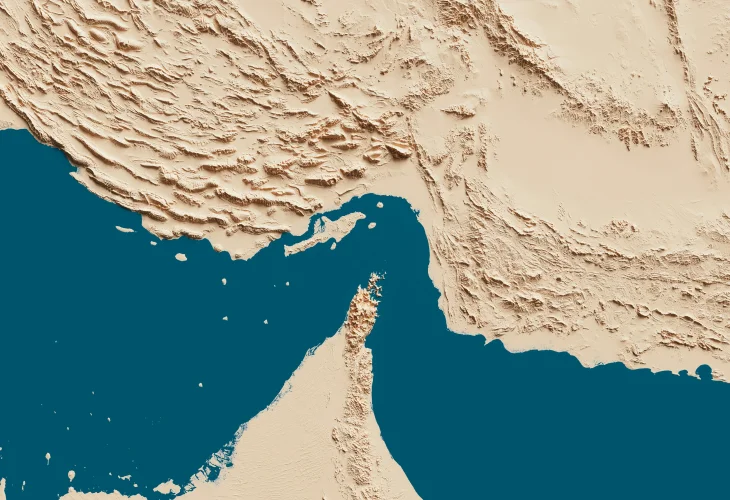 (Credit: unsplash)
Journalist Yitzhak Horowitz traveled to the Strait of Hormuz, which has been at the center of escalating tensions and exchanges of fire between the United States and Iran in recent months. In an interview with Kan 11 today (Thursday), he spoke about his decision to visit the area and the reality he encountered along the strait.
According to him, one of the most striking aspects of the visit was the gap between the signs of conflict and the peaceful landscape: "It’s amazing, because you arrive at a place that the whole world has been focused on in recent months. A place of tremendous tension. On one hand, you see the signs of war, the warships, the stranded tankers, but on the other hand, there’s also so much tranquility. It’s a very unusual contrast between the spectacular scenery, with dolphins swimming freely and an incredible fjord, and yet, on the other hand, it’s a war zone."
Despite the tension, Horowitz explained that for the area’s residents, war is not a constant part of daily life: "Every few days, there may be a report that some tanker was attacked, but that’s not the everyday experience of the people who live there. They’re fishermen; they used to make a living from tourism. There’s no tourism there anymore. But they raise goats and sheep. Their daily experience is not one of war, but it’s there; it exists."
He explained what brought him to the strait: "Naturally, it’s the place making headlines, so you want to see the place, what it looks like. But I was also in the region already; I had gone to Oman in the first place, and that’s how I ended up there too." According to him, even as an Israeli, getting there was not unusually complicated.
During his visit, Horowitz also noticed smuggling between Iran and Oman: "Some of the residents make their living from it. Overall, it’s a pretty short distance, something like an hour by boat. There are also people who have family on the other side. They speak a unique language too, a blend of Arabic and Persian. The food and culture are like that as well."

