

Parashat Vezot HaBerachah
The Power of “Sometimes”: What Vezot Haberachah Teaches About Our Unique Mission
As Moshe blesses each tribe with its own unique mission, a story about Rabbi Aryeh Levin reminds us that every person may have a moment when their goodness helps sustain the world
- Sivan Rahav-Meir
- | Updated
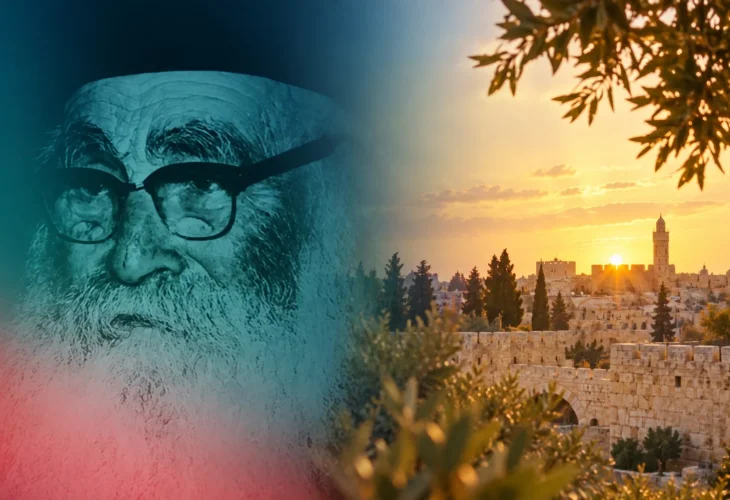
The final Torah portion describes the last hours of Moshe Rabbeinu’s life. At the age of 120, just before his passing, Moshe gives a unique blessing to each of the tribes of Israel.
He knows them well. He has been with them since the days of slavery in Egypt and has led them through forty years of wandering in the desert, through victories, failures, challenges, and growth. Now, as they prepare to enter the Land of Israel, he takes leave of them with individual blessings.
Their roles are not identical. Each tribe has its own mission, its own strengths, and its own light to bring into the world.
“Sometimes”
Israeli author Haim Be’er grew up in Jerusalem and describes himself as having been a very curious child, sometimes perhaps a little too curious.
One day, he encountered the beloved Jerusalem tzaddik Rabbi Aryeh Levin, known affectionately as “Reb Aryeh.” Rabbi Levin was small in stature but famous for his enormous heart.
He became known as the “Rabbi of the Prisoners” because he regularly visited members of the Jewish underground who had been imprisoned for fighting British rule, offering them encouragement and support. He was also known for visiting Jerusalem patients suffering from leprosy, a contagious disease that left them isolated and largely without visitors.
Young Haim had heard about Rabbi Levin’s extraordinary acts of kindness. He also knew of his devotion to Torah learning and teaching.
So he approached him and asked a bold question. “Rabbi, is it true that you are one of the thirty-six hidden tzaddikim?”
Jewish tradition speaks of thirty-six hidden righteous people in every generation in whose merit the world continues to exist. To the young boy, Rabbi Aryeh Levin certainly seemed like someone who might belong to that remarkable group.
Rabbi Levin heard the question, smiled, and answered with a single word: “Sometimes.”
At the time, standing on a Jerusalem street, the young Haim did not quite understand what he meant. Only years later did he grasp the depth of that answer.
“I think Reb Aryeh was telling me that being one of the thirty-six is not necessarily a lifelong position or a permanent title,” he later explained. “Perhaps every person can be a tzaddik at a particular moment, through a particular act.”
A Thought to Take With Us
Perhaps Rabbi Aryeh Levin was teaching that at different moments, different people may be called upon to hold up a small part of the world.
Each person has a unique mission, and each person has particular times and places when the world especially needs what only he or she can give.
That one word, “sometimes,” leaves us with a powerful question: Could that person, at this very moment, be us?
The Torah does not truly end this week. It never ends. Next week, we begin again from Bereishit. Perhaps that is the message as well: every ending is another beginning, and every new beginning gives us another opportunity to discover what our own role might be.

