

Health and Nutrition
Why the Post-Holiday Return to Routine Can Feel So Hard
Going from Chol HaMoed outings and family time straight back to work and school can be jarring. Discover simple ways to give yourself a softer landing.
- Yitzchak Eitan
- | Updated
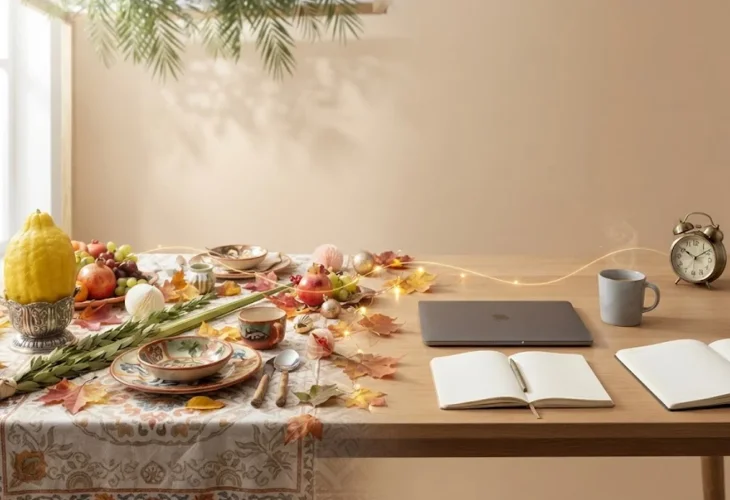
The holiday season, especially the days of Chol HaMoed, gives us a welcome break from ordinary life. There are family gatherings, outings, later nights, different meals, fewer everyday responsibilities, and a general feeling that the normal schedule has been put on hold.
And then, suddenly, it’s over.
Work starts again. The kids go back to school. The alarm clock returns. The laundry is waiting, the inbox is full, and within a day or two, we are expected to switch straight back into regular life.
If you feel unusually tired, heavy, unmotivated, or a little down after the holidays, you’re not necessarily imagining it. The transition itself can be difficult.
Why Is It So Hard to Get Back to Routine?
During a holiday break, many of our usual patterns change. We may go to bed and wake up later, eat at different times, spend more time socializing, take trips, and have fewer work or school demands. Returning abruptly to a structured schedule can therefore require a period of readjustment, particularly when our sleep routine has shifted.
There is also a psychological contrast. During Chol HaMoed, much of the day may feel flexible: Where should we go? Who should we visit? What should we do together? Once the holidays end, that freedom is replaced by appointments, deadlines, school schedules, and household responsibilities.
That contrast can make ordinary life feel particularly demanding at first, even if there is nothing actually wrong with our routine.
There can also be an emotional element. We may have spent days surrounded by family and friends, enjoying special meals and experiences, only to suddenly find ourselves back at a desk or rushing through the morning routine. It makes sense that the change can feel a little jarring.
Give Yourself a “Soft Landing”
If possible, don’t expect yourself to accomplish everything immediately.
Think of the first few days back as a transition period. Deal with what genuinely needs your attention, but if something complicated can wait until later in the week, let it wait. Instead of trying to compensate for time away by cramming twice as much into the first day back, gradually rebuild your normal rhythm.
It can also help to bring small “islands of holiday” into ordinary life. Plan a relaxed family dinner, take a short evening walk, sit together over coffee, or spend some time without phones and other distractions. The holiday may be over, but the connection and enjoyment you experienced during it don’t have to disappear with it.
Sleep matters, too. If bedtimes and wake-up times changed significantly over the holidays, gradually returning to your usual schedule can make the transition easier. Regular meals, movement, and time outdoors can also help restore a sense of rhythm.
The Holiday Is Over, but Its Impact Shouldn’t Be
Jewish life offers another way of looking at the return to routine.
The goal of a Yom Tov is not simply to experience something beautiful and then leave it behind. We return to ordinary life carrying something with us.
Perhaps we strengthened a relationship over the holiday. Perhaps we experienced greater joy, gratitude, or emunah. Maybe we spent more time with our children, prayed differently, enjoyed being away from our phones, or simply remembered how valuable it is to slow down.
Routine is where we get the opportunity to put those insights into practice.
Instead of seeing the end of the holidays only as a descent from something special into ordinary life, we can ask: What do I want to take with me?
Maybe it is one family meal a week without screens. Maybe it is going to bed a little earlier, spending more time outdoors, calling someone we reconnected with over the holiday, or making more room for prayer and reflection.
We cannot live in Chol HaMoed all year. But we can allow something from Chol HaMoed to change the way we live the rest of the year.
And perhaps that is the gentlest way to return to routine: not by trying to leave the holiday behind as quickly as possible, but by bringing a little of its joy, connection, and meaning home with us.

